
 Search

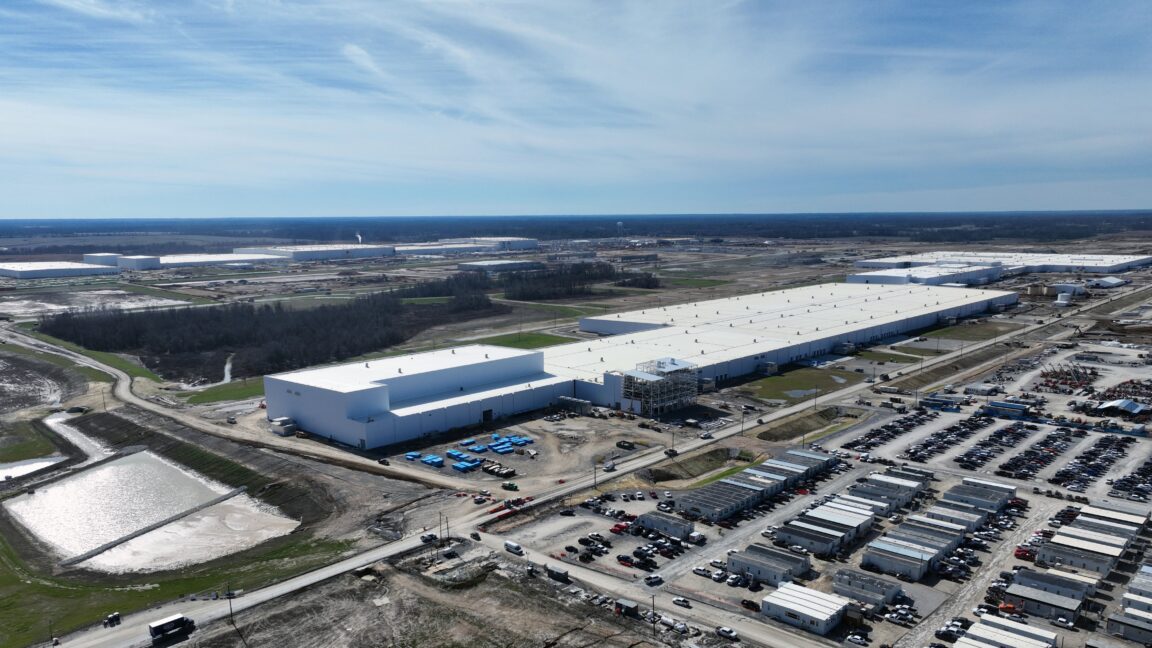
Credit: Ford
Cast your mind back to 2021. Electric vehicles were hot stuff, buoyed by Tesla’s increasingly stratospheric valuation and a general optimism fueled by what would turn out to be the most significant climate-focused spending package in US history. For some time, automakers had been promising an all-electric future, and they started laying the groundwork to make that happen, partnering with battery suppliers and the like.
Take Ford—that year, it announced a joint venture with SK to build a pair of battery factories, one in Kentucky, the other in Tennessee. BlueOvalSK represented an $11.4 billion investment that would create 11,000 jobs, we were told, and an annual output of 60 GWh from both plants.
Four years later, things look very different. EV subsidies are dead, as is any inclination by the current government to hold automakers accountable for selling too many gas guzzlers. EV-heavy product plans have been thrown out, and designs for new combustion-powered cars are being dusted off and spiffed up. Fewer EVs means a lower need for batteries, and today we saw that in evidence when it emerged that Ford and SK On are ending their battery factory joint venture.
The news has not exactly shocked industry-watchers. Ford started to throttle back on the EV hype in 2024, throwing out not one but two EV strategies by that August. Disappointing F-150 Lightning sales saw Ford postpone a fully electric replacement (which is supposed to be built in Tennessee) in favor of a smaller midsize electric truck—supposedly much cheaper to build—due in 2027.
Divorce
As for the two plants, a Ford subsidiary will assume full ownership of Blue Oval City in Kentucky, with SK On taking full ownership of the plant in Tennessee. According to Reuters, SK On decided to end the partnership due to the declining prospects of EV sales in the US. Instead, it intends to focus the Tennessee plant’s output on the energy storage market.
“Like other battery vendors, SK has been actively looking to diversify into other segments beyond EVs, particularly energy storage systems. However, ESS cells are more likely to be LFP than NMC, and while it’s certainly possible to produce multiple chemistries in the same location, you do need to isolate them to prevent cross contamination,” said Sam Abuelsamid, vice president of market research at Telemetry.
“Since SK is already producing NMC cells in Georgia, I wouldn’t be surprised to see them switch the TN plant to LFP production, much as LGES did with their expansion in Holland, Michigan. The Holland expansion was originally slated to produce NMC cells for Toyota. When LG bought out GM’s stake in their Lansing JV plant, they shifted that production there and switched Holland to LFP cells for ESS,” Abuelsamid told Ars.
For Ford, keeping Kentucky makes more sense as it’s better geographically located with regard to Ford’s other production sites.
“My guess is that we will see some of the capacity at that plant be switched over to producing LMR cells. That would give Ford three different chemistries in the region, LFP from Marshall and NMC and LMR from Kentucky to support plants in Kansas City (e-Transit), Louisville (universal EV), Avon Lake Ohio (commercial vehicle), Dearborn (whatever gets built at REVC after Lightning ends), and Oakville (I think they will produce EREV super duty vehicles),” Abuelsamid said.
Ars reached out to Ford and will update this article if we hear back from the automaker.

-
 C114 Communication Network
 -
 Communication Home
