
 Search


Mi.com
Xiaomi Clip earbuds, the company's first clip-on design, are expected to reach international buyers at a Paris event that starts at 8:00 a.m. ET on Tuesday, Nov. 17, but the buying decision involves more than price: no independent test has verified Xiaomi's sound-leakage claims, and Xiaomi, a Beijing-headquartered company, operates under Chinese laws that require organizations to support national intelligence work. The Clip has been on sale in China since May 21 at 849 yuan (approximately $127 USD), and Xiaomi has not published a European price. This article covers the data-law and privacy information readers need before buying.
Xiaomi Schedules Paris Event for 8:00 a.m. ET on Nov. 17
The event will start at 14:00 in Paris, which is 13:00 UTC and 8:00 a.m. ET, and Xiaomi will stream it on YouTube and X. The Xiaomi 18 Pro and 18 Pro Max headline the show, and a Portuguese outlet lists the Clip among the products expected alongside them. Xiaomi's own announcement has not named the Clip, so its appearance should be treated as expected, not confirmed.
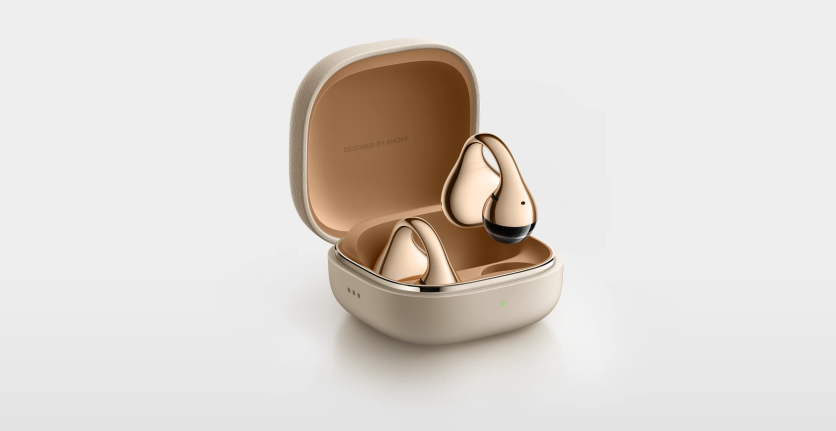
The Clip is not new hardware. Xiaomi launched it in China on May 21, and Gizchina reported that the company was filling a gap in its audio range that already included in-ear, semi-in-ear and open-hook designs but no ear-clip model.
Why Does Sound Leak From Open-Ear Earbuds, and How Far Can Reverse Waves Stop It?
An open-ear earbud does not seal the ear canal, so the driver pushes sound toward the eardrum and into the surrounding room at the same time. Xiaomi says the Clip uses reverse sound waves to limit leakage.
The technique has a physical limit. Cancellation works by emitting a second, out-of-phase wave so the two offset each other, and active noise control is best suited to low frequencies, while the spacing requirements in open space become prohibitive at higher frequencies. Treble and vocals, the sounds bystanders notice most, are therefore the hardest to cancel at a distance, and the result shifts with volume and with where a listener stands.
Xiaomi's own track record shows why independent measurement matters. Xiaomi claimed its earlier OpenWear Stereo Pro prevented leakage within 25 cm (9.8 in) in all directions, yet GSMArena's reviewers found that leakage was still present in everyday use. No independent leakage measurement of the Clip has been published as of Nov. 15.
Other hardware choices set the Clip's footing. Each earbud weighs 5.5 g (0.19 oz) and clamps onto the outer ear instead of sitting in the ear canal. ProPakistani reports that a memory-titanium wire bridge holds the buds in place. Calls use three microphones plus a bone-conduction microphone, which picks up voice through vibration instead of relying only on air-borne sound.
LHDC 5.0 Cuts Clip Battery Life From 9 Hours to 6
The Clip supports the LHDC 5.0 codec, with AAC and SBC also supported. LHDC 5.0 is a high-bitrate Bluetooth codec rated at roughly 1 Mbps, against about 256 kbps for AAC and about 328 kbps for SBC. Moving more data costs power, and a 5.5 g earbud holds a very small cell.
Xiaomi's global page lists up to 9 hours of playback from the earbuds and up to 38 hours with the charging case, both labeled as tested by Xiaomi Internal Labs with the Xiaomi 18 Pro as the source device. The Xiaomi Singapore specifications page ties those figures to the AAC codec at 50% volume with other features switched off, and lists 6 hours and 25 hours of music playback in LHDC 5.0 mode. Call time is also rated at 6 hours and 25 hours. Fast-charge figures differed between Xiaomi's page and some China launch coverage, so they may vary by market. No independent battery measurement has been published.
The codec also depends on the phone. LHDC 5.0 only runs when the phone supports it, and Android 17 adds native LHDC support, so owners of other phones and iPhones will fall back to AAC or SBC. The Clip also carries an IP57 rating, which under the IEC 60529 standard means dust protection that is not fully dust-tight and immersion tests in fresh water only, so protection can degrade with sweat, salt water and age.
Does China's National Intelligence Law Apply to Xiaomi Clip Owners in Europe?
Xiaomi is headquartered in Beijing and listed in Hong Kong, so its Chinese operations are subject to three national laws that readers should understand before buying any Xiaomi device.
- National Intelligence Law (2017): Article 7 requires all organizations and citizens to support, assist and cooperate with national intelligence work. How far it reaches into foreign subsidiaries and overseas-stored data is contested among legal scholars.
- Cybersecurity Law (2017, amended effective Jan. 1, 2026): Article 28 requires network operators to provide technical support and assistance to public security and national security organs. The law also sets data-localization requirements for certain data inside China.
- Data Security Law (2021): Article 36 restricts organizations in China from providing data stored there to foreign judicial or law-enforcement bodies without Chinese approval.
These obligations apply regardless of what a company's privacy policy says, and how they apply to a Xiaomi subsidiary in Europe is contested. They are part of the legal environment of operating under Chinese jurisdiction, not a risk that a lower price offsets.
Xiaomi's published privacy policy describes a more limited picture. It says data from users in the EU, UK and Switzerland is stored in data centers in the Netherlands, with a Singapore subsidiary acting as an intragroup processor, and that information may be remotely accessed from mainland China through limited channels for purposes such as technical troubleshooting. It also says Xiaomi discloses data to authorities where required by applicable law, and that it assesses requests and discloses only what is reasonably necessary. The policy does not mention earbuds or wearables and points users to separate product privacy notices.
Xiaomi has also faced direct security allegations. In 2021, Lithuania's National Cyber Security Centre said Xiaomi phones had built-in censorship capabilities that could be enabled remotely, and Xiaomi rejected the report. The U.S. government labeled Xiaomi as Chinese-military-linked in January 2021, and Xiaomi later reached an agreement to have that designation removed after litigation.
What data the Clip could expose. The earbuds carry microphones, including a bone-conduction microphone, and Xiaomi's AI translation runs through its Xiao AI voice assistant, so voice audio, device identifiers and usage patterns are the categories at issue. Where translation audio is processed has not been confirmed in the sources reviewed for this article. Apple's Find My, which the Clip supports for iPhone owners, runs on Apple's network and not on Xiaomi's.
What independent audits show. No independent security audit of the Clip's data transmission has been published as of Nov. 15, and that absence is a gap, not a clean bill of health.
What EU rules add. Wireless devices sold in the European Union have had to meet cybersecurity requirements under the Radio Equipment Directive, built around the EN 18031 standards, since Aug. 1, 2025. Those rules govern device design and do not change a manufacturer's legal duties under Chinese law.
What readers can do. Owners can use the Clip as a plain Bluetooth device without signing in to a Xiaomi account, skip the translation and voice-assistant features, and limit app permissions. None of those steps fully addresses the structural legal risk for data that does reach Xiaomi's systems.
Independent Reviews, Audits and Ecosystem Limits Remain Open Questions
Specifications do not show how the tuning performs, and no credible independent review of the Clip's sound quality, leakage or battery life had been published as of Nov. 15. Hi-res certification and a large driver describe capability, not results.
The ecosystem adds friction. Razom Media makes the point that full functionality is tied to Xiaomi's software. The 21-language translation claim comes from the China launch, and the feature does not appear on Xiaomi's Singapore global product page. Audio sharing works through HyperOS on Xiaomi phones and tablets. Reports differ on whether Find My tracking covers the earbuds themselves or only the charging case, so buyers should check Xiaomi's documentation before relying on it to locate a lost bud.
Xiaomi has not said which markets will get retail stock. A global product page does not guarantee availability in every country, and Xiaomi has not confirmed U.S. availability.
Leaked European Price Is Unconfirmed, and Cost Is Only One Input
In China the Clip launched at 849 yuan (approximately $127 USD), with a short introductory price of 799 yuan (approximately $120 USD).
For Europe, a report published Nov. 3 says Slovak retailer Planeo lists the Clip at €137.90 (approximately $152 USD) but cannot be ordered for now, and it does not say whether the price includes VAT. Xiaomi has not confirmed any European price, and the official figure is expected at the Nov. 17 event at the earliest.
Sony's European press page lists its LinkBuds Clip at €200 in Europe (approximately $220 USD). Against that list price, a €137.90 Clip would be about €62 (approximately $68 USD), or roughly 31%, cheaper. The gap may be smaller in practice because retailers discount Sony's model; German retailer Alza lists it at €134.90 (approximately $149 USD).
Xiaomi's previous open-ear model offers a reference point. The OpenWear Stereo Pro reached international markets in September 2025, after a June China debut, at €149.99 (approximately $165 USD) in the EU, according to iTechGuides' release report.
Buyers outside China have been able to import the Clip since May. Giztop lists it from $159.99, a reseller price above the China price.
Open-Ear Category Is Crowded, and Clip Buyers Face a Full Trade-Off
Open-ear earbuds have become a crowded category, with Sony's LinkBuds Clip among the established rivals. A lower price would count in Xiaomi's favor, but it is one input among several. The Clip's leakage cancellation is unverified, its LHDC mode cuts battery life by a third, its best features depend on Xiaomi phones, no independent audit of its data practices exists, and Xiaomi operates under Chinese laws that require support for state intelligence work. A buyer who weighs all five alongside the final European price on Nov. 17 will make a better decision than one who reads only the price.
Currency conversions in this article are approximate and based on exchange rates as of Nov. 15, 2026.
Frequently Asked Questions
Will the Xiaomi Clip be sold in the United States?
Xiaomi has not confirmed U.S. availability. Importers such as Giztop already list the Clip from $159.99, but import pricing and support terms vary by seller.
Is the Xiaomi Clip safe to use given Chinese data laws?
No independent audit of the Clip has been published. Chinese law, including the National Intelligence Law's Article 7, requires organizations to support intelligence work, while Xiaomi's privacy policy says it discloses data where required by applicable law. Using the earbuds without a Xiaomi account and without translation features reduces, but does not remove, the exposure.
Do clip-on earbuds leak sound to people nearby?
All open-ear designs leak some sound, because they do not seal the ear canal. Reverse-wave cancellation is best suited to low frequencies, and GSMArena found leakage from Xiaomi's earlier OpenWear Stereo Pro review despite a 25 cm (9.8 in) no-leakage claim.
Does the Xiaomi Clip work with iPhones and non-Xiaomi Android phones?
It pairs over Bluetooth and supports Apple Find My for iPhone owners, but AI translation and audio sharing are tied to Xiaomi's HyperOS, and LHDC 5.0 needs a phone that supports the codec.

-
 C114 Communication Network
-
 Communication Home
