
 Search

Consumer.huawei.com
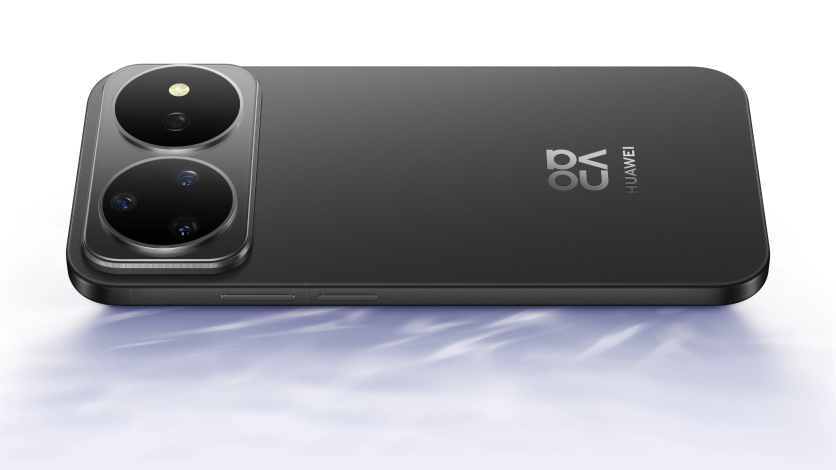
Huawei's biggest global smartphone push in years landed in Munich on Tuesday, when the company unveiled the Nova 16s Pro and Nova 16s at its "Chase the Wild" event timed to IFA 2026, which opens Thursday in Berlin. Confirmed European pricing — €749 (approximately $869 USD) for the 256GB model and €849 (approximately $985 USD) for 512GB — places the Nova 16s Pro in near-flagship territory, not the $400–$500 mid-range bracket that pre-launch analyst estimates had suggested. At that price, European buyers are comparing it against Samsung's Galaxy S-series mid-tier and the Pixel 9a, and the decision comes down to factors the specifications alone do not resolve: a chip two process generations behind the competition, a smartphone ecosystem with no Google apps, and a fixed legal obligation to China's government that applies regardless of where the device is sold.
200MP RYYB: What the Sensor Actually Does
The headline specification is a 200MP RYYB main camera built around a 1/1.28-inch sensor, and the "RYYB" part is worth understanding before the pixel count. Standard smartphone cameras use a Bayer color filter array — one red, two green, and one blue subpixel per four-pixel cluster. Huawei's RYYB pattern replaces both green subpixels with yellow. Because yellow light encompasses both red and green wavelengths, each yellow subpixel captures a broader slice of the visible spectrum than a single green subpixel, with Huawei claiming this yields roughly 40% more light in comparable conditions — though that figure comes from Huawei's own labs and has not been independently audited for the Nova 16s Pro specifically. The trade-off is real: yellow's broader spectral overlap with red makes color separation computationally harder, requiring more intensive image signal processing to produce accurate hues under mixed-temperature lighting.
Huawei addresses this with dual 1.5MP Red Maple multispectral sensors — one front-facing, one rear-facing — that measure actual scene color temperature pixel by pixel rather than estimating it algorithmically. The intent is that the ISP works with measured spectral data rather than modeled assumptions, reducing the saturation artifacts that RYYB sensors can introduce under artificial or mixed lighting.
The 200MP figure refers to the sensor's pixel array specification, not the typical output resolution. In standard shooting modes the phone uses pixel binning — combining multiple photosites into one output pixel — to produce a lower-resolution image with improved signal-to-noise ratio. Full 200MP output is available in a dedicated high-resolution mode, which produces files approaching 40MB each. Buyers should know that transferring those files off the device via cable is constrained by the Nova 16s Pro's USB Type-C 2.0 port, which caps wired data transfer at 480 Mbps — a meaningful limitation at this price point in 2026.
Read more: Huawei Watch D3 Earns EU Medical Certification No Rival Smartwatch Has
Flanking the main sensor are a 50MP periscope telephoto with 3.7x optical zoom (extendable to 100x digital) and OIS, and a 50MP ultrawide with a 118-degree field of view and 2.5cm (approximately 1-inch) macro capability. The front-facing camera is a 50MP unit capable of 4K video. AI tools include AI Composition for real-time framing guidance, AI Move for subject repositioning, AI De-Glare for removing reflections from glass surfaces, and AI Best Expression for selecting optimal faces across group shots. Regional availability of some features will vary.
Silicon-Carbon Anode: Why 7,000mAh Fits in 7.1mm
The most engineering-dense fact about the Nova 16s Pro is one its marketing minimizes: a 7,000mAh silicon-carbon battery inside a chassis that measures just 7.1mm (0.28 inches) thick and weighs 218g (7.69 oz). That combination is not possible with a conventional graphite-anode lithium-ion cell.
Standard lithium-ion batteries use graphite as their anode material. Graphite's practical energy storage capacity is approximately 200–250 milliamp-hours per gram. Silicon's theoretical capacity is roughly ten times higher — approximately 3,579 mAh/g — but raw silicon expands by up to 300% in volume as it absorbs lithium ions during charging, cracking the anode and degrading the battery within dozens of cycles. Silicon-carbon composite anodes, now standard in Chinese smartphone flagships and rapidly spreading to the broader market in 2026, address this by embedding silicon particles within a structural carbon matrix. The carbon acts as a reinforcing lattice that constrains expansion while preserving the silicon's capacity advantage.
The practical result is 20–50% higher volumetric energy density compared to a pure graphite cell of the same physical size. In the Nova 16s Pro's case, that means 7,000mAh rated capacity (6,800mAh rated; 7,000mAh typical) in a body that would have required either a thicker chassis or a significantly smaller battery using legacy chemistry. Honor's Magic V6, announced at MWC 2026, uses a silicon-carbon cell with 25% silicon content and an energy density of 921 Wh/L — higher than a Tesla 4680 cell.
Charging is handled by Huawei SuperCharge Turbo at up to 100W wired, requiring Huawei's official charger and cable. There is no wireless charging on the global Nova 16s Pro — that feature is present on the China-exclusive Nova 16 Ultra but was not carried to the international model. Buyers who assumed wireless charging based on pre-launch leaks or erroneous spec descriptions should note this explicitly. On the China-market Nova 16 Pro, some specifications differed; the global "Nova 16s Pro" is a distinct regional configuration.
Kirin 9010S and SMIC's Process Ceiling
The processor powering both Nova 16s models is the Kirin 9010S, listed in GSMArena specifications, manufactured by SMIC — China's largest domestic chip foundry — on what the industry classifies as a 7nm-class process node. Understanding what that means in practical terms requires brief context.
Since 2019, US export controls have prevented Huawei from sourcing chips from TSMC, Samsung Foundry, or any other manufacturer that uses American equipment or software. SMIC is not subject to this prohibition, but SMIC also lacks access to extreme ultraviolet (EUV) lithography — the technology that enables TSMC and Samsung to manufacture chips at 3nm density. TechInsights, the chip analysis firm, confirmed in December 2025 that SMIC's N+3 process — the most advanced node used for Huawei's Kirin 9030 flagship — "remains substantially less scaled than industry 5nm processes from TSMC and Samsung." The Kirin 9010S in the Nova 16s Pro is manufactured on a comparable or slightly earlier SMIC process class.
In practical terms, this means the Kirin 9010S operates at a transistor density roughly two full chip generations behind the Snapdragon 8 Elite Gen 5 (in Samsung Galaxy S26 series) and Apple A19 (in iPhone 17 series), both of which are manufactured on TSMC's 3nm process. For the camera processing, voice recognition, and everyday multitasking that define the Nova series' core use case, the Kirin 9010S is capable and responsive. For sustained AI inference workloads, intensive video editing, or gaming at peak graphics settings, the process-node gap produces measurable performance and efficiency differences.
Huawei's published performance benchmarks are Huawei-sourced and have not been independently audited for the Nova 16s Pro. SemiAnalysis confirmed in June 2026 that no EUV equipment is present in SMIC's production line. The Kirin 9010S's 12-core configuration — Taishan high-performance cores paired with Cortex-A510 efficiency cores — combined with Huawei's tight hardware-software integration in EMUI 16 delivers competitive real-world responsiveness for the daily tasks the Nova series targets. The ceiling matters when you push beyond them.
Display: Ultra-Bright, Adaptive, and Built for Outdoor Use
The 6.84-inch LTPO OLED panel is designed around a specific use case: outdoor photography and content creation in direct sunlight. Its adaptive refresh rate runs from 1Hz (for displaying static content with minimal power draw) to 120Hz (for scrolling and video), with peak brightness reaching 6,000 nits at 1% APL — meaning that figure is achieved when a very small portion of the screen is illuminated at maximum output. The more practically relevant figure for most outdoor use is the dynamic peak brightness of 4,000 nits at 20% APL. For context, most flagship smartphones in 2026 advertise peak figures in the 2,000–3,000 nit range under comparable conditions.
The display uses 2,160Hz high-frequency PWM dimming — at low brightness settings, rather than simply reducing the current to the panel (which can introduce color shifts), the screen turns pixels on and off 2,160 times per second. The intent is to reduce eye strain compared to lower-frequency PWM implementations. Resolution is 1320×2856 pixels (~460 ppi). The panel carries Kunlun Glass with a nano crystal coating, which Huawei claims provides ten times better drop resistance versus standard glass — that comparison is against Huawei's own prior generation, not against Corning Gorilla Glass or Schott Xensation competitors.
The IP65 rating means the Nova 16s Pro is dust-tight and protected against low-pressure water jets — but not rated for full submersion. Buyers expecting pool or sink splash resistance equivalent to IP68-certified rivals (Samsung Galaxy S26, iPhone 17) should note this distinction.
Life Without Google: AppGallery and the Workaround Tax
The Nova 16s Pro ships globally with EMUI 16, an Android-based operating system, that runs without Google Mobile Services certification. Gmail, YouTube, Google Maps, Google Pay, and Google Photos are not available through any official channel. They are also not simply "unavailable" — because most Western apps depend on GMS APIs for push notifications, location services, payment processing, and sign-in, many apps that can be sideloaded from APK sources will install but fail at core functions.
The primary alternative is Huawei AppGallery, which Huawei reports serves 580 million monthly active users across 170 countries. AppGallery contains major international apps including TikTok, Snapchat, Amazon, and Tinder, and provides web app alternatives (essentially bookmarks with notification support) for Google-dependent services. What it does not contain: native Gmail, native YouTube, native Google Maps, the Google Play Store, or apps that require Google Play Services to authenticate or function.
For users who have already migrated their digital lives away from Google's ecosystem — or who live primarily in services that support Huawei's HMS (Huawei Mobile Services) platform — the gap is manageable. For users whose daily workflows depend on Gmail push notifications, Google Maps navigation, YouTube offline downloads, or Google Pay contactless payments, the friction is structural and not resolvable through any AppGallery update.
Available workarounds include the Aurora Store (a client for downloading Play Store APKs without a Google account), microG (an open-source partial GMS implementation), and direct APK installation from app developers' own websites. Each carries its own security and compatibility caveats; sideloaded APKs are estimated to be 80% more likely to contain malware than Play Store equivalents. None of these workarounds produce an experience equivalent to a Google-certified Android device.
China-market units run HarmonyOS 6.1 rather than EMUI 16 — a distinction that matters for buyers considering gray-market imports. HarmonyOS 6.1 is Huawei's own native OS framework with its own application model; EMUI 16 is Android-based and supports APK installation. The global Nova 16s Pro ships with EMUI 16 only.
China's National Intelligence Law and Your Data
Every buyer of a Huawei device — regardless of which country purchases it, which market it is sold in, or where Huawei's servers are physically located — should understand a fixed legal condition before completing a purchase.
China's National Intelligence Law (2017), Article 7 requires all organizations to "support, assist, and cooperate with national intelligence work in accordance with the law." Article 14 grants intelligence agencies the explicit authority to compel that cooperation. A 2019 independent legal analysis by Swedish law firm Mannheimer Swartling concluded that this obligation applies to all Chinese citizens and to the overseas subsidiaries of Chinese companies — a conclusion directly contrary to the opinion Huawei commissioned from Zhong Lun law firm. Huawei has consistently denied sharing or intending to share user data with the Chinese government, and no specific incident of data sharing has been publicly confirmed.
The legal obligation is not a contested claim. It is a fixed jurisdictional condition, and it cannot be modified by any server location choice, corporate subsidiary structure, privacy policy language, or company statement.
The categories of data the Nova 16s Pro collects that fall under this framework include: GPS location history (the phone supports L1+L5 dual-band multi-constellation GNSS); photographs and videos (including face recognition data from AI Best Expression and AI Move features); voice data processed through the Celia AI assistant; contacts and call logs; and all app usage patterns linked to a Huawei ID account and processed through Huawei's cloud services. No independent Western security audit of the Nova 16s Pro exists — the device was announced on September 2, 2026, and no audit can have been conducted at this stage.
The US FCC designated Huawei a national security threat to communications networks in 2020, a status confirmed in the July 2026 Open Commission Meeting that also banned new devices containing Huawei chips from the US market. The UK has excluded Huawei from 5G core infrastructure. The EU has not issued a consumer device ban.
For buyers who choose to proceed:
- Disable Celia voice assistant and microphone access for apps where it is not needed.
- Limit Huawei Mobile Cloud backup to non-sensitive content.
- Disable GPS location permissions for apps where location access is not essential.
- Understand that none of these steps modifies the underlying legal obligation described above.
Read more: Huawei MatePad Air 2026 Goes on Sale in Malaysia: OLED Flagship Carries China Data-Law Obligation
Connectivity, Build, and the Full Spec Picture
Beyond the headline features, several specifications are worth calling out for buyers doing final comparisons. The Nova 16s Pro connects via dual-SIM 5G, Wi-Fi 7 (802.11be), Bluetooth 6.0 with L2HC HD audio support (for lossless audio transmission to compatible headphones), NFC, and an infrared blaster. GPS covers L1+L5 dual-band with support for BeiDou, Galileo, QZSS, NavIC, and GLONASS in addition to standard GPS. The USB port is Type-C 2.0 — adequate for charging, but not for fast wired file transfers.
Build is aerospace-grade aluminum alloy frame with Kunlun Glass front (nano crystal coating) and frosted AG glass rear. The IP65 rating covers dust and low-pressure water exposure. Stereo speakers with a 100-degree soundstage round out the audio experience.
Available colors for the Pro: Isle Blue, Breathing Crystal, and Starry Black. The standard Nova 16s adds Sky White to those options. The standard model runs the Kirin 8020 processor, offers a 6.68-inch 120Hz OLED display, and carries the same 7,000mAh battery and 100W charging as the Pro — at a starting price of €599 (approximately $695 USD) for 256GB.
Who Should Buy This Phone
The Nova 16s Pro is a genuine mid-to-upper-tier device with above-average camera hardware, an industry-leading battery capacity for its chassis thickness, and a display calibrated for outdoor legibility. Its silicon-carbon battery and RYYB sensor are substantive engineering choices, not marketing labels. At €749 (~$869 USD), it undercuts the Samsung Galaxy S26 entry model while offering comparable photographic hardware.
The full decision requires weighing what the hardware does not include. The processor runs two chip generations behind Snapdragon 8 Elite Gen 5 and Apple A19 due to sanctions-imposed SMIC constraints. There is no wireless charging on the global model. The USB port is Type-C 2.0. Google Mobile Services are structurally absent, with no pathway to full recovery through any available workaround. And China's National Intelligence Law creates a government-access obligation that Huawei cannot legally refuse — a condition as fixed as the phone's dimensions.
None of these facts appear in the Nova 16s Pro's marketing materials. All of them belong in a buying decision.
Currency conversions in this article are approximate, based on exchange rates at time of publication, and are subject to change.
Frequently Asked Questions
Does the Huawei Nova 16s Pro work with Google apps in Europe?
Not natively. The global Nova 16s Pro ships with EMUI 16, an Android-based operating system that lacks Google Mobile Services (GMS) certification. Gmail, YouTube, Google Maps, Google Pay, and the Google Play Store are not available through any official channel. Apps that depend on GMS APIs — the majority of Western apps — may install via APK sideloading but will typically fail at push notifications, sign-in, payment processing, or location features. Huawei AppGallery provides an official alternative store with major apps including TikTok, Snapchat, Amazon, and Tinder. Workarounds such as the Aurora Store (a Play Store APK client) and microG (an open-source partial GMS implementation) exist but introduce security and compatibility trade-offs. No workaround produces an experience equivalent to a Google-certified Android device.
What is a silicon-carbon battery and why does it matter for this phone?
Silicon-carbon batteries replace the standard graphite anode in a lithium-ion cell with a silicon-carbon composite. Silicon can theoretically hold roughly ten times more lithium ions than graphite per gram — but raw silicon expands by up to 300% during charging, cracking the anode within weeks. Embedding silicon particles in a structural carbon matrix stabilizes the silicon while preserving most of its capacity advantage. The result is 20–50% higher volumetric energy density than a conventional graphite cell. In the Nova 16s Pro, this chemistry is what makes a 7,000mAh battery possible inside a 7.1mm (0.28-inch) chassis — without silicon-carbon anodes, achieving that capacity at that thickness would require either a physically larger battery or a thicker phone body.
Can the Chinese government access data on a Huawei phone sold in Europe?
China's National Intelligence Law (2017), Article 7, legally requires Huawei — as a Chinese company — to "support, assist, and cooperate with national intelligence work" on demand. Article 14 grants intelligence agencies the authority to compel that cooperation. A 2019 independent legal analysis by Swedish firm Mannheimer Swartling confirmed this obligation applies regardless of where Huawei's servers are located, which country the device is sold in, or what Huawei's privacy policy states. Huawei has consistently denied sharing user data with the Chinese government, and no specific incident has been publicly confirmed. The legal obligation, however, is a fixed jurisdictional condition — not a contested claim or a theoretical risk. European buyers should factor it into their decision alongside the hardware specifications.
What is the practical difference between the Nova 16s Pro's IP65 rating and the IP68 found on rival phones?
IP65 means the Nova 16s Pro is certified as fully dust-tight and protected against water jets at low pressure — adequate for rain, splashes, and accidental brief exposure to running water. IP68 (the standard on Samsung Galaxy S26, iPhone 17, and Pixel 9) additionally certifies the device to survive submersion in up to 1.5 meters (approximately 5 feet) of fresh water for at least 30 minutes. The practical gap: the Nova 16s Pro should survive a drop in a sink or a rainstorm, but buyers who swim, shower with their phone, or work near water should not assume submersion protection.

-
 C114 Communication Network
 -
 Communication Home
