
 Search

Acer.com
Acer's next@Acer press conference in Berlin this morning delivered what is almost certainly the gaming monitor world's most concrete milestone in a decade: a 24.5-inch IPS display that refreshes at 1,000Hz at full 1080p resolution — the first time a four-digit refresh rate has been paired with a resolution that most competitive players actually use. That announcement arrived alongside a Packard Bell resurrection, a Framework-challenging repairability commitment built into a mainstream premium laptop, and a compact desktop that brings 1 petaflop of AI compute off cloud servers and onto a desk. Acer marked its 50th anniversary at IFA 2026's City Cube Hall with 13 product categories across gaming, sustainability, AI computing, displays, and lifestyle electronics — its largest IFA showcase to date.
World's First 1080p 1000Hz Gaming Monitor
The Predator XB253Q U1 is the headline product. Acer announced the 24.5-inch IPS monitor at 1,000Hz native at 1920×1080 — advancing beyond the 1,000Hz barrier the company first crossed at CES 2026 with the XB273U F6, which achieved that rate only at 720p resolution.
The distinction matters technically. Reaching 1,000Hz at 720p requires driving 921,600 pixels per frame 1,000 times per second. Reaching 1,000Hz at 1080p requires driving 2,073,600 pixels — more than twice as many — at the same rate. The pixel transition speed required rises proportionally, demanding lower gray-to-gray response times from the IPS panel's liquid crystal cells and faster overdrive electronics. Acer's proprietary Visual Response Boost (VRB) Pro technology uses a combined overdrive-and-backlight-strobing approach to force pixel transitions within 0.3ms — reducing the trailing artifact that appears when pixels haven't finished switching before the next frame arrives.
The practical argument for 1,000Hz is most compelling in esports titles where GPU frame rates can exceed 500fps at competitive settings. At those frame rates, a 360Hz monitor still displays the same frame for roughly 2.8ms; at 1,000Hz, each frame is shown for 1ms, reducing the maximum input lag any single frame contributes. Research into high refresh rate perception in esports has established that sensitivity to refresh rate differences varies significantly between players, with competitive professionals more likely than casual users to register improvements at higher tiers.
Read more: CES 2026: Acer Unveils 3 New Gaming Monitors Coming Later This Year
The XB253Q U1 also carries Acer's Circular Polarizer coating for glare reduction, supports both AMD FreeSync Premium and NVIDIA G-Sync compatibility certifications, and achieves VESA DisplayHDR 400. Color coverage spans 90% of DCI-P3 and 99% of sRGB. Panel response time in VRB mode is rated at 0.3ms.
Pricing for North America is $1,099.99; the EMEA price is €1,099 (approximately $1,273 USD). Availability in both regions is scheduled for Q1 2027.
What the Monitor Lineup Adds Up To
The XB253Q U1 led a full Acer monitor announcement spanning Predator, Nitro, and ProDesigner lines.
The Predator X32 V3 is a 31.5-inch QD-OLED display using a new five-layer Penta Tandem panel at 180Hz, with VESA DisplayHDR True Black 400, 99% DCI-P3, and both AMD FreeSync Premium Pro and G-Sync Compatible support. Starting at $899.99 in North America (€899, approximately $1,041 USD in EMEA), available Q1 2027.
The Nitro XV275X P uses a 5K/165Hz panel with a 2,304-zone Mini LED backlight that can switch to QHD at 330Hz, enabled by Acer's Dynamic Frequency and Resolution technology. Starting at $1,199.99 in North America (€1,199, approximately $1,389 USD in EMEA), Q1 2027.
The Nitro XV275U Z2 gives competitive players a single panel adjustable between QHD at 275Hz, FHD at 360Hz, or HD at 520Hz. Starting at $329 in North America (€329, approximately $381 USD in EMEA), Q4 2026.
The Predator XB273K V7 delivers 4K gaming starting at $449.99 in North America (€449, approximately $520 USD in EMEA), shipping Q4 2026.
Two more specialized displays round out the lineup. The EP130K ePaper Monitor is a 3200×2400 e-paper display running at up to 60Hz, with touch and stylus support, color and monochrome modes, and a bistable panel that holds its image without power. It connects and draws power through a single USB-C cable — aimed at outdoor workers and heavy document readers. The ProDesigner PE270X P is a 27-inch 5K factory-calibrated display for creative professionals.
The Vero 16 Is the First Mainstream Laptop to Challenge Framework on Repairability
The moment a major laptop manufacturer commits to supporting CPU and motherboard upgrades across two processor generations — in writing, at a public product launch — is the moment Framework's approach stops being a niche proposition and becomes a competitive baseline. The EU's Right to Repair Directive (Directive 2024/1799), adopted in June 2024 and in application across member states from July 2026, requires electronics manufacturers operating in Europe to meet repairability standards. Acer announced the Vero 16 in September 2026 already compliant with those requirements, rather than in reaction to an upcoming deadline.
Acer's Vero 16 (model V16-I71 / V16-I71T) is the first laptop from a top-five global PC manufacturer to make that commitment, as Gizmodo's hands-on confirms. The fourth-generation Vero laptop opens without tools via a latch on the bottom cover; the battery and SSD are user-replaceable; the external hinge detaches; I/O port covers on both sides lift away. A visual repair guide is etched directly into the bottom casing.
The two-generation CPU upgrade pledge is the part that Framework fans will register as unprecedented from a mainstream OEM. Acer is committing to supply future-generation Intel motherboards that fit the Vero 16 chassis — a supply chain and engineering investment, not merely a design decision. The current model ships with Intel Core Ultra Series 3 processors, up to the Core Ultra X9 388H with 12 Xe3 GPU cores and up to 180 platform TOPS for on-device AI, qualifying it as a Copilot+ PC, confirmed by Tom's Guide hands-on review.
The Vero 16 pairs that processor with a 16-inch 3K OLED display (available in touch and non-touch variants), a 71Wh battery, dual Thunderbolt 4, and dual USB-A. Materials include 50% recycled content in the aluminum lid and palm rest, 60% post-consumer plastic on the bottom panel, and a solvent-free powder coating. The chassis holds MIL-STD-810H certification.
"Sustainability should be built into every stage of a product's lifecycle — from raw materials all the way to packaging," said James Lin, Acer Notebooks GM.
UK pricing is £1,599 (approximately $2,155 USD) per Tom's Guide's hands-on reporting; EMEA availability is scheduled for Q1 2027. North America pricing has not yet been confirmed.
Acer SFF RTX Spark: Petaflop AI in a Compact Desktop
The Acer SFF RTX Spark brings the same NVLink-C2C unified memory architecture that NVIDIA developed for data center supercomputers into a small-form-factor desktop design, as confirmed at Acer's IFA 2026 press conference.
The technical case for that claim is specific. In a conventional desktop PC, the GPU communicates with system RAM through a PCIe bus that delivers approximately 128 GB/s of bandwidth — and must stage data across two separate memory pools when a workload exceeds the GPU's own VRAM. The RTX Spark Superchip, which Acer confirmed this morning as the engine of the SFF design, uses NVLink-C2C to connect a 20-core NVIDIA Grace CPU and a Blackwell GPU with 6,144 CUDA cores through a single package sharing one 128GB LPDDR5X memory pool. Measured real-world NVLink-C2C throughput in prior Grace Hopper implementations has reached approximately 375 GB/s host-to-device — nearly three times PCIe 5.0's peak.
The practical implication: a 120-billion-parameter language model that would require a data-center GPU to run can reside entirely in the RTX Spark SFF's unified memory pool and be accessed by the GPU without copying data across a bus. NVIDIA says the platform can run 120B-parameter models with up to 1 million tokens of context, render 90GB 3D scenes, decode 12K 4:2:2 video via the Blackwell decoder, and play AAA games at 1440p above 100fps with ray tracing and DLSS.
Acer pitches the SFF design at three simultaneous audiences: AI developers who want local inference without cloud data exposure, content creators who need serious GPU compute, and gamers who want maximum performance in a compact chassis. Pricing and availability have not been announced; Acer said those details will be confirmed at a future date.
Read more: Computex 2026: RTX Spark Targets Apple, Intel Arc G3 Wins Handheld Verdict, RX 9070 GRE Ships
Predator Atlas 7: Acer's Second Gaming Handheld in Months
With the Predator Atlas 7, Acer has turned the Predator gaming handheld line into a genuine product family rather than a one-time Computex experiment, as detailed in the Predator Atlas 7 announcement.
The 7-inch Windows 11 device ships with a Full HD display at 120Hz with variable refresh rate support and 500 nits peak brightness, up to an Intel Arc G3 Extreme processor with integrated Arc B390 graphics, 24GB of LPDDR5X memory, and an 80Wh battery — larger than many laptops. Optional TMR (Tunneling Magnetoresistive) analog sticks and Hall-effect triggers address the joystick drift issue that has plagued competing handhelds using conventional potentiometer-based sensors. Dual Thunderbolt 4 ports and a dual-fan cooling system complete the hardware.
The Atlas 7 is the smaller sibling to the Predator Atlas 8 (announced at Computex 2026, with a UK launch now moved forward to September 23, 2026). Acer is targeting North America availability from Q4 2026 and EMEA from November 2026. An Xbox Game Pass bundle is included.
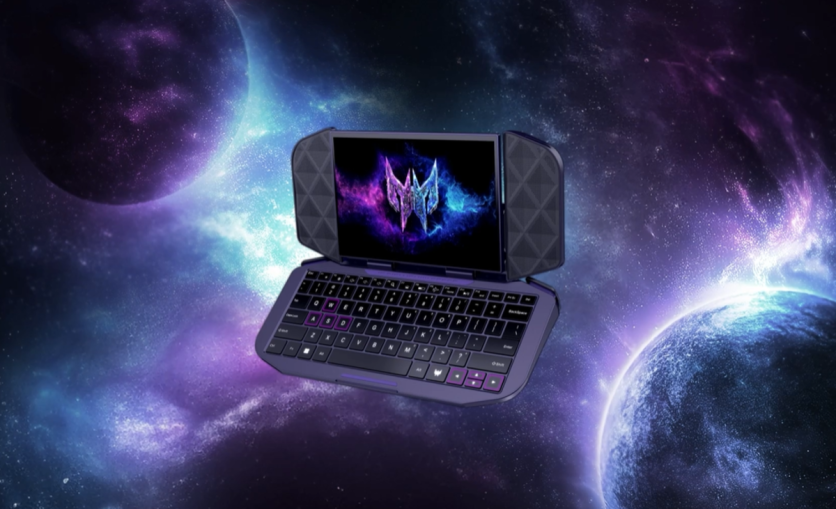
Acer also showed Project DualPlay Mini, an 8-inch concept device that flips between gaming handheld and miniature laptop configurations via a swivel hinge, with a physical keyboard for FPS games — but explicitly as a concept with no confirmed production timeline.
Packard Bell Is Back and It Brought a Turntable
The final segment of Acer's press conference produced the most genuinely surprising announcement of IFA 2026's Media Days: the formal resurrection of Packard Bell, timed to the brand's 100th anniversary in 2026, as documented in the Packard Bell centennial relaunch release.
Packard Bell was founded in 1926 in Los Angeles by Léon Packard and Herbert Bell as a consumer radio manufacturer. It moved through color televisions and then PCs to become one of the dominant household computing brands in European markets through the 1990s — particularly strong in France, Germany, and the Netherlands. Acer acquired the brand in 2008 and wound it down by 2013. The brand lay dormant for 13 years before this morning's revival.
The revived Packard Bell operates under the slogan "Tech it easy" with a new constellation logo that embeds the letters "P" and "B." The strategy has shifted entirely away from PC hardware aimed at power users: the new Packard Bell is a European lifestyle technology brand targeting accessibility, bold color (orange, purple, green, yellow, cyan), and affordable pricing. Acer EMEA Marketing VP Valérie Piau presented the relaunch, noting: "People need technology that helps them study, work, and stay in touch, all at a fair price."
The "Dot" launch lineup:
DotBook — A 14.5-inch everyday laptop designed for browsing, streaming, and productivity. Available in EMEA from November 2026 starting at €499 (approximately $578 USD).
DotLoop — The lineup's standout: a suitcase-style vinyl turntable with a 1970s aesthetic, built-in speakers, RGB lighting, Bluetooth 5 wireless connectivity, and voice control. Available in EMEA from September 2026 starting at €149 (approximately $173 USD; approximately £130, or about $175 USD).
DotTune — A portable Bluetooth speaker in multiple bold colors, available in EMEA from September 2026 starting at €34.99 (approximately $41 USD).
DotLine — A 4G feature phone with a 2.8-inch IPS display, 2MP camera, and approximately two weeks of battery life, in four colors. Available November 2026 starting at €69 (approximately $80 USD).
DotLook — Audio glasses starting at €99 (approximately $115 USD) or £90 (approximately $121 USD) in UK, available from September 2026.
DotBass — Headphones from €29 (approximately $34 USD). DotCombo — Keyboard-and-mouse bundle from €39 (approximately $45 USD). DotShine — A ring light for content creators from €39 (approximately $45 USD).
The initial range targets EMEA markets from September 2026. No US availability has been announced.
Aspire G 3D 16: Glasses-Free 3D With AMD Power
The Aspire G 3D 16 (model AG3D16-81M) is Acer's most powerful implementation of its SpatialLabs glasses-free 3D display platform, pairing the AMD Ryzen AI Max+ 395 processor (with up to 126 TOPS of AI compute) with AMD Radeon 8060S integrated graphics and up to 128GB of LPDDR5X-8000 unified memory, as detailed in the Aspire G 3D 16 announcement.
The 3D effect works through dual eye-tracking cameras integrated into the display bezel. Those cameras track the viewer's eye position in real time, allowing the display to dynamically adjust the parallax offset that creates perceived depth without glasses — an autostereoscopic approach distinct from earlier fixed-lenticular designs like the Nintendo 3DS. In 3D mode, the panel's 3840×2400 resolution adjusts to 1920×2400 per eye. The SpatialLabs 3D Hub app handles 2D-to-3D conversion for photos, video, and supported games.
Acer presented architectural visualization and medical education as professional use cases. Availability and pricing will be announced separately.
Other IFA 2026 Announcements
Predator ES Thunder Pro e-scooter: The Predator brand extended into off-road electric mobility with a 500W motor (1,600W peak), 32Nm of torque, 10-inch off-road tires, traction control, up to 70 km (43 miles) of claimed range, and RGB lighting.
Acer Medical: An unusual segment for a consumer product keynote — Dr. Alan Lan, head of Acer Healthcare, presented on the company's three-year effort to build an AI-driven medical services division aimed at reducing clinical workload and expanding diagnostic tool access.
Swift laptops, Iconia tablets, PD163Q P3 triple monitor, Connect D5P 5G dongle: Additional products announced with specifications to be released in full.
Is What Monitors Did Acer Announce at IFA 2026 Worth an Upgrade?
The eight monitors announced span a wider range of use cases and price points than any prior Acer monitor announcement at a single show. The XB253Q U1 at $1,099.99 is aimed at the esports professional and committed competitive enthusiast; the XB273K V7 at $449.99 brings 4K gaming to a price point many buyers can reach. The ePaper monitor addresses a genuine gap in the premium display market — a high-resolution, power-efficient display for professionals who work outdoors or in document-heavy environments. The Nitro XV275U Z2 at $329 offers genuine multi-mode flexibility at a moderate price.
All availability dates are Q4 2026 for the value tier and Q1 2027 for the flagship monitors. Buyers already considering an upgrade in the current cycle should weigh whether waiting for Q1 2027 delivers meaningfully better value — for most, the 1080p 1000Hz product alone represents a genuine milestone rather than an incremental upgrade.
Context: Acer's 50 Years
Founded in 1976 as Multitech in Hsinchu, Taiwan, Acer rebranded in 1987 and has grown to operate in more than 160 countries. The IFA 2026 showcase — gaming, sustainability, AI workstations, displays, lifestyle brands — signals a company not retreating to a single identity but pushing across every major consumer segment simultaneously.
Microsoft Corporate Vice President Mark Linton joined Acer Chairman and CEO Jason Chen on stage: "Microsoft is 50 as well, so we share that in common. We go back many decades." Intel executive Sam Gao added that the Acer-Intel partnership has spanned his 20-year career at the company.
IFA 2026 opens to the public on September 4 and runs through September 8, with Acer's full lineup on the show floor in Berlin.
Currency conversions in this article are approximate, based on exchange rates at time of publication.
Frequently Asked Questions
Is the Acer Predator XB253Q U1 the world's fastest gaming monitor at 1080p?
Yes, based on Acer's announcement this morning and independent corroboration from Engadget and other outlets. The XB253Q U1 is the first 1080p monitor to reach a native 1,000Hz refresh rate. Acer's previous 1,000Hz display — the XB273U F6 from CES 2026 — achieved that rate only at 720p resolution. The XB253Q U1 is priced at $1,099.99 in North America and is scheduled for Q1 2027 availability.
What happened to Packard Bell, and why is it coming back now?
Packard Bell was a major consumer electronics and PC brand from 1926 through the 1990s, particularly dominant in European markets. Acer acquired it in 2008 and discontinued the brand by 2013. In 2026 — the brand's 100th anniversary — Acer revived it as a European lifestyle technology brand under the "Tech it easy" identity, repositioning it away from PCs and toward affordable everyday electronics: a laptop, a vinyl turntable, headphones, a feature phone, audio glasses, and accessories. Initial availability is in EMEA markets from September 2026 onward; no US launch has been announced. See the Packard Bell centennial relaunch announcement for the full product details.
Can the Acer Vero 16 CPU be upgraded by the user?
Acer has committed to supporting processor upgrades "for at least two generations" on the Vero 16, meaning the company will supply future-generation Intel CPU/motherboard combinations that fit the existing chassis. The bottom cover opens without tools via a latch, and the battery and SSD are also user-replaceable. Hands-on reviewers from Gizmodo and Tom's Guide confirmed that this commitment is genuine and represents a notable departure from industry practice among major OEMs. UK pricing is approximately £1,599 (approximately $2,155 USD); EMEA availability is Q1 2027. See the Vero 16 official announcement for full specifications.
What makes the Acer SFF RTX Spark different from a regular gaming desktop for AI workloads?
The SFF RTX Spark is built around NVIDIA's RTX Spark Superchip, which uses the same NVLink-C2C interconnect technology NVIDIA originally developed for data center supercomputers. Unlike a conventional desktop, where the GPU and the processor communicate through a PCIe bus and maintain separate memory pools, the RTX Spark Superchip integrates a 20-core Grace CPU and a 6,144-core Blackwell GPU on a single package with a shared 128GB LPDDR5X memory pool. That unified architecture allows large AI models — up to 120 billion parameters — to reside entirely in local memory accessible to the GPU without data-transfer bottlenecks. See the Acer SFF RTX Spark announcement. Pricing and availability have not been announced.

-
 C114 Communication Network
 -
 Communication Home
