
 Search

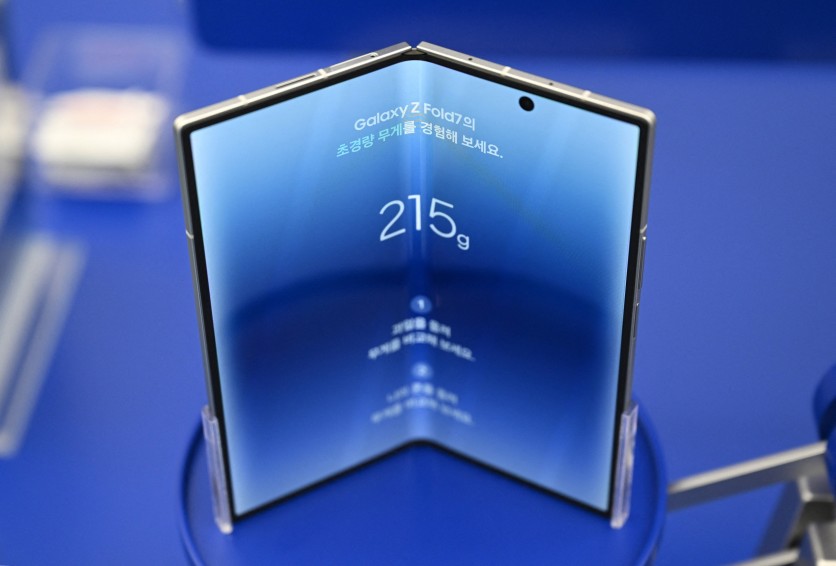
The Samsung Galaxy Z Fold7 smartphone is displayed at a Samsung store in Seoul on July 10, 2025. Samsung unveiled on July 9, the new generation of its foldable smartphone, the Z Fold7, dramatically slimmed down in an attempt to jumpstart this still-niche market. JUNG YEON-JE/AFP via Getty Images
The ultra-thin glass (UTG) cover on Samsung's new "Wide" foldable — the passport-shaped addition to this year's lineup — is reportedly more than 30% thicker than the model it's most often compared with, a change said to be meant to reduce the display crease and improve drop durability. The detail comes from leak coverage, originating with a ZDNet Korea report; Samsung has confirmed none of it.
Samsung is preparing three foldables for 2026, according to those reports: the clamshell Galaxy Z Flip 8, the book-style Galaxy Z Fold 8 Ultra (the direct successor to last year's Z Fold 7), and a new wider, shorter "passport-form" model most often referred to as the Galaxy Z Fold 8 (Wide). The naming is still reportedly being finalized — some leaks suggest the wide model may simply carry the Galaxy Z Fold 8 name. The Wide's appeal is its proportions, closer to a 4:3 shape for landscape content and split-screen use, and it is widely seen as Samsung's answer to Apple's first foldable iPhone, expected around September 2026.
The Glass Is Where the Two Book-Style Models Diverge
The Wide is said to use a UTG about 60 micrometers thick, while the Fold 8 Ultra reportedly sticks with 45μm — the same spec Samsung used on the Z Fold 7 — making the Wide's glass more than 30% thicker.
Why that matters takes a little physics. The ultra-thin glass laminated over the bendable OLED is what gives a foldable its glass-like feel and adds the rigidity that suppresses the crease and helps the screen survive drops. But the strain a sheet of glass undergoes at a given bend radius rises with its thickness, so a thicker cover is less willing to flex and more prone to fracture under repeated folding. Thicker glass, in other words, buys a flatter, tougher screen at the cost of foldability — which is exactly the tension foldable engineering has always had to manage.
That tradeoff is why Samsung appears to be treating the Wide as a controlled experiment, applying the new thickness to just one model rather than both. The company's own history shows how delicate the balance is: it once pushed its foldable UTG as thin as 30μm on the 2024 Z Fold 6, reversed course with 45μm on the Z Fold SE later that year, and carried that 45μm through the Z Fold 7. Pushing back up to 60μm on a single model is a way to test the thicker glass in real hands before committing to it broadly.
Read more: CES 2026: Samsung's Showcase Unveils Crease-less Display That Is Speculated for the iPhone Fold
A Test Bed for the Post-Apple Fold 9
If the 60μm glass performs well on the Wide, reports suggest Samsung may extend it to the 2027 Galaxy Z Fold 9 — making this year's model effectively a proving ground for the next generation. The timing is what gives that its weight: the Fold 9 would likely be Samsung's first foldable to launch after Apple's foldable iPhone, the point at which crease quality stops being a Samsung-versus-Samsung comparison and becomes a head-to-head against a brand-new rival. Validating the thicker glass on a lower-volume model first lowers the risk of betting the post-Apple flagship on an unproven spec.
That low volume is built into the plan. Samsung has reportedly set a shipment target of 5 to 6 million units across the three new foldables through year-end — roughly the mid-one-millions for the Flip 8, around 2 million for the Fold 8 Ultra, and 1.5 to 2 million for the Wide — placing more weight on the two book-style models than on the Flip, whose predecessor sold sluggishly. Even so, the plan is conservative next to the roughly 6 million foldables Samsung shipped after launching last year's lineup.
Who Makes the Glass
Industry reports describe a UTG supply chain split by model: for the Flip series, suppliers including Ikonics and UTI handle front-end work such as slimming while Samsung does the back-end strengthening in-house; for the Fold and Wide, Dowoo Insys handles both stages. The glass mother sheets come from suppliers including Corning and Schott, and Samsung Display makes the foldable panels. That division is long-standing: the Fold line has historically paired Schott glass with Dowoo Insys processing, while the Flip line has leaned on Corning glass with separate back-end partners.
Samsung is expected to unveil the lineup at an Unpacked event in late July, rumored for July 22. As with everything here, the specifics are pre-announcement leaks and could change when Samsung takes the stage.
Read more: Samsung Galaxy Z Fold 8 Unpacked Set for July 22: New Wider Fold Joins Z Flip Lineup
Frequently Asked Questions
What is ultra-thin glass in foldable phones?
Ultra-thin glass (UTG) is a flexible glass layer, measured in tens of micrometers, laminated over a foldable phone's bendable OLED panel. It gives the screen a glass-like feel rather than a soft-plastic one and adds rigidity that helps reduce the crease and resist impacts, while still being thin enough to fold.
Why does a thicker UTG reduce the crease but risk breaking?
A thicker glass cover is stiffer, so it resists deforming into a visible crease and better absorbs drops. But the strain glass experiences when bent rises with thickness, so a thicker sheet is less able to flex and more likely to fracture under repeated folding. That tradeoff is why Samsung is reportedly testing the thicker 60μm glass on only one model.
What is the Galaxy Z Fold 8 "Wide"?
According to leaks, the "Wide" is a new passport-shaped foldable in Samsung's 2026 lineup with proportions closer to 4:3, suited to landscape video and split-screen use. It sits alongside the clamshell Z Flip 8 and the taller Z Fold 8 Ultra, and is widely seen as Samsung's answer to Apple's first foldable iPhone. Its final name has reportedly not been settled.
When is Samsung's 2026 foldable Unpacked?
Samsung is expected to unveil its 2026 foldable lineup at an Unpacked event in late July, with leaks pointing to July 22 in London. Until then, the glass specs, shipment targets, and even the models' names remain unconfirmed rumors.

-
 C114 Communication Network
 -
 Communication Home
