
 Search

Samsung.com
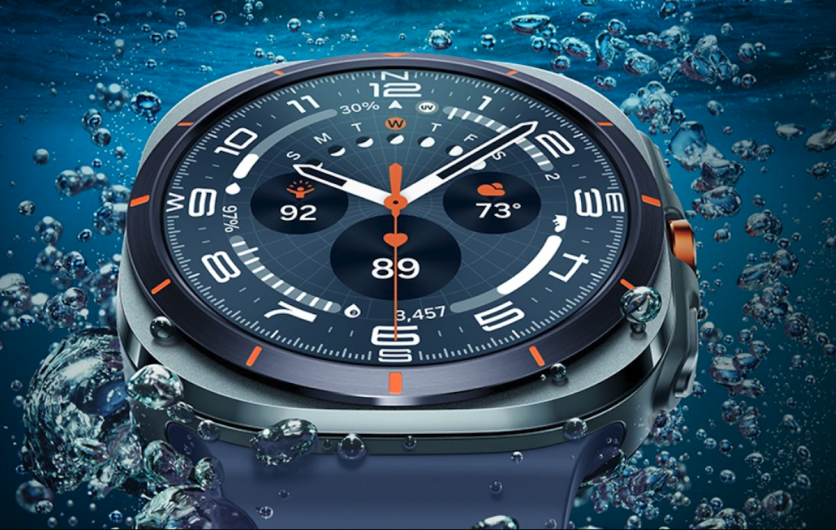
Samsung's Galaxy Watch 9 and Galaxy Watch Ultra 2 have cleared both FCC certification in the United States and CMIIT approval in China, according to regulatory database filings reported June 15 — the clearest public signal yet that both devices are on track for a Galaxy Unpacked event in London, reported for July 22. The FCC filings list the 40mm Galaxy Watch 9 under model numbers SM-L340 and SM-L345, the 44mm variant as SM-L350 and SM-L355, and the Galaxy Watch Ultra 2 cellular model as SM-L715.
What is absent from both databases is the Galaxy Watch 9 Classic — with no certification filing and no model number sighting in either the FCC or CMIIT records. That absence is now the single most consequential piece of information in these filings for buyers who have been holding out for the rotating-bezel variant.
No Classic Model Numbers in FCC or CMIIT Databases
The Galaxy Watch Classic line dates to the Watch 4 generation and has shipped every subsequent year, including the Galaxy Watch 8 Classic, which launched in July 2025. Its design signature — a physical rotating bezel that functions as a navigation crown — has distinguished it from the standard model and served as a nod to traditional watch aesthetics within an otherwise software-first product category.
The complete absence of Classic model numbers from both the FCC and CMIIT databases strongly indicates Samsung is not planning to launch one in this cycle. Devices reach regulatory certification only when hardware has been finalized for commercial production; the window for a Classic to appear and still ship alongside the Watch 9 and Ultra 2 at a July event has all but closed. Sammy Fans, which reported the combined FCC and CMIIT update on June 15, noted the Classic's absence explicitly and said the presence of the Ultra 2 in the lineup makes a Classic "less likely to show up this year."
Samsung has not officially confirmed the Classic's discontinuation, and it is possible — though increasingly unlikely — that a later announcement could follow. For buyers who specifically want a rotating bezel, that window appears to have effectively closed.
Read more: Smartwatch Market Hits 37M Units in Q1: Fitness Wristbands Shrink as Galaxy Watch 9 Nears
What FCC and CMIIT Certification Means for a Smartwatch Launch
Regulatory certification through the FCC and CMIIT is not a product announcement, but it is a reliable signal of where a product stands in its development cycle. The FCC tests and approves devices for radio frequency emissions before they can be sold in the United States; CMIIT performs the equivalent function for the Chinese market. Devices typically reach these databases only after hardware development is complete and mass production is underway or imminent.
For Samsung's summer lineup, the timing of these filings fits the company's established pre-launch cadence. The Galaxy Watch 8 was announced July 9, 2025, and began shipping July 25, 2025. With Galaxy Unpacked reported for July 22, the current filings land approximately five to six weeks before the expected announcement date — consistent with prior generations.
The 3C charging certification, which appeared in an earlier wave of filings, confirmed 10W wired charging at 5V/2A for both models — the same specification as the Watch 8 series. Samsung is not prioritizing faster charging this generation.
Galaxy Watch Ultra 2: Larger Battery, 5G, and a New Chip
The Galaxy Watch Ultra 2 arrives with a reported hardware profile that draws a sharper line between it and the standard Watch 9 than any prior Samsung smartwatch generation has managed.
The device is reported to carry a battery of approximately 784 mAh — compared to 590 mAh in the original Galaxy Watch Ultra, which launched in 2025, representing a roughly 35 percent increase. Combined with a more efficient chip, that capacity could push the Ultra 2 toward the extended multiday endurance that outdoor sport users — currently underserved by Samsung's lineup relative to Garmin — specifically need.
The Ultra 2 is also reported to be Samsung's first smartwatch with 5G support. This is not full 5G in the smartphone sense; the Snapdragon Wear Elite chip supports 5G RedCap — Reduced Capability — a narrowband 5G variant designed specifically for wearables and IoT devices. RedCap delivers lower latency and lower power draw than full 5G, allowing the watch to handle calls, messages, and data streams independently from a paired phone, without the battery penalty that conventional 5G would impose on a device of this size.
Snapdragon Wear Elite: What the Chip Change Actually Means
The Ultra 2 is expected to debut Qualcomm's Snapdragon Wear Elite, announced at MWC 2026 in Barcelona. Every Galaxy Watch to date — from the original in 2018 through the Watch 8 in 2025 — has used Samsung's in-house Exynos silicon. The Snapdragon Wear Elite represents the first time Qualcomm silicon is expected to power a Galaxy Watch at the Ultra tier.
The chip is built on a 3nm process — the same node as the Exynos W1000 in the Watch 8 — but the architecture is substantially different. The Snapdragon Wear Elite introduces a big.LITTLE design for the first time in Qualcomm's wearable lineup: one prime core running at 2.1 GHz handles demanding tasks, while four efficiency cores at 1.95 GHz handle background workloads. Qualcomm claims this delivers 5x single-core CPU performance versus its previous Snapdragon W5+ Gen 2 wearable chip.
The most significant addition is a dedicated Hexagon neural processing unit capable of running AI models with up to 2 billion parameters at 10 tokens per second, directly on the device. A second, lower-power ambient NPU handles always-on tasks — keyword detection, activity recognition — without drawing down the main chip. This dual-NPU architecture is the technical foundation for the on-device AI health coaching features Samsung has previewed for the next Galaxy Watch generation: recovery scoring, sleep analysis, and personalized fitness guidance that can function in airplane mode without a cloud round-trip.
Whether the standard Galaxy Watch 9 also receives the Snapdragon Wear Elite or stays on an updated Exynos chip remains unconfirmed. Sammy Fans and multiple other outlets have reported both models will use the new Qualcomm chip, while a Notebookcheck leak attributed to tipster Jason C suggested the Watch 9 would retain the Exynos W1000 and only the Ultra 2 would move to Snapdragon — a split that would create a clearer performance ceiling between the two tiers. Samsung has not officially clarified which model gets which silicon.
Why the Chip Split Matters for Buyers
If the two-chip strategy holds — Exynos W1000 for the Watch 9, Snapdragon Wear Elite for the Ultra 2 — it would mark the first time Samsung has used chip differentiation to distinguish its standard and premium smartwatch tiers. Prior Galaxy Watch generations used the same processor across all models in a given year, with differentiation coming from design, battery size, and durability rating.
A chip boundary would mean the Ultra 2 is not just a premium finish on the same internals. It would also mean the 5G RedCap cellular independence and the full Hexagon NPU capability would be exclusive to the Ultra tier — relevant for buyers who specifically want phone-free operation or the most capable on-device AI features. If both models share the Snapdragon Wear Elite, that distinction collapses, and the Ultra 2's case rests primarily on its larger battery and rugged construction.
Read more: Samsung Galaxy Z Fold 8 Unpacked Set for July 22: New Wider Fold Joins Z Flip Lineup
What Remains Unconfirmed Before July 22
Samsung has not officially announced the July 22 date, and no official specs have been disclosed for either watch. The Galaxy Watch 9 Classic's absence from regulatory databases is significant evidence but not a confirmed discontinuation. The 784 mAh battery figure comes from component leaks and has not been validated by Samsung. Pricing, final design details, and the software feature set are among the elements the company will hold for London.
What the filings do confirm: two Galaxy Watch models exist, both are hardware-complete and headed for production, neither carries a Classic designation, and Samsung's second major hardware event of 2026 is approaching on schedule.
Frequently Asked Questions
Will there be a Galaxy Watch 9 Classic?
Based on regulatory filings published as of June 15, 2026, no Classic model number has appeared in either the FCC database in the United States or the CMIIT database in China. Devices reach these databases only when hardware development is complete. The absence of a Classic model number at this stage means one is very unlikely to launch alongside the Watch 9 and Ultra 2 in July. Samsung has not officially confirmed a discontinuation, but the practical window for a Classic to appear in time for a July launch has all but closed.
What chip will the Galaxy Watch Ultra 2 use?
The Galaxy Watch Ultra 2 is expected to debut Qualcomm's Snapdragon Wear Elite, announced at MWC 2026 in Barcelona. Qualcomm confirmed Samsung as a launch partner for the chip. The Snapdragon Wear Elite is built on a 3nm process with a big.LITTLE architecture and a dedicated Hexagon neural processing unit capable of running AI models up to 2 billion parameters directly on the device — the first Qualcomm wearable chip to include dedicated AI silicon of this kind.
What is the Samsung Galaxy Watch 9 release date?
Samsung has not officially confirmed a launch date. Reports from South Korean outlets cite a Galaxy Unpacked event in London, reported for July 22, 2026, where the Galaxy Watch 9, Galaxy Watch Ultra 2, and Samsung's new foldable lineup are expected to be announced. Based on Samsung's prior cadence, retail availability would follow approximately two to three weeks after announcement.
What makes 5G on the Galaxy Watch Ultra 2 different from LTE?
Prior Galaxy Watch cellular models used LTE for independent connectivity. The Ultra 2 is reported to use 5G RedCap — Reduced Capability — a narrowband 5G standard designed for wearables and IoT devices rather than smartphones. Unlike full 5G, RedCap prioritizes low power draw alongside lower latency, making cellular independence more practical in a battery-constrained device. If confirmed, the Ultra 2 would be the first Galaxy Watch to support this standard, enabling phone-free data and call handling with less battery impact than conventional 5G connectivity.

-
 C114 Communication Network
 -
 Communication Home
