
 Search

store.steampowered.com
Valve's two long-awaited hardware products — the Steam Machine living-room console and the Steam Frame standalone VR headset — are closer to reaching consumers than at any point since they were announced in November 2025. According to a report from GameGPU published June 13, Valve plans to announce retail pricing and open pre-orders between June 22 and 30, and benchmark review hardware has already landed in the hands of selected media and content creators. A separate leak, published June 14 by Steam Hardware Updates, claims the price announcement is set for June 23 at 10 a.m. PT, with reservations opening the following week on June 30. Neither date has been confirmed by Valve. What Valve has confirmed — in a June 4 blog post — is that both the Steam Machine and Steam Frame are "shipping this summer."
What that means for buyers: if you are holding off a console, PC upgrade, or VR headset purchase pending Valve's pricing, the next ten days are the most signal-rich since these products were announced. A review embargo reportedly lifts after June 23, which means independent evaluations should be publicly available shortly after that date.
Steam Frame Pallets Arrive in US Warehouses
The clearest physical evidence that both launches are imminent arrived June 12, when supply chain observer Brad Lynch spotted pallets of Steam Frames logging into Valve's US warehouse network via the import intelligence platform ImportYeti. UploadVR confirmed the sighting alongside Valve's official summer shipping commitment. When the second-generation Steam Controller was spotted through the same tracking method, it reached buyers roughly three weeks later — a pattern that has led analysts to suggest the Steam Frame could launch near the start of summer rather than the end.
Valve had originally targeted the first half of 2026 for all three hardware products — the Steam Machine, Steam Frame, and new Steam Controller. The Steam Controller launched first, going on sale May 4 at $99. The two larger products have faced a harder road, and understanding why requires understanding the single external factor that has derailed virtually every piece of gaming hardware released in 2026.
How the DRAM Crisis Has Reshuffled Valve's Pricing
The reason neither the Steam Machine nor the Steam Frame carries a confirmed price tag is one structural problem: a global DRAM shortage driven by AI data center infrastructure spending has made memory — the primary cost variable in both devices — dramatically more expensive than it was when Valve announced them.
DRAM contract prices rose more than 170 percent year-over-year between Valve's November 2025 announcement and mid-2026, with Samsung and SK Hynix reallocating production capacity toward high-margin AI server memory rather than the consumer-grade DDR5 and LPDDR5X that goes into gaming hardware. AI infrastructure alone is projected to consume roughly 20 percent of global DRAM production in 2026, according to industry analysts, permanently competing with consumer electronics for the same fabrication capacity.
The Steam Machine carries 16 GB of DDR5 system memory and 8 GB of GDDR6 graphics memory — both affected categories. Valve engineer Lawrence Yang told PC Gamer the company is "bummed" but "not the only one in this boat." For the Steam Frame, the pressure is sharper: the headset's 16 GB of LPDDR5X unified memory made it the most memory-intensive standalone VR headset on the market when announced, and that specification has become the single largest pricing risk in the entire lineup.
Valve had originally aimed to sell the Steam Frame below the $999 full-kit price of the original Valve Index. A Czech retailer database visible in January 2026 listed the 512 GB model at roughly $950 and the 2 TB model at approximately $1,070 — regional estimates that have not been confirmed by Valve. Hardware analyst Moore's Law Is Dead estimated the Steam Machine in May at $600 to $650. A more recent unverified leak from a first-time source cited a potential $1,500 Steam Machine price if component costs are fully passed to buyers, reflecting a 50 percent increase over Valve's original target of around $1,000. The range reflects genuine uncertainty: no single estimate carries confirmed sourcing. What Valve has said, in the words of the engineer Lawrence Yang, is that pricing will be announced when the company has numbers it can "confidently" stand behind.
The Steam Deck OLED received a price increase of more than $200 in May 2026 for the same reason, giving buyers a concrete data point for how the DRAM crisis is flowing through Valve's product line.
Read more: Steam Machine Could Launch Before June 29: FCC Manual Dates Mirror Controller Pattern
Why Valve Refuses to Subsidize Hardware — and Why That Now Makes Sense
Valve has described the Steam Machine's pricing philosophy as "PC pricing," meaning the company will not sell the hardware below cost the way Sony and Microsoft have traditionally done with consoles. Phil Spencer confirmed in 2022 that Microsoft subsidizes each Xbox by $100 to $200 at launch, with the expectation that component costs will fall over a console's lifecycle and allow the company to recover the loss through game sales and subscriptions.
The DRAM crisis has inverted that expectation. AI infrastructure spending has structurally reallocated semiconductor fabrication capacity in a way that IDC has characterized as potentially permanent rather than cyclical. Xbox's own internal memo, confirmed in June 2026, warned that storage costs have quadrupled since fall 2025 and could reach five times their pre-shortage levels by the 2027 holiday season — which is exactly the window when the next generation of traditional consoles is expected to launch. The console subsidy model depends on component costs declining predictably; if that decline no longer happens on schedule, manufacturers who priced their hardware on the assumption of declining costs face structural losses they cannot recover. Valve, by declining to subsidize from the start, avoids inheriting that exposure entirely.
Steam Machine: What the Specs Actually Mean at Your Television
The Steam Machine is a compact 6-inch cube running SteamOS — Valve's Arch Linux-based gaming operating system — on a semi-custom AMD platform that is deliberately not a single-chip design. Unlike the Steam Deck, which uses an integrated AMD APU combining CPU and GPU on one die, the Steam Machine separates its compute elements: a 6-core, 12-thread AMD Zen 4 CPU running up to 4.8 GHz at a 30W thermal budget, plus a discrete semi-custom AMD RDNA 3 GPU with 28 compute units, 8 GB of GDDR6 VRAM, and a GPU power envelope of roughly 110 W. This two-chip architecture is what allows the system to deliver six times the compute performance of the Steam Deck within a compact chassis running on a 200W internal power supply.
In practical terms, the 28-CU RDNA 3 GPU is roughly equivalent to AMD's mobile RX 7600M. That places it below the PlayStation 5's GPU in raw performance, which means demanding titles at native 4K require AMD FSR 3 upscaling — typically from a 1440p-class rendered resolution — to reach 60 fps. At 1080p, the machine handles essentially any title without upscaling assistance. Valve's Steam Machine Verified program sets the floor at 30 fps at 1080p, a conservative threshold that covers the broadest possible slice of the Steam library rather than targeting cutting-edge performance.
The operating system delivers an advantage that raw benchmark numbers do not capture. SteamOS uses open-source AMD RADV Vulkan drivers that outperform Windows AMD drivers in a meaningful subset of titles. The system also ships with Proton, Valve's compatibility layer built on a patched version of the Wine translation software that converts Direct3D calls to Vulkan in real time, enabling the vast majority of Steam's Windows library to run on Linux without any user configuration.
The anti-cheat gap. Not every major title runs on SteamOS. Games protected by kernel-level anti-cheat systems — including Valorant, League of Legends, Call of Duty, Battlefield 6, all EA Sports titles, and GTA V Online — cannot currently run on SteamOS because their anti-cheat software requires direct kernel access that Linux does not provide in the same way Windows does. Buyers who primarily play those titles should verify current compatibility before committing to a purchase.
Steam Frame: The Engineering Architecture of a Streaming-First VR Headset
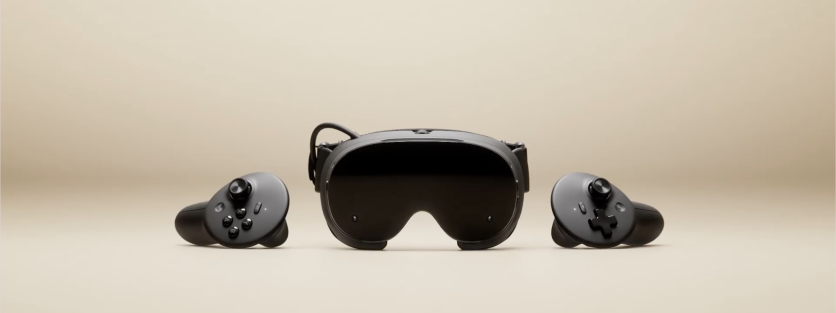
The Steam Frame is built around a design principle Valve calls "streaming-first," which is not marketing language but a specific set of engineering decisions. Understanding those decisions explains both the headset's advantages and its most important limitation.
The headset uses a Qualcomm Snapdragon 8 Gen 3 system-on-chip — an ARM64 processor — with 16 GB of LPDDR5X unified memory, dual 2,160×2,160-per-eye LCD panels viewed through pancake lenses, and refresh rate support from 72 to 144 Hz (with 144 Hz listed as experimental). It includes four monochrome passthrough cameras and infrared emitters for inside-out positional tracking using simultaneous localization and mapping, and ships with a bundled Wi-Fi 6E USB adapter that provides a dedicated 6 GHz wireless link between the headset and a host PC, bypassing the local area network to reduce latency and avoid congestion.
The dual-radio architecture. The Steam Frame uses two Wi-Fi 7 radios simultaneously — one on the 5 GHz band for general internet traffic and one on the 6 GHz band exclusively for VR streaming data between the headset and a host PC. That band separation is the technical basis for Valve's wireless PCVR performance claims: by isolating game data on the 6 GHz channel, the system avoids the packet collisions and variable latency that affect headsets relying on shared 5 GHz home networks.
Foveated rendering. The headset includes eye tracking hardware that feeds real-time gaze data to the GPU. The GPU uses that data to render the portion of the display where the user's fovea is pointed at maximum resolution while reducing quality in the surrounding peripheral regions. In a standalone headset running on a mobile chip, this is not a luxury feature but an engineering necessity: the Snapdragon 8 Gen 3 cannot sustain 2,160×2,160 per eye at 90 Hz across the full frame at high quality. Foveated rendering concentrates GPU budget precisely where the visual system is sensitive to it, compensating for the chip's mobile power budget relative to a desktop VR GPU.
The compatibility stack on an ARM chip. Running Steam's Windows-native library on an ARM-based headset requires three translation layers operating simultaneously. Proton handles Windows-to-Linux compatibility by translating Direct3D graphics calls to Vulkan. FEX-Emu emulates x86-64 instructions on the ARM64 processor for games that lack native ARM builds. Lepton — a fork of the Android compatibility layer Waydroid — provides an Android Open Source Project runtime for APKs, primarily targeting games built for competing standalone headsets. The overhead from stacking Proton and FEX-Emu means standalone performance for demanding x86 Windows titles will be meaningfully lower than the headline GPU specifications suggest; PC streaming over the dedicated 6 GHz link is the intended path for those titles.
TMR controllers. The Steam Frame's motion controllers use tunneling magnetoresistance sensors in their analog sticks. Both TMR and the more widely used Hall Effect technology are contactless magnetic sensing methods — both resistant to stick drift — but they operate differently at a quantum level. A TMR sensor measures changes in electrical resistance as electrons quantum-tunnel through a nanometer-thin insulating barrier between two magnetic layers, with resistance varying based on the relative orientation of the magnets. A Hall Effect sensor reads position from voltage changes in a conductor exposed to a magnetic field. TMR sensors offer roughly ten times the positional resolution of Hall Effect sensors at substantially lower power consumption — approximately 100 microamps versus 4 milliamps. Sony, Microsoft, and Nintendo currently ship potentiometer-based sticks in their first-party controllers; none has adopted Hall Effect or TMR natively at scale. The Steam Frame would be the first major first-party gaming product to launch with TMR thumbsticks from day one.
Battery life. The Steam Frame's 21.6 Wh battery supports approximately one hour of standalone gameplay per charge. This is the headset's most significant hardware limitation in untethered mode, and it is a direct consequence of powering a high-resolution display and mobile SoC without the thermal headroom available in a wired headset. For PC streaming sessions, the headset charges via USB-C while in use, making extended play sessions viable when a host PC is nearby.
Read more: Steam Frame VR Headset Targets Meta Quest 3 With Double RAM and Foveated Streaming
Steam Frame vs. Meta Quest 3: Where the Specs Diverge
On published specifications, the Steam Frame exceeds the Meta Quest 3 in every major measurable category: higher per-eye resolution (2,160×2,160 versus 2,064×2,208), double the RAM (16 GB versus 8 GB), a newer wireless standard (Wi-Fi 7 versus Wi-Fi 6E), a higher peak refresh rate (144 Hz versus 120 Hz), and TMR controllers versus the Quest 3's standard analog sticks.
The Meta Quest 3 holds advantages that specifications do not capture: a more mature standalone software ecosystem, broader third-party VR app support, a confirmed retail price, and meaningfully longer battery life per charge. The Steam Frame also does not support stereoscopic 3D content at launch — a gap Valve has acknowledged and described as "on our list" for a future update.
Whether the specification advantages translate into a better experience depends significantly on how a buyer intends to use the device. For PC gaming streamed wirelessly from a capable gaming rig, the Steam Frame's dual-radio architecture and Proton compatibility give it access to a library that the Quest 3 cannot match. For purely standalone use on lighter titles, the one-hour battery life and the performance overhead of the ARM compatibility stack will be the defining constraints.
What to Watch Before July
Based on available intelligence — Valve's June 4 summer shipping confirmation, Steam Frame warehouse arrivals spotted June 12, benchmark hardware in reviewer hands, and leaked dates pointing to June 23 and June 30 — the two weeks ahead carry the most signal of any period since these products were announced last November. If the June 23 price announcement holds, independent reviews should publish the same day or shortly after. Pre-order reservations, if the June 30 date is accurate, would open within two weeks of this writing.
Buyers weighing a decision should note that the Steam Controller sold out rapidly enough after its April 27 price announcement that Valve implemented a reservation queue before the May 4 shipping date. A similar dynamic for products with far higher anticipation is plausible. The official Steam store and Valve's news channel are the only authoritative sources for confirmed dates and pricing.
Frequently Asked Questions
When will Valve open pre-orders for the Steam Machine and Steam Frame?
According to a GameGPU report published June 13, Valve plans to open reservations between June 22 and 30. A separate leak from Steam Hardware Updates, published June 14, claims the price announcement is set for June 23 at 10 a.m. PT, with pre-orders opening June 30. Neither date has been confirmed by Valve, which has publicly committed only to a summer 2026 shipping window for both products.
How much will the Steam Machine cost in 2026?
No official price has been announced. Published estimates range from roughly $499 at analyst consensus for a base configuration to $600–$650 per hardware analyst Moore's Law Is Dead in May 2026. A Czech retailer database from January 2026 listed the 512 GB model at approximately $950 and the 2 TB model at around $1,070. A June 14 unverified leak from a first-time source cited a possible $1,500 figure reflecting full pass-through of component cost increases. The uncertainty is structural: the DRAM shortage that caused Valve to delay pricing has made memory costs difficult to forecast, and no single estimate can be treated as authoritative until Valve announces a number directly.
Is the Steam Frame better than the Meta Quest 3?
On paper, yes — the Steam Frame offers higher per-eye resolution, double the RAM, a newer Wi-Fi standard, and TMR controllers that outperform the Quest 3's sticks in positional resolution. It also runs SteamOS with Proton compatibility, giving it native access to Steam's full library for wireless PC streaming. The significant trade-offs are a roughly one-hour standalone battery life versus the Quest 3's longer runtime, the absence of stereoscopic 3D support at launch, and no confirmed retail price as of June 15, 2026. How those factors weigh against the specification advantages depends on how a buyer primarily intends to use the device.
Why can't the Steam Machine run Valorant, Call of Duty, or Battlefield?
These games use kernel-level anti-cheat systems — Riot Games' Vanguard for Valorant, Activision's RICOCHET for Call of Duty, and kernel-mode Easy Anti-Cheat for Battlefield — that require direct access to the Windows operating system kernel. SteamOS, being Linux-based, does not grant the same kernel-level access pathways those systems depend on. As a result, none of these titles are compatible with SteamOS at the Steam Machine's anticipated launch. Valve has previously indicated it is working on the anti-cheat compatibility problem, but buyers who primarily play competitive titles from Riot, Activision, EA, or Rockstar should verify the current compatibility status before purchasing.

-
 C114 Communication Network
 -
 Communication Home
