
 Search

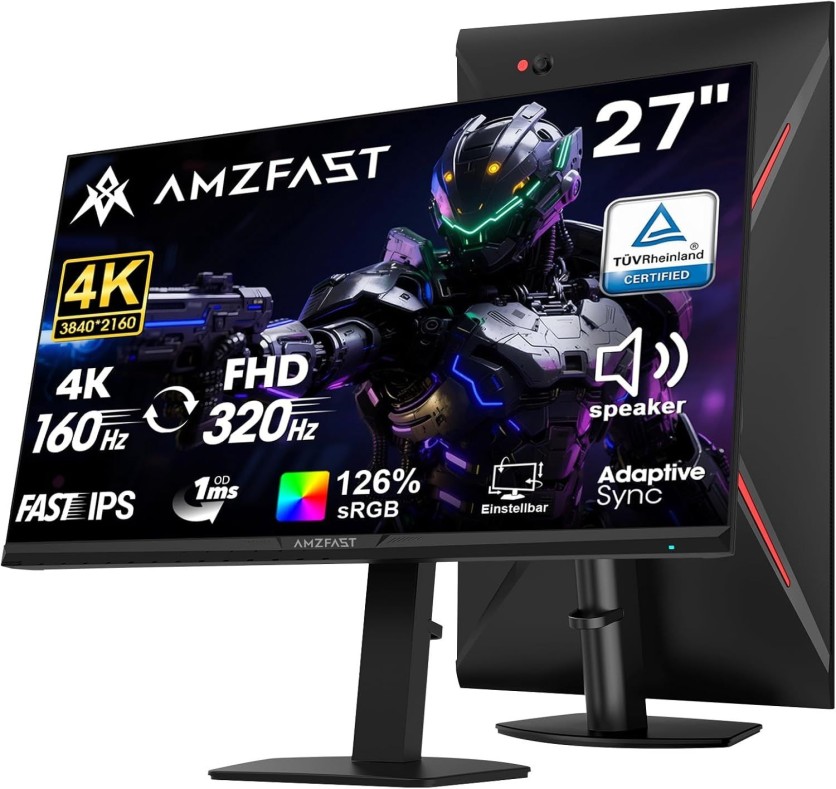
AMZFAST AMZG27F6U AMZFAST
The AMZFAST AMZG27F6U has been on the reviewer's desk for about a week, and honestly, the amount packed into this monitor for roughly $275 is kind of nuts. There's this quirky "dual mode" feature that lets players flip between 4K at 160Hz and Full HD at a blazing 320Hz. Yep, 320Hz on a 27-inch IPS panel—makes one squint, wondering if it's some kind of wizardry or just failing eyesight.
First thing that catches attention? The panel. It measures 27 inches and sports a fast IPS display. For gamers craving vibrant colors, this means the screen actually pops. No fading, no bland junk, and none of that usual weird tint found on cheaper monitors. The response time is wild too, clocking in at an impressive 1ms MPRT. The manual might throw in some technical jargon like "OD" here and there, but who's really keeping track of all that? Late one night, during a 1AM Elden Ring session (because naturally, that's when intense gaming happens), the reviewer's roommate wandered in, eyes half-closed, glanced at the monitor, and remarked, "Dude, this monitor is seriously next-level." Not because the player had suddenly turned into a gaming god, but the sharpness and the buttery smooth visuals caught him off guard.
Then there's HDR 400 with 400 nits brightness—pretty bright for late-night dark rooms without frying the eyeballs. Colors hit roughly 93% of that fancy DCI-P3 gamut, or whatever the marketing says. No one pulled out a colorimeter—come on, who really does? But it looks killer. Rich, natural, and no weird oversaturation like some flashy gimmicky screens that make everything look radioactive. The hues feel spot-on, especially given the price.
Now, the headliner—the dual-mode toggle. The user presses one button and, bam, it switches from crazy detailed 4K 160Hz to ultra-fast 1080p at 320Hz. A lot of fiddling happens between these modes. Gamers jump in and out of sweaty matches like Call of Duty Warzone and then dip into chaotic, flashy titles like Cyberpunk 2077. The jump from 160 to 320Hz feels massive, especially for players who live for twitchy, rapid-fire shooters. That 320Hz mode is basically a crack if chasing the esports edge cases. But if one wants to get lost in sprawling, beautiful worlds, 4K at 160Hz nails it with insane clarity. The reviewer convinced themselves the latter mode offers just enough frame speed for open-world gaming—even if it's not exactly "pro."
Here's where things get interesting: the AI features. Initially, there was skepticism about AI Smart Aim—an AI-driven sniper scope and crosshair overlay. Seemed like marketing fluff. Yet, during a late-night grind on Warzone, that extra crosshair overlay strangely boosted confidence. Didn't magically turn the player into a sharpshooter, but was kind of helpful? Then there's the Owl Sight Shadow Boost—it brightens dark spots without blasting the rest of the scene into oblivion. Huge plus for anyone gaming in basements or dimly lit rooms, especially if eyesight isn't quite 20/20 and needs all the backup possible.
Also included is AI Dynamic Blue Light Reduction. Among those who game late into the night, eye strain is always a battle. This feature smooths things out a bit. It isn't a miracle cure for headaches, but there's a noticeable difference. The monitor is also flicker-free and anti-glare, which becomes a lifesaver when bright afternoon sunlight unexpectedly throws harsh reflections onto the screen (why the user still has those windows is a mystery).
For console gamers wondering whether this is worth a look—the reviewer plugged in a PS5 via HDMI 2.1, complete with all that serious FRL and VRR magic. The result? Holy crap, 4K at 120Hz works just as smooth as advertised. Testing with Ratchet & Clank: Rift Apart turned out silky smooth gameplay with zero frame drops or annoying lag attacks. Sony owners can definitely breathe a sigh of relief here.
Now, of course, not everything's perfect. The OSD (On-Screen Display) buttons are a bit of a pain—fiddly, unforgiving, and a "meh" user experience. Expect some accidental button jab disasters ("Stop messing with my settings! I'm just trying to check brightness!"). Not a big deal unless someone constantly tweaks settings. Brightness at 400 nits works fine indoors, but anyone gaming in a super sunlit room might find it a bit underwhelming compared to higher-end $600+ monitors. Not a dealbreaker unless sitting directly next to a floor-to-ceiling window roasting everything.
Build quality could be better described as "solid but unremarkable." Not cheap plastic-trash, but no wow-factor luxury either. Pretty standard desk fare for the price.
Here's the main takeaway: sheer versatility. Normally, monitors pick a side—either big, gorgeous 4K artistry or lightning-fast, color-bland lower-res performance. This one flips the script by delivering both—not perfectly, but close enough to make the player forget they're compromising much at all. At roughly $275, it feels like stumbling upon some secret menu item—unexpectedly good and flying somewhat under the radar.
For those who enjoy switching gears between cinematic game explorations and manic, high-octane esports battles, this monitor backs up those mood swings. Players can toggle modes, land precision headshots, then marvel at breathtaking landscapes just minutes later.
Straight up? This is a solid contender for anyone needing both 4K gaming and wild 1080p beast mode without breaking the bank. Will it fully dethrone ultra-premium $600+ monitors? Nope, definitely not. But for casual gamers or those who like dabbling, this is downright impressive.
Seems like this monitor might hang around longer than expected—it kind of grows on the player over time.
P.S. Hardcore color nerds or folks wanting a rock-solid premium build and all the fancy bells and whistles might look elsewhere. But for anyone chasing strong performance with ridiculous flexibility and a friendly price? This is a surprisingly good bet. Seriously.

-
 C114 Communication Network
 -
 Communication Home
