
 Search

Credit: Motorola
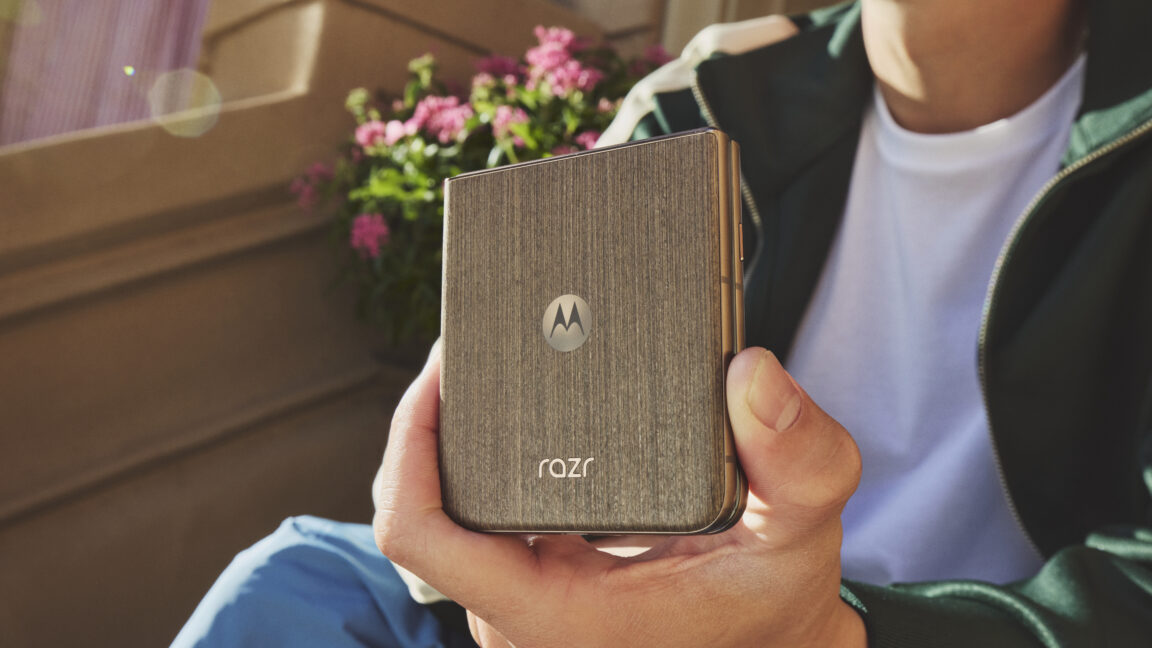
Motorola is crazy about foldables. With each passing year, the company has beefed up its folding phone lineup, and in 2026, there will be four devices launching on May 21. At the top end is the company’s first tablet-style foldable, the Razr Fold. Below that, Motorola will again offer three flip-style foldables: the Razr Ultra, Razr+, and Razr. These phones get a few modest upgrades over last year’s phones, along with price increases. Motorola is unfortunately not immune to the rising cost of components.
| Specs at a glance: 2026 Motorola Razr series | ||||
|---|---|---|---|---|
| Razr 2026 ($800) | Razr+ 2026 ($1,100) | Razr Ultra 2026 ($1,500) | Razr Fold ($1,900) | |
| SoC | MediaTek Dimensity 7450X | Snapdragon 8s Gen 3 | Snapdragon 8 Elite “Pro” | Snapdragon 8 Elite Gen 5 |
| Memory | 8GB | 12GB | 16GB | 16GB |
| Storage | 128GB | 256GB | 512GB | 512GB |
| Display | External: 3.6-inch 1056 x 1066 OLED, 90 Hz, 1700 nits; Internal: 6.9-inch 1080 x 2640 OLED, 120 Hz, 3000 nits | External: 4-inch 1272 x 1080 OLED, 165 Hz, 2400 nits; Internal: 6.9-inch 1080 x 2640 OLED, 165 Hz, 3000 nits | External: 4-inch 1272 x 1080 OLED, 165 Hz, 3000 nits; Internal: 7-inch 1224 x 2992 OLED, 165 Hz, 5000 nits | External: 6.6-inch 2520 x 1080 pOLED, 165 Hz, 6000 nits; Internal: 8.1-inch 2484 x 2232 LTPO OLED, 120 Hz, 6,200 nits |
| Cameras | 50 MP wide, f/1.7; 50 MP ultrawide, f/2.0; 32 MP selfie, f/2.4 |
50 MP wide, f/1.8; 50 MP ultrawide, f/2.0; 32 MP selfie, f/2.4 |
50 MP wide, f/1.8; 50 MP ultrawide, f/2.0; 50 MP selfie, f/2.0 |
50 MP wide, F/1.6; 50 MP ultrawide with Macro, f/2.2; 50 MP 3x telephoto; 32 MP outer selfie, f/2.4; 20 MP inner selfie, f/2.4 |
| Software | Android 16 | Android 16 | Android 16 | Android 16 |
| Battery | 4800 mAh, up to 30 W wired charging, wireless charging | 4500 mAh, up to 45 W wired charging, wireless charging | 5,000 mAh, up to 68 W wired, wireless charging | 6000 mAh, up to 80 W wired charging, 50 W wireless charging |
| Connectivity | Sub-6 GHz 5G | Sub-6 GHz 5G | Sub-6 GHz 5G | Sub-6 GHz 5G |
| Measurements | Open: 171.30 × 73.99 × 7.25 mm Closed: 88.08 × 73.99 × 15.85 mm, 188g |
Open: 171.42 × 73.99 × 7.09 mm Closed: 88.09 × 73.99 × 15.32 mm, 189g |
Open: 171.48 × 73.99 × 7.19 mm Closed: 88.12 × 73.99 × 15.69 mm, 199g |
Open: 160 height × 144.4 width × 4.55 depth (mm); Closed: 160 height × 73.6 width × 9.89 depth (mm), 243g |
| Colors | Hematite, Violet Ice, Sporting Green, Bright White | Mountain View | Orient Blue, Cocoa | Blackened Blue, Lily White |
The Razr Fold represents a big step for Moto. Its foldable flip phones have revived the Razr name and offered a good alternative to Samsung’s Z Flip line, but people buying foldables are generally more interested in the large format. As prices at the lower end of the spectrum ratchet up, there’s less and less distance between premium flip phones and bigger foldables. At $1,900, the Razr Fold is not a cheap phone, but it’s roughly in line with the pricing of 2025 foldables (right between Google and Samsung). Given the current state of things, that’s a small win for 512GB of storage and 16GB of RAM.
Moto’s first big foldable is almost here.
Credit: Motorola
Motorola is not reinventing the wheel with the Fold, so you can expect a device that looks and feels similar to other big foldables like the Pixel 10 Pro Fold. It’s about the same size as Google’s foldable but slightly thinner and lighter. Samsung’s Z Fold 7, however, is much thinner and lighter. Motorola does have the advantage of stylus input, which Samsung has dropped from its foldables. The Moto Stylus will launch at $99 alongside the Razr Fold on May 21.
The Razr Fold’s displays are a little larger than the competition, with a 6.6-inch external screen and an 8.1-inch inner foldable panel. While the external screen has a 165 Hz refresh, the inner one is only 120 Hz. The listed brightness ratings and resolution are at or above the level of other big foldable phones. You should see solid battery life on this phone, which has a silicon-carbon battery rated at 6,000 mAh, which is higher than either Google’s or Samsung’s foldables.
The camera situation is hard to judge at this point. Motorola’s devices have struggled to keep up with Google and Samsung in image quality, but the hardware looks solid. All three rear cameras are 50 MP, including a Sony Lytia with gargantuan 2.44μm pixels for the primary.
Initially, the Razr Fold will only be available unlocked directly from Motorola, but it will eventually come to T-Mobile, Verizon, and Xfinity Mobile. The stylus will only be sold by Moto, but it’s strictly an optional accessory—there’s no slot in the phone.
Flip for foldables
If larger foldables aren’t your thing, Motorola still has three flip phones available for 2026. All three phones have big external displays with enough real estate to use apps and reply to messages. They’re also great for taking selfies with the main cameras. The Ultra has Gorilla Glass Ceramic 3, while the other models have Gorilla Glass Victus, an upgrade over last year’s.
The 2026 Razr Ultra has an updated primary 50 MP sensor that can apparently collect more light for sharper, faster captures. The Razr+ also swaps from a secondary 2x telephoto to an ultrawide. Meanwhile, the base model gets a higher-resolution ultrawide (50 MP up from 13 MP). The rest of the camera hardware appears unchanged.
The Razr 2026 has a smaller external screen, but it comes in the most colors.
Credit: Motorola
The Razr Ultra again packs a customized Qualcomm Snapdragon 8 Elite with 16GB of RAM, making it a match for any non-folding flagship phone. However, it looks like there won’t be a 1TB storage option for the Ultra in 2026 like there was last time. The Razr+ steps down to the Snapdragon 8s Gen 3 and 12GB of RAM (unchanged from last year), and the Razr has a MediaTek Dimensity 7450X (slight upgrade) and 8GB of RAM.
Last year’s Razr phones marked a significant expansion of Motorola’s AI efforts, and all those features remain in 2026’s models. The Moto AI system contains features from three different AI providers. Gemini is integrated throughout the experience, but there are also elements of Microsoft Copilot and Perplexity. The phones can summarize your notifications, create meeting notes, and offer contextual recommendations based on screen content. The phones will also debut a Google Photos feature that scans your wardrobe and suggests new outfits.
AI privacy is already a problem if you use a single platform, but integrating three of them with a phone just means your data is going more places. While the most powerful Razrs have the hardware to do at least some processing on-device, the base model will probably have to export more data to the cloud for processing. So keep that in mind when you mash the Moto AI key on these phones.
Yes, the Razrs still have that quirky camcorder mode.
Credit: Motorola
All four Motorola phones will launch with Android 16. Motorola says the phones will get five years of security patches and three OS updates. That’s far short of what you get from Samsung or Google (seven years for both).
Probably the most notable hardware upgrade comes in the battery setup—all three phones get slightly larger silicon-carbon batteries, with the Ultra reaching 5,000 mAh. These batteries have higher capacity without adding additional weight, so even the Ultra isn’t getting any heavier this year. Little by little, foldable drawbacks are being addressed. The price is moving in the wrong direction, though.
The most expensive of the flips, the Razr Ultra, is even more spendy than its predecessor. Motorola has increased the price by $200 to $1,500. The Razr+ is up $100 to $1,100, and the base model Razr is also $100 more expensive at $800. The Ultra will only be available from Motorola on May 21, but the Razr+ will also launch on AT&T next month, with T-Mobile coming later. The Razr will have the widest carrier availability, including Verizon, T-Mobile, Google Fi, Spectrum, and more.

-
 C114 Communication Network
 -
 Communication Home
