
 Search

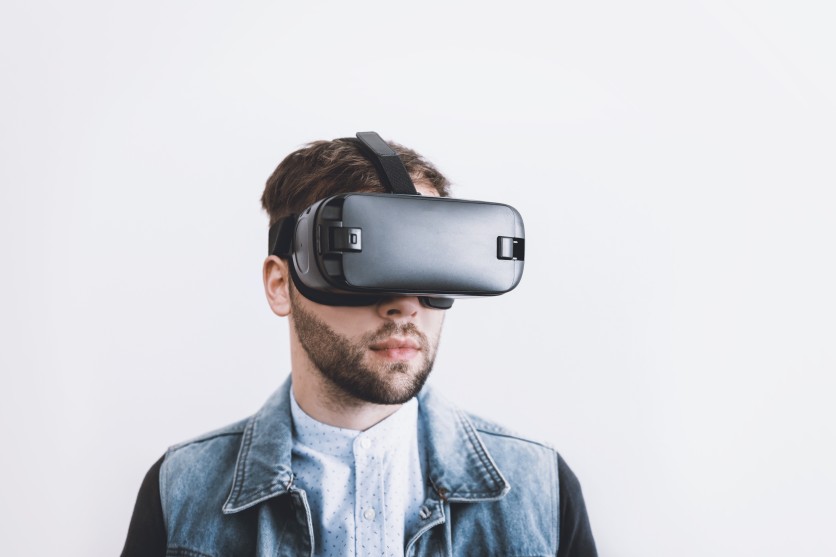
Explore the AR vs VR comparison and learn how augmented and virtual reality technologies are transforming digital experiences, innovation, and the future of immersive interaction. Pixabay, JESHOOTS-com
Immersive technologies have transformed how people interact with the digital world, bringing once futuristic ideas into everyday life. Among these innovations, augmented reality (AR) and virtual reality (VR) are leading the way.
The ongoing AR vs VR comparison continues to attract attention as both technologies evolve rapidly. While they share similar goals of enhancing digital experiences, their methods and real-world applications differ in essential ways.
What is the Difference Between AR and VR?
At their core, augmented reality and virtual reality deliver different types of immersion. Augmented reality enhances users' perception of the real world by overlaying computer-generated elements such as images, text, or animations.
It works through smartphones, tablets, and smart glasses that blend physical surroundings with digital enhancements.
Virtual reality, however, replaces the real world entirely with a simulated environment. VR headsets immerse users in 360-degree digital spaces using controllers, sensors, and motion tracking. In this AR vs VR comparison, AR expands reality, while VR creates a new one.
Key differences between AR and VR:
- Environment: AR blends the digital and physical worlds, while VR creates a fully simulated space.
- Devices: AR operates through smartphones and AR glasses, whereas VR requires specialized headsets and controllers.
- Interaction: AR overlays virtual content onto real surroundings, while VR immerses users in entirely artificial experiences.
- Accessibility: AR is more accessible since most users already have compatible devices, while VR often involves higher equipment costs.
How Does Augmented Reality Work?
Augmented reality integrates layers of digital information onto physical spaces using a device's camera, sensors, and software. The system detects visual markers or spatial context, allowing virtual objects to appear naturally within the environment.
Everyday examples of AR include popular applications such as Pokémon GO, which places animated creatures into real-world scenes, or IKEA Place, where users visualize how furniture fits into their homes before purchase.
Social media filters found on apps like Snapchat and Instagram are also familiar forms of AR, demonstrating how seamlessly the technology merges entertainment, marketing, and functionality.
In sectors like education and healthcare, AR supports visualization and real-time guidance. Medical students, for example, can study human anatomy using 3D overlays, gaining insight without needing physical specimens.
How Does Virtual Reality Work?
Virtual reality operates by transporting users into a digitally created environment that feels immersive and real. Using headsets such as the Meta Quest or PlayStation VR, the system tracks head movements and adjusts visuals accordingly, creating a convincing sense of presence.
Most VR setups include a combination of high-resolution displays, spatial audio, and motion controllers, allowing users to interact naturally within digital environments.
This technology has become especially valuable in simulation training. Pilots, engineers, and medical professionals use VR to practice complex tasks in safe, controlled conditions.
In gaming, VR delivers an unparalleled sense of immersion, placing players inside interactive worlds. Beyond entertainment, VR is gaining traction in architectural design, remote collaboration, and therapy sessions designed to manage anxiety or phobias.
Which is Better: AR or VR?
Determining whether AR or VR is the better technology depends on purpose and context. Each excels in specific applications. Augmented reality stands out for accessibility and real-world integration.
Because it relies on smartphones or lightweight glasses, it can be adopted easily by consumers and businesses alike. Its open nature makes it ideal for navigation, product visualization, retail experiences, and industrial maintenance.
Virtual reality, in contrast, thrives where full immersion is crucial. Its ability to create a controlled environment makes it indispensable for gaming, simulations, and remote collaboration. In this AR vs VR comparison, AR is about enhancing daily life, while VR focuses on creating entirely new experiences.
When evaluating user adoption, AR currently leads in scale, as it requires little additional hardware. However, VR continues to set the bar for depth and engagement. The two technologies often complement rather than compete with each other.
Read more: Top Meta Quest VR Games 2026: Must-Play Adventure, Shooter & Social Experiences
Is AR or VR the Future?
Emerging trends suggest that both technologies will continue to evolve in parallel, each influencing core aspects of digital innovation. Augmented reality is expected to expand as smartphone processing, camera accuracy, and 5G connectivity improve.
Future AR glasses could replace smartphones by enabling users to access real-time information directly in their field of view.
Virtual reality, on the other hand, is positioning itself for the next wave of digital collaboration and entertainment. With the advancement of cloud-powered rendering and wireless headsets, VR is becoming more practical for everyday users.
Companies across entertainment, healthcare, and education are increasing investments in virtual experiences designed to replicate physical presence across distance.
In the global AR vs VR comparison, analysts predict steady growth for both. The market for AR is projected to dominate retail and productivity, while VR is expected to lead in training, gaming, and social engagement.
Can AR and VR Work Together?
Rather than existing as separate technologies, AR and VR increasingly intersect within a broader framework known as Extended Reality (XR). This term refers to experiences that combine aspects of both augmented and virtual environments, as seen in mixed reality (MR) systems.
Mixed reality allows users to interact with both virtual and physical elements simultaneously. For instance, an engineer using MR could overlay a digital model onto real machinery to analyze its design while interacting with physical tools.
Similarly, architectural teams can collaborate in hybrid realities, where digital building models appear anchored to physical spaces.
The merging of AR and VR through XR underscores how the two can complement one another. Many experts believe this convergence will define the next stage of immersive computing, one where digital information integrates seamlessly into daily tasks.
AR vs VR: Which Technology Will Win?
Comparing AR and VR purely in competitive terms can oversimplify their evolving roles. Each technology continues to shape how people experience and interpret reality in distinct ways.
Augmented reality connects users with their immediate surroundings, providing digital enhancements that assist with daily interactions. Virtual reality, meanwhile, offers total immersion, transporting users into entirely new experiences that would be impossible in the physical world.
When looking at scalability and accessibility, AR holds an advantage thanks to its compatibility with common devices. However, VR's strength lies in emotional engagement and depth of experience.
Both technologies have proven essential across industries. Retailers and manufacturers rely on AR for visualization, while medical training institutions and entertainment platforms find great value in VR immersion.
In the ongoing AR vs VR comparison, neither technology is expected to surpass the other entirely. Instead, they will likely continue developing in tandem, contributing to the growing ecosystem of digital interaction.
As hardware advances and computing becomes more powerful, the line separating physical and virtual spaces will narrow even further. The future may not belong exclusively to one, but rather to a blended reality where AR, VR, and their successors coexist to redefine how people connect, learn, and create.
Frequently Asked Questions
1. What devices are commonly used for AR experiences?
Most AR experiences work through smartphones and tablets, but advanced options include smart glasses like Microsoft HoloLens and Apple Vision Pro.
2. Can AR or VR be used without an internet connection?
Yes, basic functions can run offline, but many AR and VR apps rely on internet access for updates, real-time data, or cloud-based rendering.
3. How do AR and VR impact business marketing?
They create interactive campaigns, AR enables virtual product try-ons or location-based ads, while VR offers immersive branded experiences.
4. What skills are needed to develop AR or VR applications?
Developers typically use 3D modeling, programming languages like C# or C++, and platforms such as Unity or Unreal Engine to build immersive environments.
Read more: Meta Quest Setup Made Easy: Step‑by‑Step Installation Guide to Set Up Your Meta Quest Headset in Minutes

-
 C114 Communication Network
 -
 Communication Home
