
 Search

Credit: Andrew Cunningham
If the only thing you had to go off was Apple’s string of product announcements this week, you’d have little reason to believe that there is a historic AI-driven memory and storage supply crunch going on. Some products saw RAM and storage increases at the same prices as the products they replaced; others had their prices increased a bit but came with more storage than before as compensation. And there’s the MacBook Neo, which at $599 was priced toward the low end of what Apple-watchers expected.
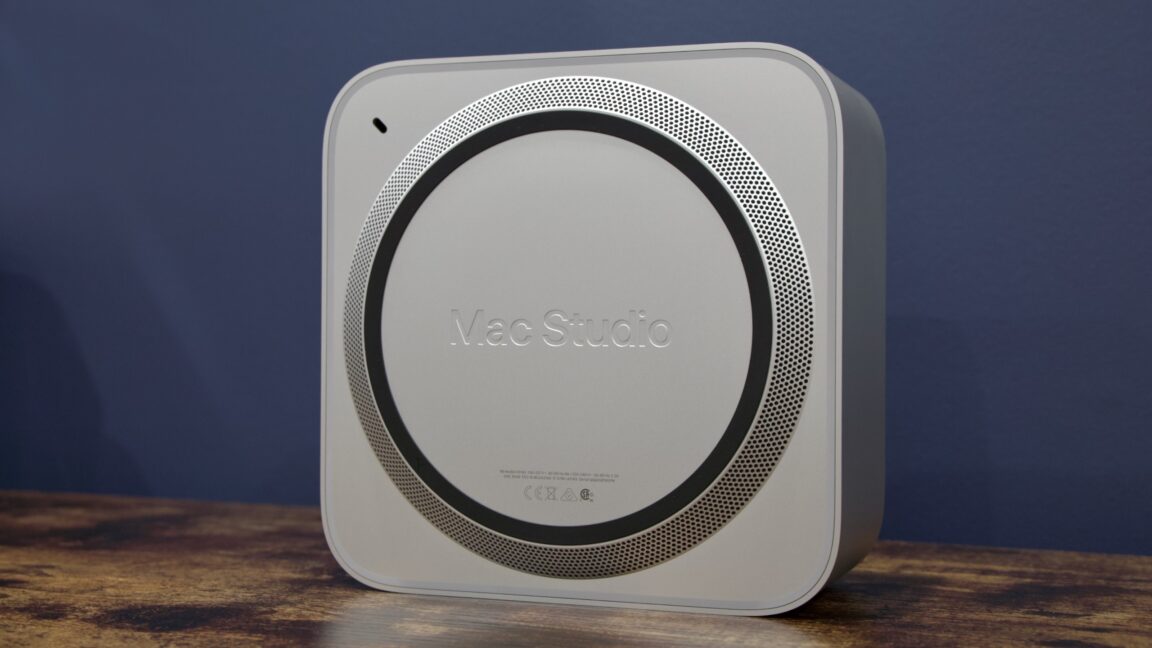
But even a company with Apple’s scale and buying power can’t totally defy gravity. At some point between March 4 and now, Apple quietly removed the 512GB RAM option from its top-tier M3 Ultra Mac Studio desktop. Pricing for the 256GB configuration has also increased, from $1,600 to $2,000. The Tech Specs page on Apple’s support site still acknowledges the existence of the 512GB configuration, but both the Apple Store page and the list of available configurations have removed any mention of it.
We’ve asked Apple to comment on the disappearance of the 512GB Mac Studio and will update this article if we receive a response.
It’s rare for Apple to pull any configurations of products it sells, aside from removing higher-capacity storage options for older iPhones after new ones come out. More commonly, the company will just increase its shipping estimates to reflect the supply chain backlog.
The 512GB Mac Studio was not a mass-market machine—adding that much RAM also required springing for the most expensive M3 Ultra model, which brought the system’s price to a whopping $9,499.
But for workloads that demand tons of graphics memory, including large language models, the Studio and its unified memory architecture offer gobs of graphics memory far in excess of what most PC graphics cards offer. In the macOS Tahoe 26.2 update, Apple added a feature that allows Thunderbolt 5-equipped Macs like the Studio to operate as a single compute cluster, pooling their memory and other resources to execute complex workloads. If you want a cluster with 512GB of RAM, you now need to buy two Mac Studios instead of one.
Apple’s Ultra chips are the only ones it sells that support more than 128GB of RAM. Both the M4 Max and M5 Max chips top out at 128GB. The M4 Pro and M5 Max max out at 64GB, and the standard M4 and M5 support a maximum of 32GB.
RAM is in short supply in part because memory-makers have shifted their production capacity toward the more lucrative high-bandwidth memory (HBM) used in pricey data center AI accelerators like Nvidia’s H200. That has left a smaller supply of traditional DRAM for companies and consumers to fight over, and many smaller companies have raised prices (sometimes more than once) and delayed product launches as a result. Apple buys and uses so much RAM across all its product lines that it’s in a better negotiating position than the likes of Framework or Raspberry Pi, but CEO Tim Cook acknowledged in the company’s last earnings call that memory pricing could begin to eat into Apple’s profit margins later this year.

-
 C114 Communication Network
 -
 Communication Home
