
 Search

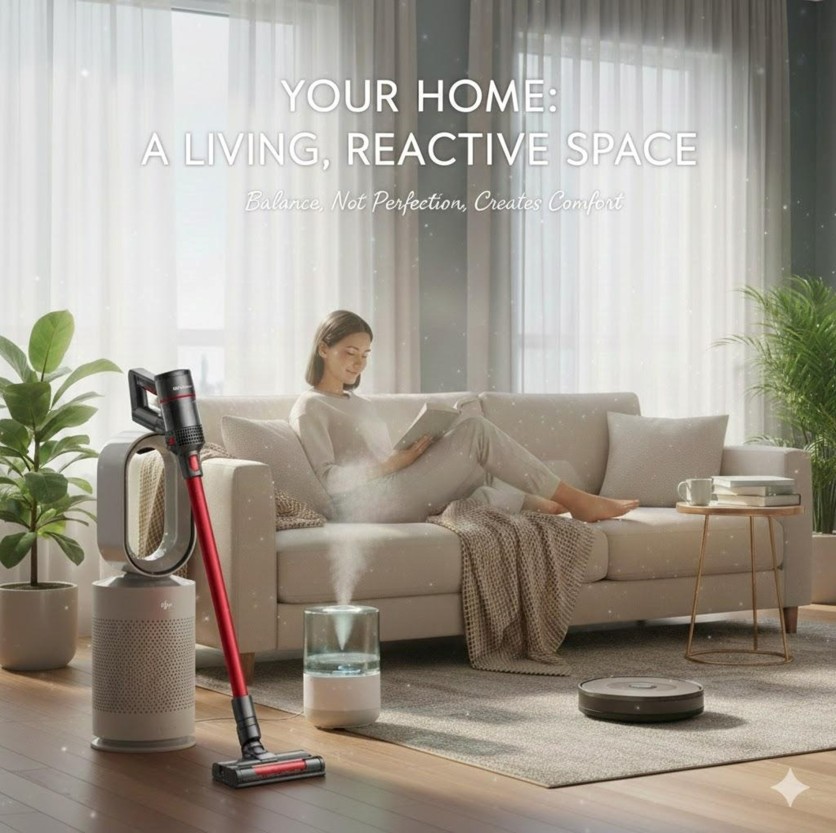
Does your home ever feel spotless, but not homey? Well, you are not alone. Most people feel this way without being able to explain the cause. The answer to this issue is simple: your cozy house is not created by appearance alone; it needs a little bit of magic that shapes how your home feels and behaves throughout the day.
There are constant fluctuations in temperature, moisture levels, surface residue, and airborne particles, turning your private abode into a living environment rather than a static space. However, these are never constant and give you the off feeling, and to help with that, many brands design solutions with this reality in mind. They offer tools like humidifier, air purifier, and floor cleaner to help maintain this balance and make your home feel comfy. Let's dive deeper into how they help make your static space livelier and more fun to live in.
Your Home Is a Living, Reactive Space
The majority of people believe that their homes are fixed and that nothing is changing, but in reality, with every passing second, everything is changing. Every action, no matter how small, influences the indoor environment in ways that build up over time, and it is important to understand why your comfort in the same home can shift without warning.
It Responds to Everything You Do
We all cook food, move around our home, and get on with our daily activities, and each action creates a reaction. Cooking releases heat and moisture; our movements disturb the tiny particles in the air, ever so lightly altering indoor conditions. These changes are very minor, yet with time, they make your home uncomfortable to live in. These buildings in which we live absorb habits and reflect them over time. When this responsiveness is ignored, spaces can feel heavy, dry, or stale, with no apparent cause. Comfort, in this sense, depends more on consistency than on occasional fixes.
Some Rooms Feel Better for a Reason
Some rooms in your home are comfortable, while others feel heavy, right? Well, this is because the airflow, humidity, and energy movement are different in each room. You might find a south-facing room colder and more energy-efficient in winter and summer, compared to a west-facing room, which needs an extra layer of shading to hide from the sun, making it warmer or heavier. Similarly, if air circulation is poor, then it creates stagnant zones where discomfort builds quietly. At the same time, balanced conditions help maintain consistency across rooms and decrease sudden temperature shifts and uneven comfort. So, when the home feels predictable, it becomes easier to relax and focus.
Comfort Shapes How You Think and Feel
Comfort is generally treated as a physical issue, but its impact is everlasting. Our mental clarity, emotional balance, and daily energy levels all depend on the environment in our home, something most of us don't even consider.
Why Indoor Conditions Affect Mental Performance
The way a home feels directly influences focus, mood, and productivity. Stale air, dryness, or heaviness force the body to adapt, often leading to fatigue or irritability without a clear explanation. When indoor conditions are stable, the mind expends less energy compensating for discomfort. This allows people to move through their day with greater clarity, patience, and ease.
The Invisible Issues That Matter Most
The majority of indoor issues come from things that we cannot see without the naked eye, like air composition, humidity imbalance, and microscopic debris that grows silently. We can feel its effects even before we can understand that they are the ones causing imbalance in our lives. Thus, addressing these invisible factors early transforms how a home feels, even when nothing visually appears different. This is why balanced spaces are often described as calm or refreshing.
Cleanliness Is a System, not a Task.
Many households think of cleanliness as something to complete and move on from. However, cleanliness does not mean mopping the floor and dusting; it is something that needs to be considered and continuously performed daily by cleaning the air, optimizing humidity, and refreshing the home.
Why Clean Doesn't Always Mean Maintained
Floors are cleaned, surfaces are wiped, and everything looks fine, yet daily movement immediately begins redistributing particles and moisture. This is why your living space feels unclean even after scrubbing everything off. Therefore, houses that are maintained constantly do not need daily deep cleaning, but a clean atmosphere. This way, hygiene levels stay stable, and both effort and frustration decrease.
How Environmental Balance Protects Your Home
Environmental inconsistency affects more than comfort. Our furniture, flooring, and fabrics absorb the surrounding environment, and if there are fluctuations in air quality and moisture, then this stress can shorten their lifespan and increase costs for us. So, stable indoor conditions help homes age more gracefully, and consistency protects comfort, appearance, and long-term value simultaneously.
When Gadgets Enter Your Life Naturally
The effectiveness of home care tools depends not just on performance, but on how easily they fit into everyday routines. Products that interrupt daily life are rarely used as often as intended. What matters most is the design and technology that work in the background.
Design That Encourages Consistent Use
Do you like lifting heavy tools or working out a whole complex problem just to start a machine? Well, no, right? Such inconvenient tools just make maintaining our homes a chore rather than a solution. Thus, design is the most important, and the styles that align with natural movement, storage habits, and ease of use are preferred. They just become another member in the family, and silently help the home feel cozy without demanding attention.
Technology as a Partner
We usually do not notice the most effective home technology; why? Instead of drawing attention to it, such machines imply that they do their work and adapt quietly to changing conditions, and maintain balance before they cause discomfort, which makes the home feel heavy. This kind of support allows people to focus on living rather than managing their surroundings, and it becomes their everyday partner instead of a distraction.
A Space That Supports Better Habits
Over time, people adjust their behaviour based on how their environment makes them feel, and these adjustments may seem small, but they accumulate and shape daily routines in meaningful ways.
How Comfort Influences Behaviour Over Time
If you are comfortable in your home, you will be productive, fully rested, and might even enjoy a little social interaction. But if you feel continuously heavy or unorganised, then it can cause stress, fatigue, and even mood swings. So, gadgets like humidifiers, air purifiers, and floor cleaners integrate naturally into your routine. When you spend less energy optimising your home, you utilise that energy to engage more fully with your daily life.
Why Balance Matters More Than Perfection?
Comfort is generally mistaken for luxury, but true comfort does not come from expensive furniture, heavy lights, or fancy machines. It comes from stability, a well-balanced home, a small humidifier in the living room, a floor cleaner sweeping the floor after some time, and an air purifier that refreshes the air, making it easier to live in. So, when air, moisture, and cleanliness work together, the house becomes a space that supports rather than demands attention.

-
 C114 Communication Network
 -
 Communication Home
