
 Search

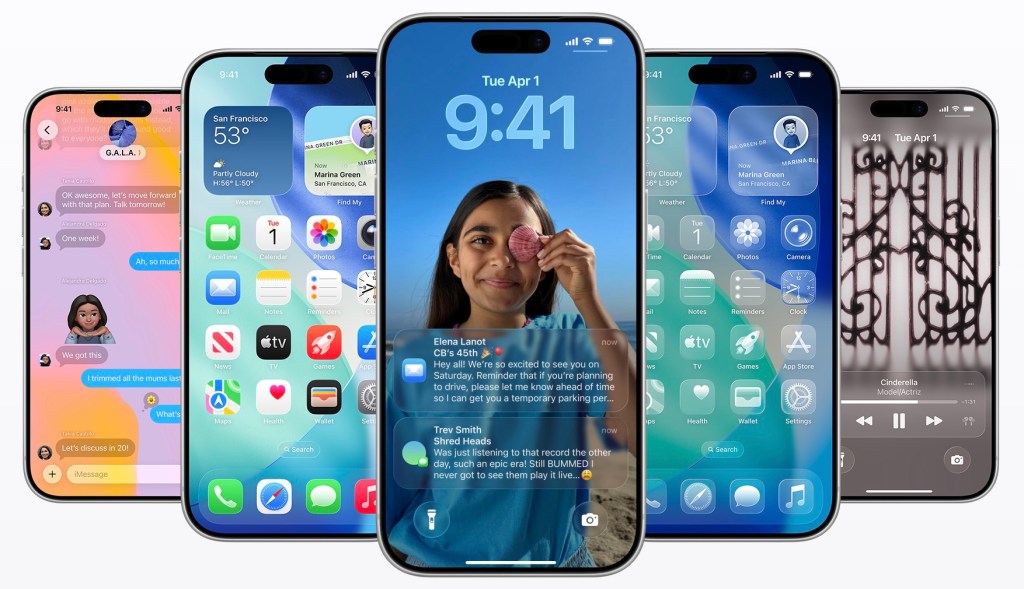
Image Credits:Apple
Apple this week released the latest version of its mobile operating system, iOS 26.4, which introduces several new features, including an AI-powered playlist-generation feature in Apple Music, support for video content in the Podcasts app, end-to-end encryption (E2EE) for RCS messages, and more.
The update is currently available in pubic beta, with the public release expected sometime in March or April.
Apple Music’s AI playlist
One of the most noticeable improvements arrives in Apple Music — iOS 26.4 introduces a new AI-powered “Playlist Playground” feature that leverages Apple Intelligence. The feature allows users to generate a custom 25-song playlist from a text prompt, such as “upbeat workout mix” or “calm evening.” Users can then further refine the results and even select matching cover art.
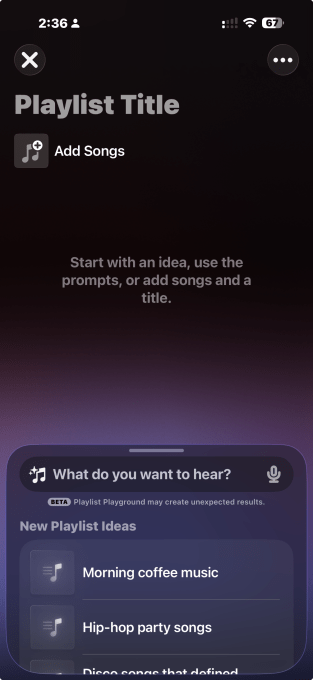
Image Credits:Apple (screenshot)
In addition, Apple Music’s user interface has been refreshed to showcase full-screen artwork for albums and playlists.
Concerts Near You
Plus, Apple Music is getting a new “Concerts Near You” section that helps users discover live shows from their favorite artists. You can filter this section by Date and Genre, or switch locations if you’re traveling.
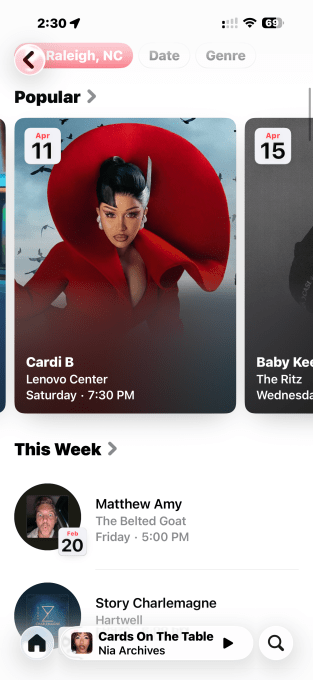
Image Credits:Apple (screenshot)
Apple Podcasts video episodes
Following Spotify’s push into video, Apple’s Podcasts app is making it easy to switch back and forth between audio and video episodes with this release. Creators can publish video podcasts using HTTP Live Streaming (HLS), and listeners can seamlessly switch between audio and video playback within the same episode, moving to a full horizontal display if they choose.
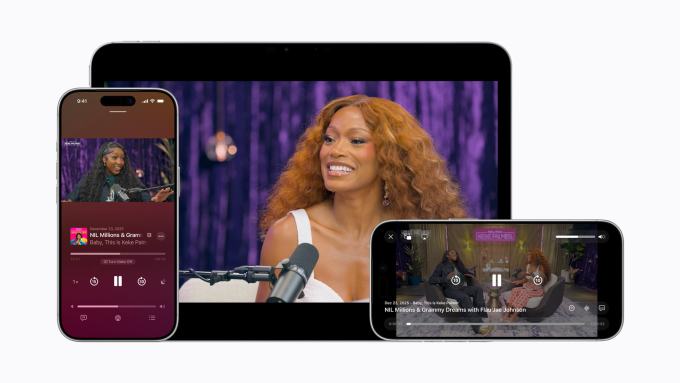
Image Credits:Apple
At launch, the video episodes will be integrated with other Apple Podcasts features, like personalized recommendations and editorial curation on the New tab and Category pages, just as audio podcasts are.
HLS also brings an automatic quality adjustment feature, which helps videos play better whether listeners are on Wi-Fi or cellular. Plus, users will be able to download video episodes for offline viewing. At launch, HLS is supported by Acast, Amazon’s ART19, Triton’s Omny Studio, and SiriusXM, including SiriusXM Media, AdsWizz, and Simplecast.
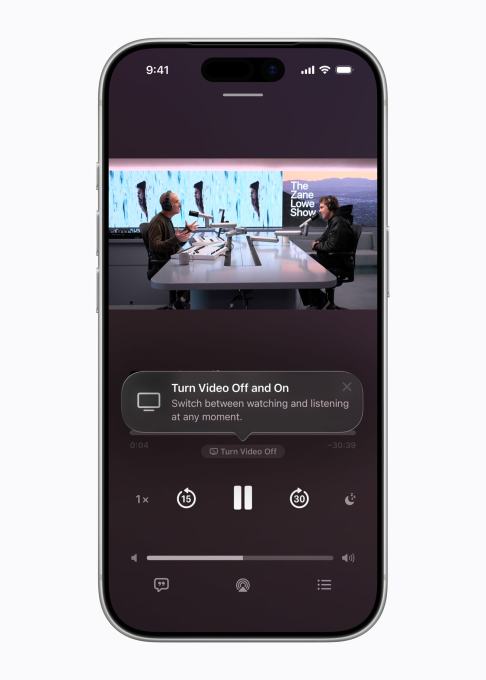
Image Credits:Apple
Creators will be able to dynamically insert video ads, including host-read spots, into their podcasts, too. Apple doesn’t charge creators to distribute podcasts, but it says that, starting later this year, participating ad networks will have to pay an impression-based fee for the delivery of the dynamic ads in the HLS videos.
Encrypted RCS messaging
Messaging is also receiving an important upgrade with encrypted Rich Communication Services (RCS), which begins testing in iOS 26.4. End-to-end encryption for RCS conversations will one day help ensure messages between iPhone users and Android users are just as secure as iMessage.
Currently, Apple is only testing this between iPhones in beta. These conversations will be labeled as encrypted and cannot be read while sent between devices. The company notes that the feature will be released publicly in a later software update for iOS, iPadOS, macOS, and watchOS, and the beta is not available for all devices and carriers.
Stolen Device Detection is on by default
Security improvements are another highlight of iOS 26.4. Stolen Device Protection is now enabled by default, adding an extra layer of biometric authentication for sensitive actions such as accessing saved passwords or making certain account changes. By requiring Face ID or Touch ID authentication in more scenarios, Apple reduces the risk of unauthorized access if a device is stolen and the passcode is compromised.
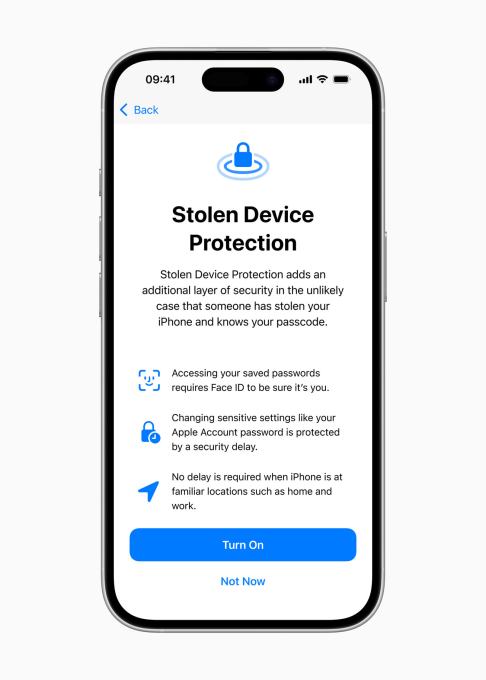
Image Credits:Apple
CarPlay adds in-car video playback
Drivers using Apple CarPlay will also notice changes. CarPlay now supports in-car video playback for select apps — including the Apple TV app —but only when the vehicle is parked to ensure safety. This enhancement introduces new entertainment options for passengers when they’re stopped or while waiting in the car for a period of time. (Hooray for parents in the pickup line at school!)
Third-party AI services come to CarPlay
CarPlay for the first time will offer access to third-party AI services like OpenAI’s ChatGPT, Google’s Gemini, and Anthropic’s Claude.
Audio Zoom in Camera app
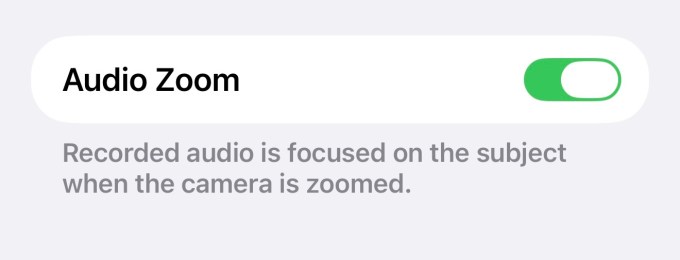
Image Credits:iPhone screenshot/TechCrunch
Meanwhile, the Camera app introduces Audio Zoom. When recording video, the microphone focuses on the subject as you zoom in, reducing background noise and enhancing clarity. This feature makes it easier to capture speeches, performances, or interviews without external audio equipment.
Ambient Music widget
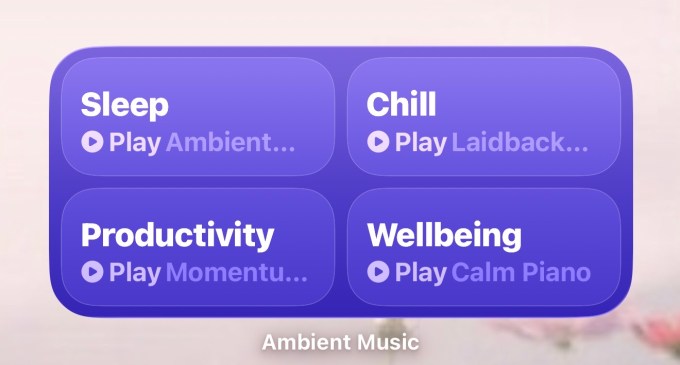
Image Credits:Apple (screenshot)
Additionally, the Ambient Music feature is now accessible through a widget, letting users instantly play soundscapes designed for focus, sleep, or relaxation directly from the Home Screen, instead of just the Control Center as before. The feature, first introduced in iOS 18.4, added a variety of ambient sounds to stream across categories like Sleep, Chill, Productivity, and Wellbeing.
“Urgent” reminders
There’s also a new “Urgent” section in the Reminders app that groups high-priority tasks and can trigger more prominent alerts when deadlines approach. Setting a reminder as Urgent will add an alarm so you’re sure not to miss the event.

Image Credits:iPhone screenshot/TechCrunch
And more …
A few other smaller features include the following:
- A new unified Apple Account Hub in the App Store, Apple Music, and other Apple apps replaces the “profile” feature that was previously used.
- A new animation is in the Messages app when you draft a message.
- An updated Wallpaper Gallery separates the different categories in a new way; a similar design came to the Apple Watch Face Gallery as well. The new version includes sections for Weather, Astronomy, Emjoi, and more, among other changes.
- Apple Music lets you add songs to multiple playlists at once.
- The Health app adds a new metric: Average Bedtime, which shows the average time you went to bed over the past two weeks. The Vitals section was also updated to include a blood oxygen level on the daily graph.
- Freefrom adds a Content Hub for Creator Studio subscribers, providing access to new AI features and high-quality art. Its icon was updated, too.
- The Personal Hotspot feature now includes a Data Usage section that shows how much data has been sent to your device and which Apple and non-Apple devices have been using your data.
- Live Captions adds support for Chinese (Taiwan) under the language options.
- There’s a new “Set Battery Charge Limit” action in Shortcuts.
- The App Store’s Search bar is back at the top of the screen.
- The link to iCloud.com gets a larger, featured section within the iCloud section in the Settings app. Before, there was only a toggle to “Access iCloud Data on the Web.” Now it’s more like a big ad for iCloud.
Notably absent from this release is a next-generation Siri experience. While Apple has signaled deeper AI ambitions for its voice assistant, those larger changes do not appear in iOS 26.4, reportedly delayed once again.

-
 C114 Communication Network
 -
 Communication Home
