
 Search

(Image credit: Future / Mike Lowe)
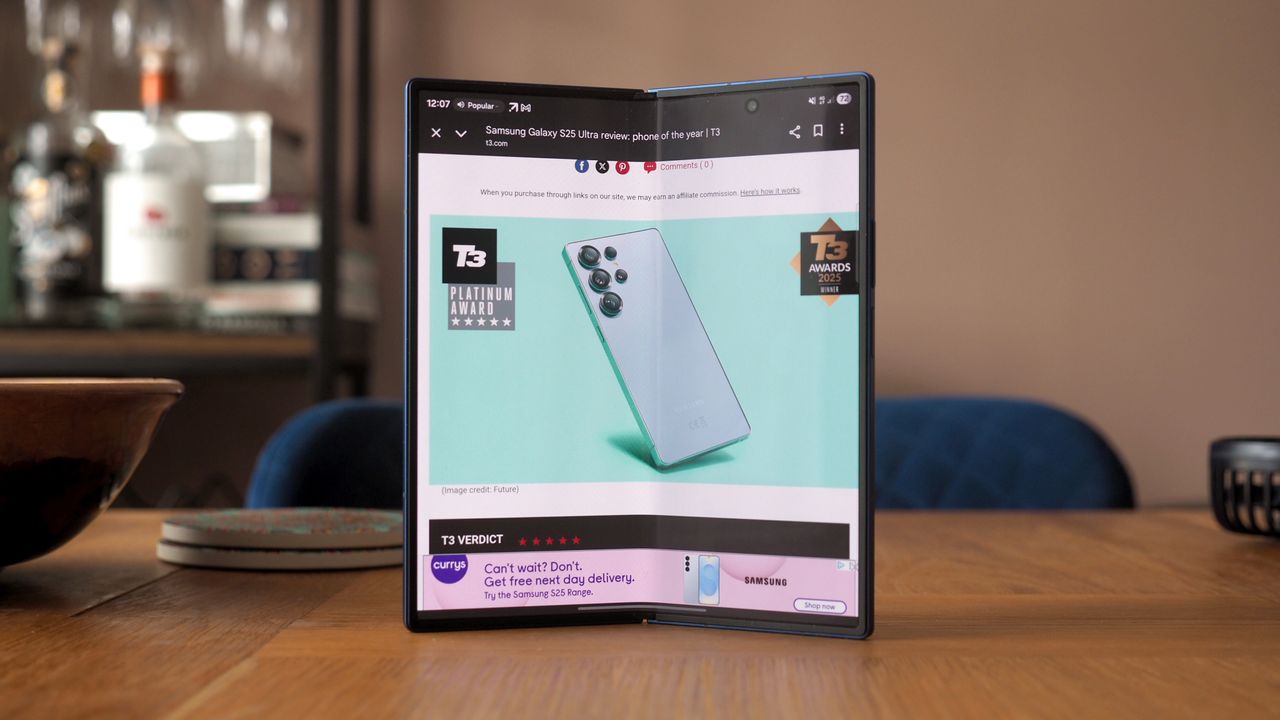
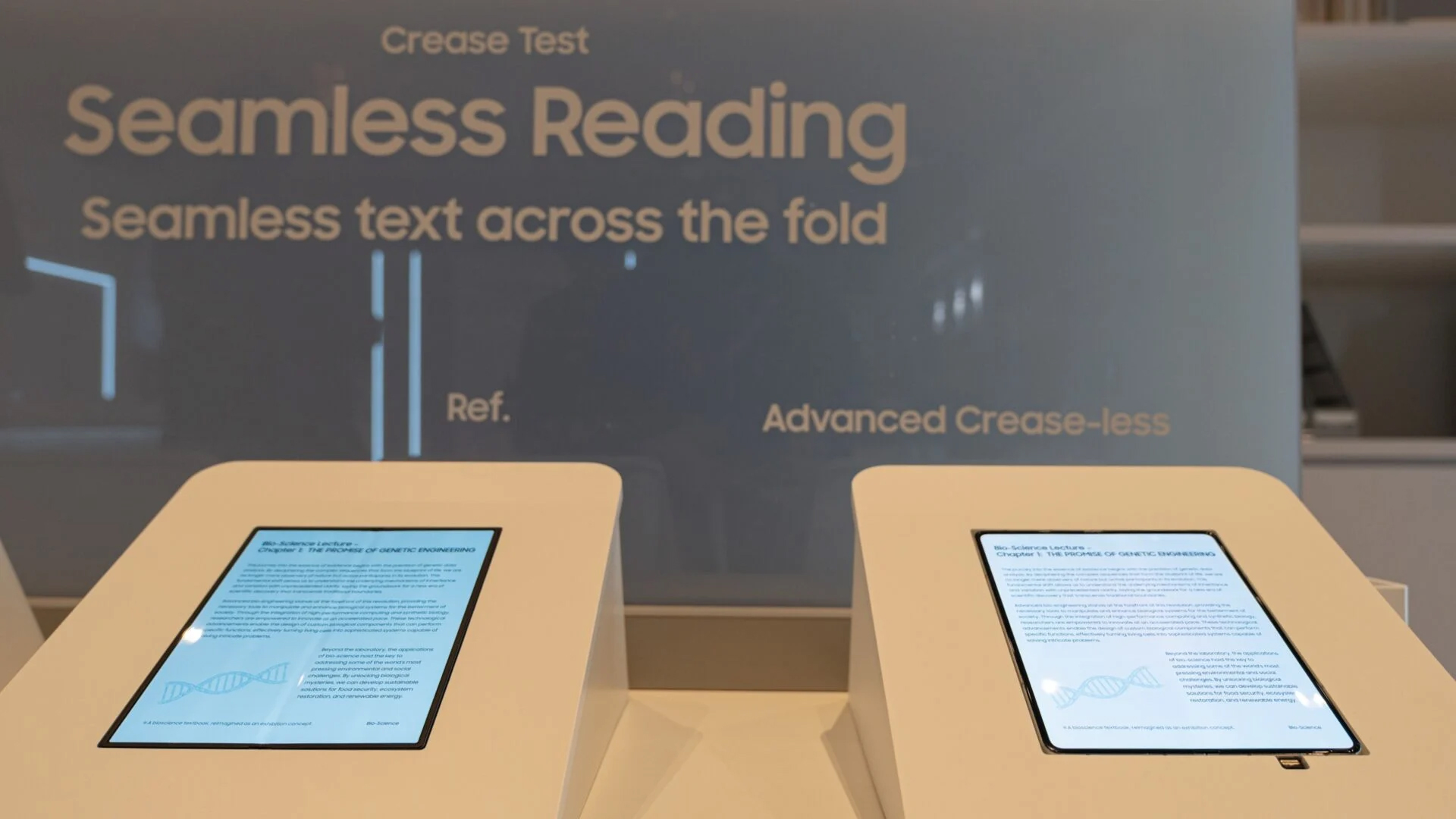
Samsung Display might have found the solution for the crease that typifies folding phone displays and it might be more simple than you might think. The answer might just be to add more glass.
Samsung's folding display is made up of a number of layers: there's the OLED layer itself which is plastic, then ultra-thin glass, then a plastic layer on the top. The suggestion is that more ultra-thin glass over the folding section will help remove the crease.
This, according to Dealsite (via 9to5Google) will be combined with a backplate that's laser drilled to allow it to distribute the stress better for that crease-less finish.
What's more interesting is where this technology might be heading. The source suggests that it's been developed for the iPhone Fold, although there's every chance that Samsung might use it for the Galaxy Z Fold 8, either instead or as well as. One advantage, it seems, is that because it uses glass, it's a relatively inexpensive change.
(Image credit: SamMobile)
The new technology was shown off at CES 2026, although reportedly was removed after a brief showing, according to 9to5Google.
Folding phones have, since their inception, been called out for the crease down the centre of the display. While in practise it doesn't make a huge difference to the quality of the visuals of the practical use of the screen, it's a marked difference to a regular non-folding screen.
Samsung's folding display tech has got incrementally better with each iteration as the company has refined the offering as well as a the hinges it uses to make the experience better. That's lead to thinner devices, devices that have no gap when folding and things like higher IP ratings.
It was always assumed that Apple wouldn't enter the folding phone market until there was a degree of maturity in the displays, so that some level of experience could be guaranteed.
But it's still a more volatile display than a standard flat screen with a nice sheet of (not thin) glass over the top. Whether there will ever be parity between the two display types remains to be seen, but it looks like Samsung will move a step closer in 2026.

-
 C114 Communication Network
 -
 Communication Home
