

 Search

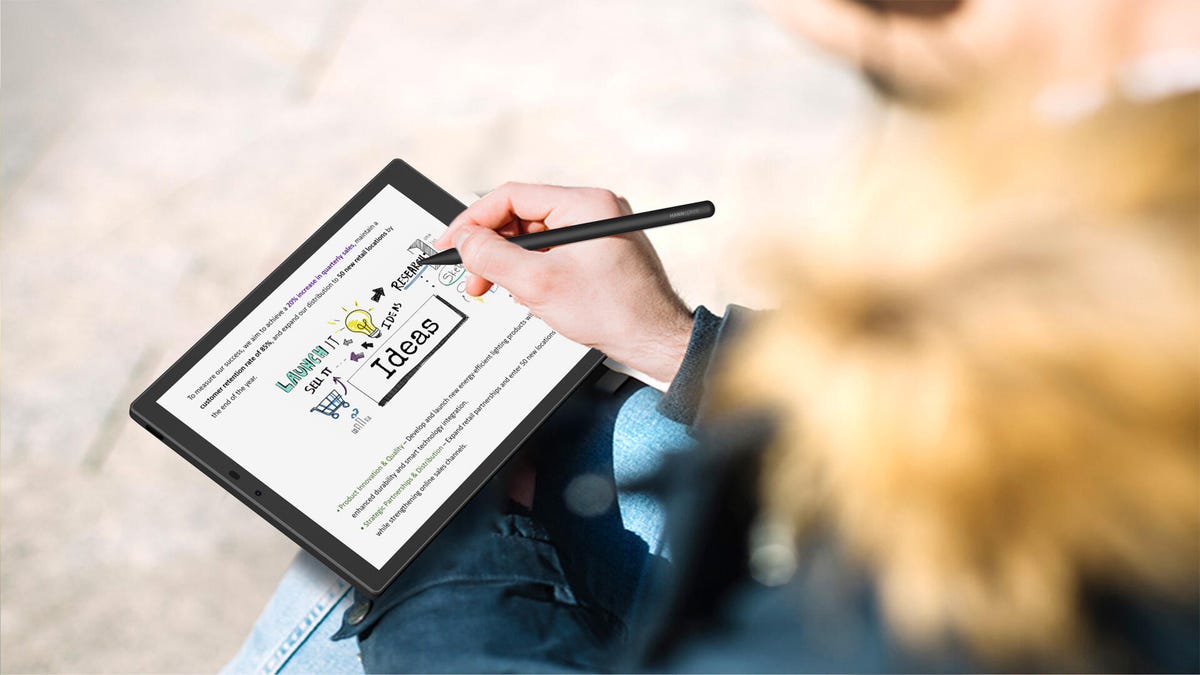
If you spend long hours staring at screens and want something that's easier on your eyes without feeling sluggish, Hannspree may have an answer. Hannspree, a German company that focuses on visual health and green tech, has introduced the Hannspree Lumo, a "dynamic paper tablet." The company says the tablet emphasizes eye health without sacrificing visual quality or speed.
A paper tablet, or e-ink tablet, is a device that uses electronic ink to mimic the look and feel of writing on real paper. Instead of a pen or pencil, you use a stylus, and the screen itself has a more textured, grainy feel like paper. These tablets are minimalist by design and have reduced lighting to minimize eye strain during extended periods of reading and writing.
Hannspree says its latest innovation is called "ecoVision," a proprietary technology that uses ambient light to illuminate the Lumo screen. The more surrounding light there is, the sharper and more vivid the display will be. The company said that not using a backlight, as LCD and OLED screens do, will be easier on your eyes and use less power.
Don't miss any of our unbiased tech content and lab-based reviews. Add CNET as a preferred Google source.
When there is little ambient light, such as in the evening, the Lumo has a front LED light. The smart light also automatically adjusts its brightness based on ambient light levels.
For anyone who struggles with eye strain or screen-triggered headaches, the Lumo could be appealing. Hannspree says its flicker-free, anti-glare, blue-light-free display is designed to help people with visual sensitivities, including photophobia (light sensitivity), migraines and computer vision syndrome -- a cluster of eye and vision problems linked to extended screen use.
However, Jay Neitz, an ophthalmologist and researcher at the University of Washington School of Medicine, told CNET there are no "significant advantages" to reflective displays, such as those on the Lumo.
"The advertiser says their reflective display has less blue light. However, there is no good evidence that the blue light emitted by phones, tablets, or monitors causes retinal injury or increases the risk of macular degeneration," Neitz said. "Many blue-light–blocking devices are marketed as protecting eye health, but controlled studies show little to no benefit for eye strain, visual acuity, or long-term ocular health."
The Android-powered Lumo can be used for reading e-books, surfing the web, watching videos, casual gaming and video calls, but Hannspree territory manager Martin Kent says the Lumo "isn't just another e-reader."
"By combining visual wellness, color, speed and flexibility, Lumo represents a fundamental shift in how tablets can and should work," Kent said. He added that the Lumo tablet has "greater consideration for our health."
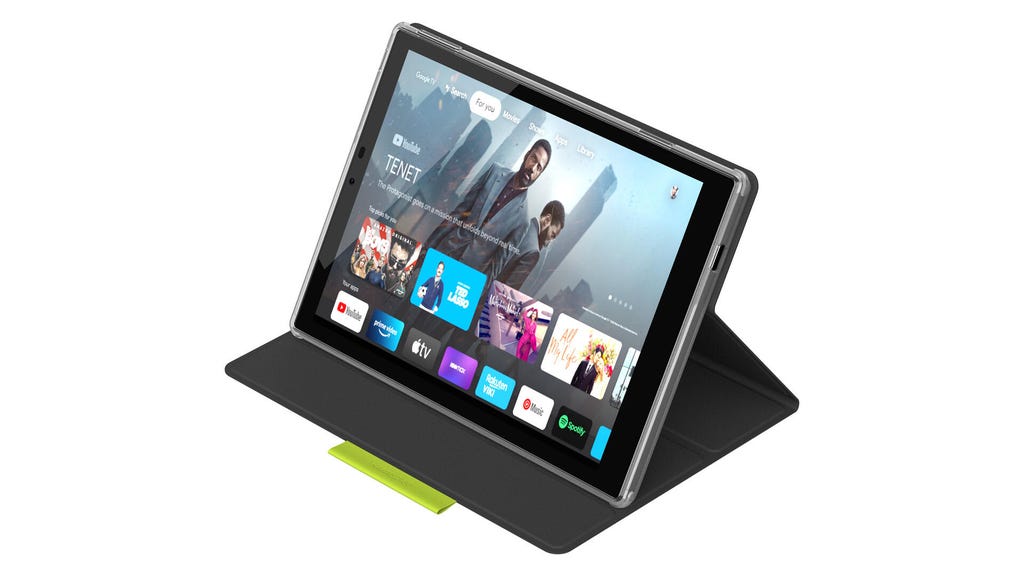
The Hannspree Lumo prioritizes eye health. Hannspree
The Android operating system powers it, and you can access streaming apps such as YouTube, Hulu, Prime Video and more.
The Lumo's 7.8-inch paper-like screen can display 16.7 million colors, with a 60Hz refresh rate and a 5-millisecond response time. The device is 6.6mm thin and weighs only 250g, making it easy to hold with one hand.
Other features include an optional USI 2.0 stylus with 4,096 levels of pressure sensitivity, palm rejection, an eraser button and a real writing feel. A 10-point multitouch allows you to use both the stylus and finger touch simultaneously.
The Lumo is also outfitted with a microphone, 4GB of memory and Bluetooth 5.0. It's priced at £299 (roughly $400), though there's no word yet on whether it will get a US release.
The e-reader market is projected to double by 2035, from $8.46 billion in 2023 to $16.93 billion, with an annual growth rate of 6.51%. E-reader technology has continued to evolve since its early days. (Remember the Rocketbook?) E-ink displays are improving, multimedia elements are increasingly incorporated, and cloud storage and AI are becoming increasingly integral.
More from CNET: Best E-Reader for 2026: Ditch Those Paper Books for Good


