
 Search

(Image credit: Future / Max Freeman-Mills)
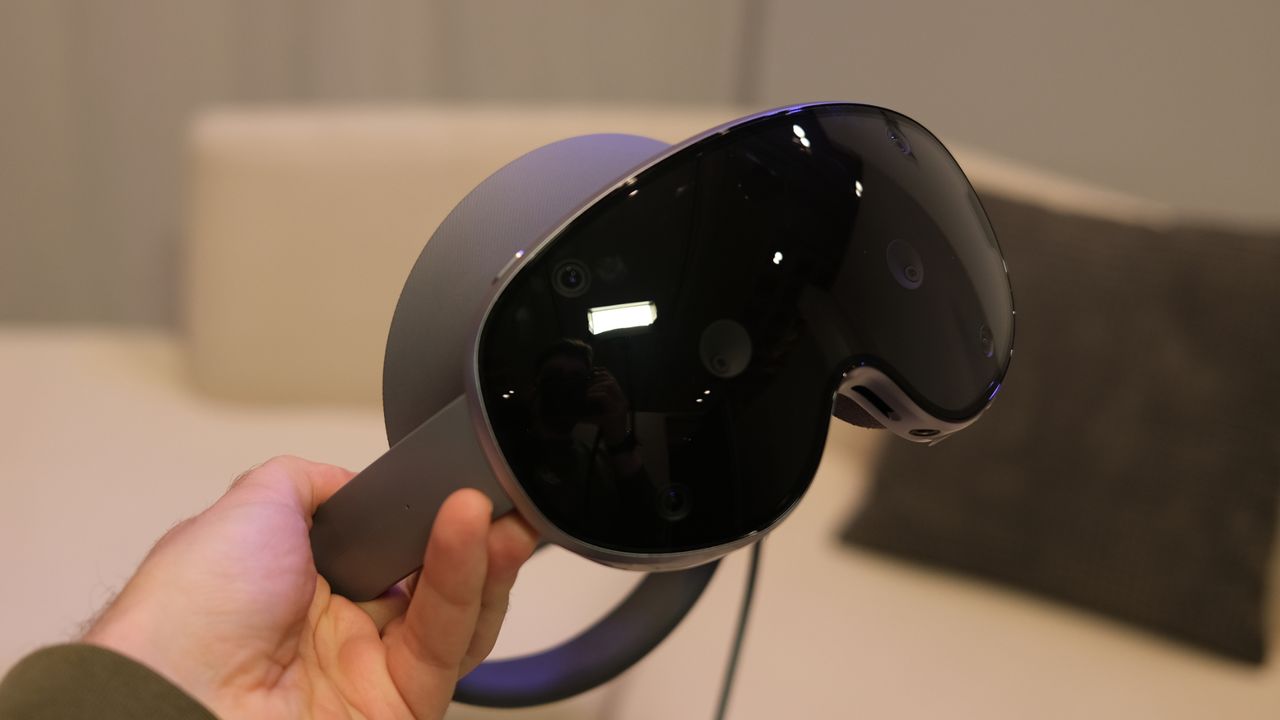
The way Samsung's been rolling out its Galaxy XR headset has made for quite a long wait here in the UK, where it's still not on sale. In the US, though, it's been publicly available for a short while, which made CES 2026 the perfect opportunity to finally get hands-on with the device.
I got a briefing behind closed doors from Samsung, showing off the headset and some new features that it'll get this year, and it was a very intriguing first experience with Samsung's vision for high-fidelity XR.
First off, I got something of a straightforward tutorial in how the headset's interface works, which largely means getting used to hand-tracking and the trademark pinch gesture that steers so many of its menus and buttons. As someone who's used Meta Quest headsets a bunch, this didn't take long to get to grips with.
(Image credit: Future / Max Freeman-Mills)
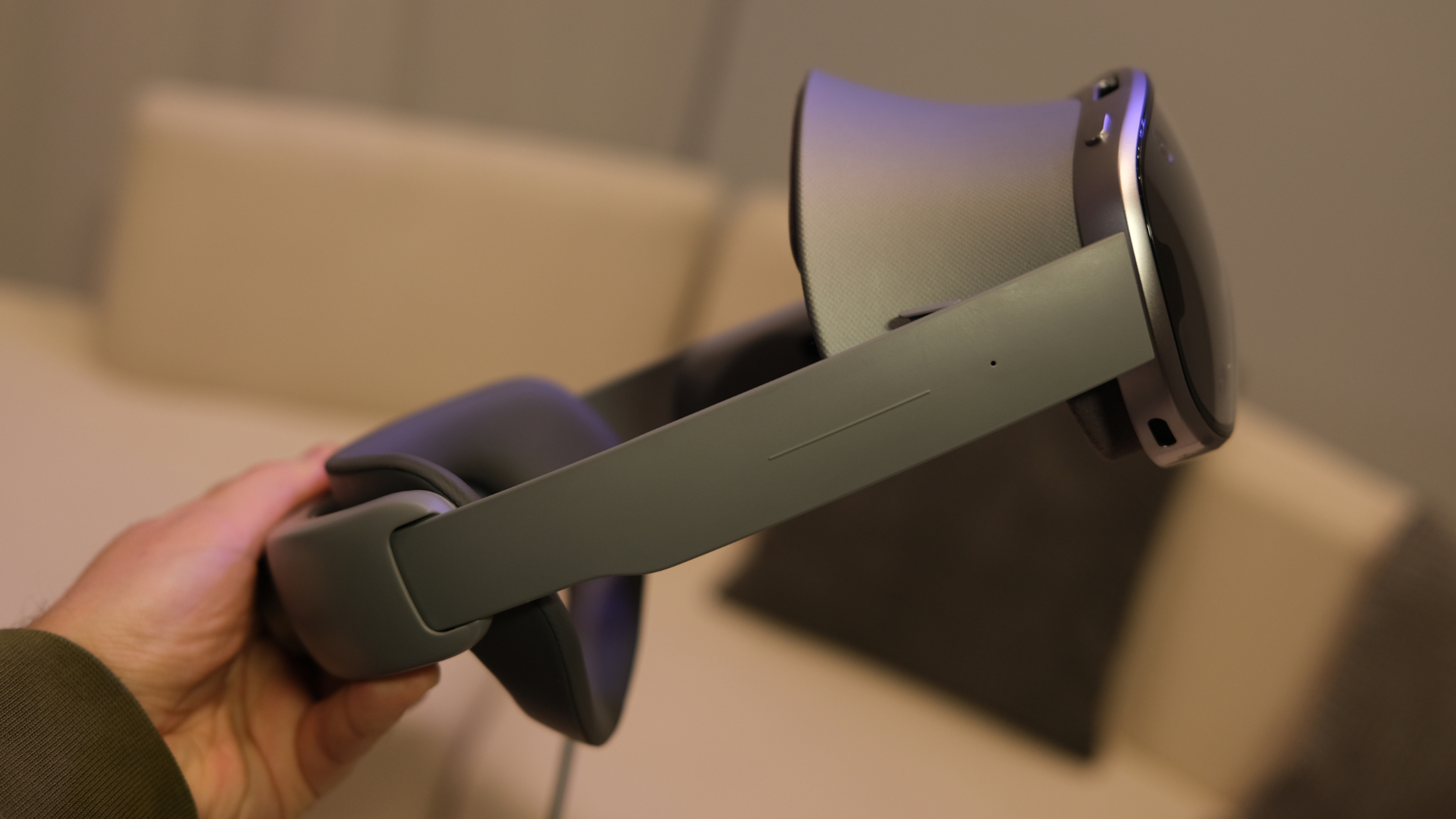
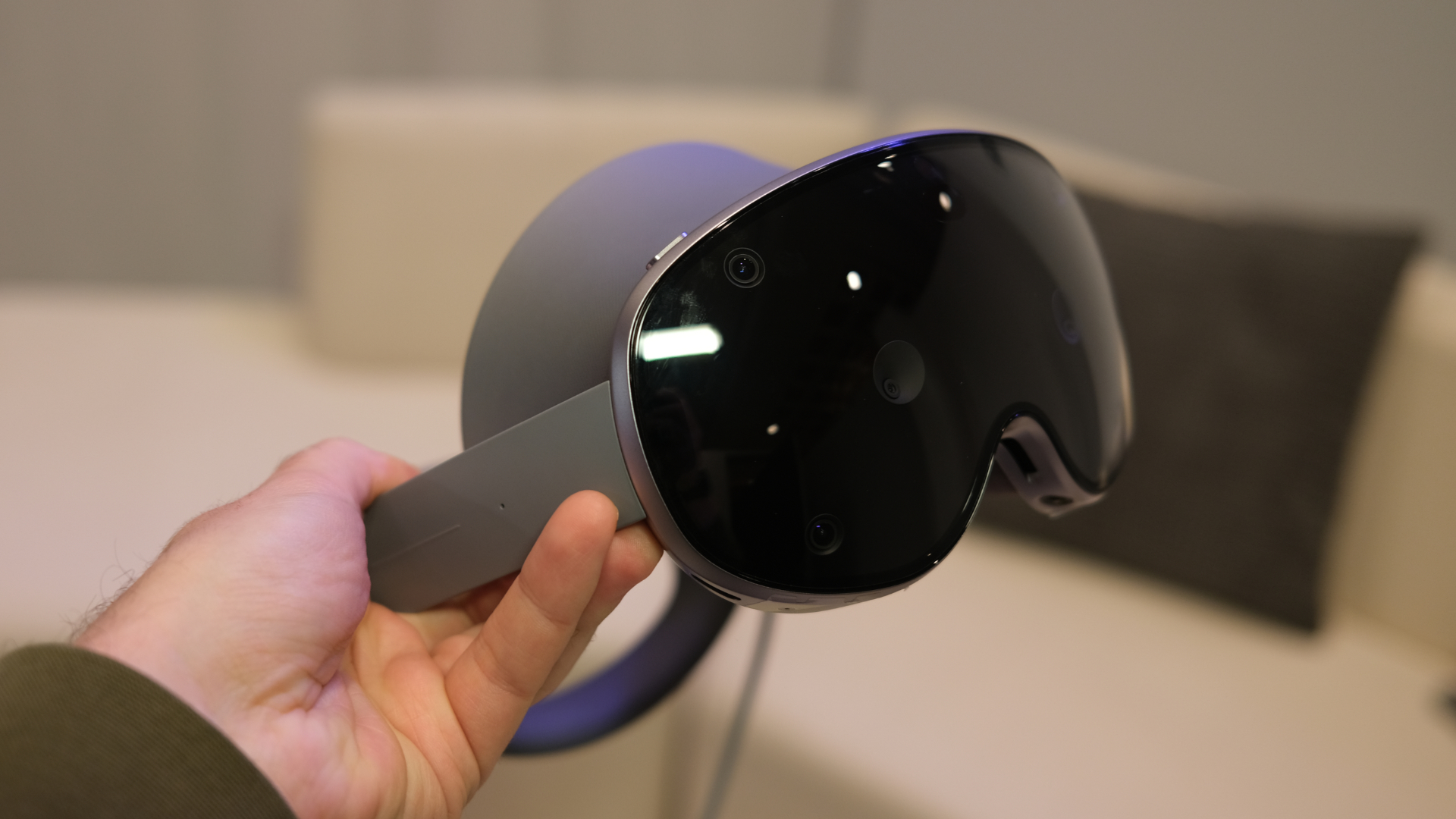
Going through some tutorials and then having a play around with Google Earth (which has been a VR and XR demo favourite for years and years) confirmed what I expected from the Galaxy XR. Its resolution is indeed impressively sharp, and the way you can use it while enjoying clear visuals of your surroundings is indeed impressive.
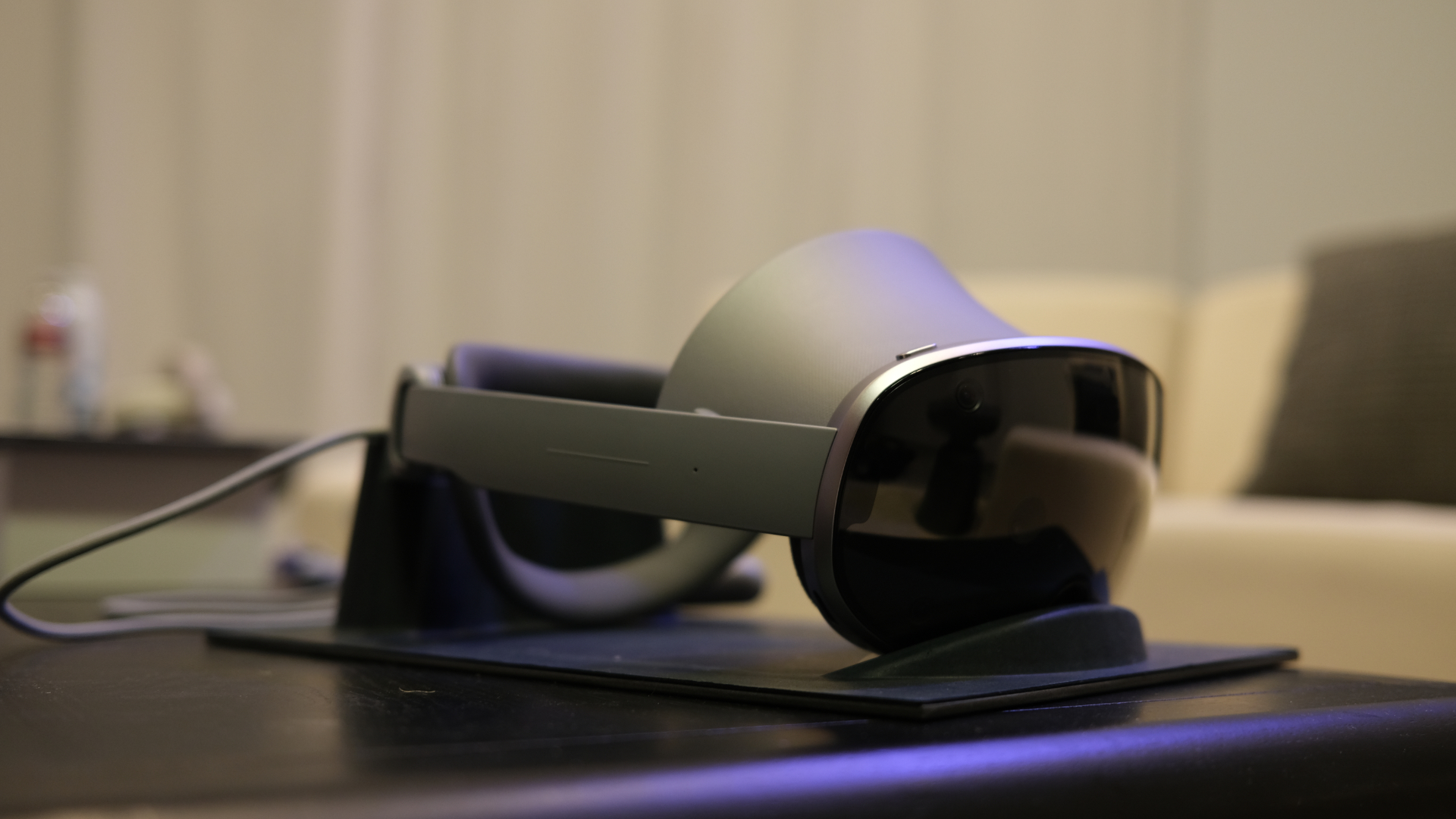
It also confirmed my less optimistic suspicions, though – namely, that a headset priced so expensively might struggle to justify its cost for most people. That's largely because, while the hardware is decently comfortable and impressive in resolution and sharpness terms, it really doesn't offer much that far cheaper VR headsets can't.
Sure, it's technically XR rather than VR thanks to its see-through design (unless you use the light-shields to close it off more), but I found myself enjoying apps and systems that any VR headset has access to, generally at a way lower price. In fact, while its visuals are way more pixellated by comparison, it really made me think that the Meta Quest 3S still stands out as a brilliant way to get a very similar experience for far less.
(Image credit: Future / Max Freeman-Mills)
Where Samsung was able to impress me a bit more was when it briefly showed me some features that most people haven't yet had a chance to try. The biggest and best was labelled as "auto spatialisation", and effectively gave the headset the ability to turn any flat video I watched into a spatial one.
The Galaxy XR can already do this with flat photos that you view, using AI processes to detect edges and create images with depth (a bit like holographs). Applying this same wizardry to videos, it was really cool to see how the headset added layers in real-time, to give a subtle but noticeable effect of depth to footage.
Ultimately, though, this still feels like a nice little bonus feature, and far from a system-seller on its own (as Apple has discovered with spatial videos on Vision Pro). That goes for much of what I experienced, to be honest – that $1800 price tag in the US is really hard to swallow just to watch spatial videos.
(Image credit: Future / Max Freeman-Mills)
Ironically, the more theoretically boring part of my demo session involved a showcase of business uses for the headset, but it impressed me a little more. Seeing how it could be used to show customers of giant shipping vessels some detailed models that they could explore and interact with made sense from a sales perspective.
Medical training programs, meanwhile, were rudimentary in terms of graphics, but it's easy to see how they could be super useful to help get trainee doctors used to surgical environments and processes. That said, none of this really helps explain why a normal person might need a Galaxy XR headset.
Really, that's the chief takeaway I left my session with. Samsung's tech is undoubtedly impressive, and this was certainly one of the sharpest headsets I've ever slipped on, but while it remains this expensive, there's really no clear path to it gathering millions of users at any point.
The big challenge for Samsung, just like Apple is facing with Vision Pro, is to work out whether this is really a consumer product at all right now, or if that's still a good few years away. Otherwise, this is all looking a bit Microsoft HoloLens again, from my point of view.

-
 C114 Communication Network
 -
 Communication Home
