
 Search

Credit: Getty
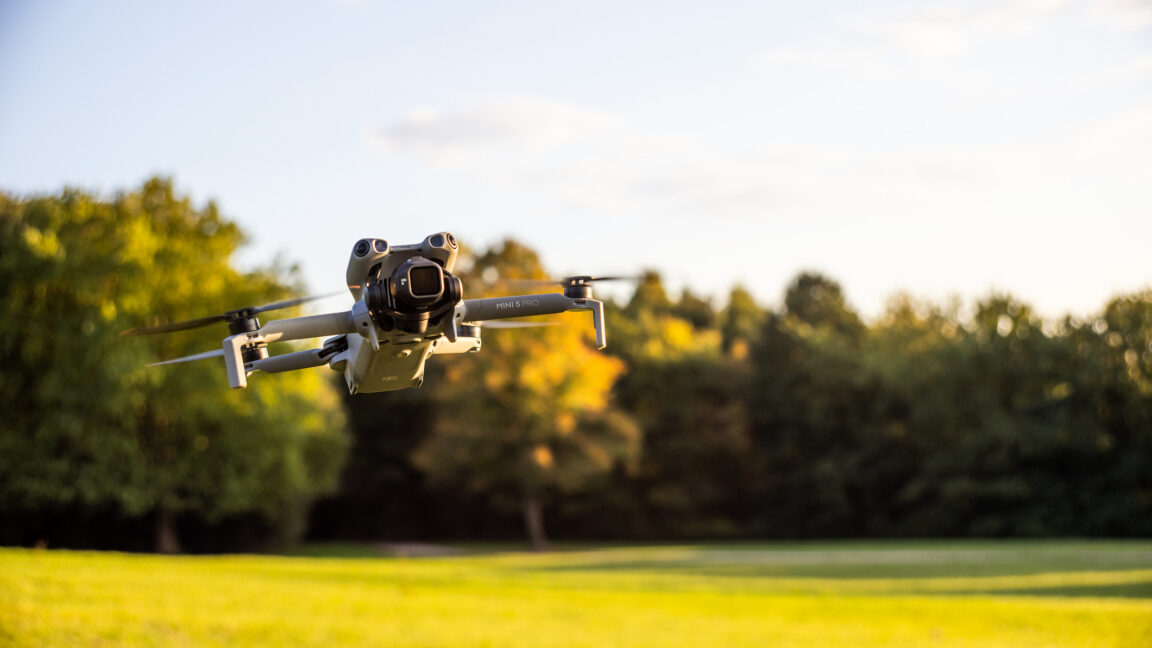
Americans will be unable to buy the latest and greatest drones because the Federal Communications Commission (FCC) has banned foreign-made drones as of today.
On Monday, the FCC added drones to its Covered List, which it says are communications equipment and services “that are deemed to pose an unacceptable risk to the national security of the United States or the security and safety of United States persons.” The list was already populated by Kaspersky, ZTE, Huawei, and others.
An FCC fact sheet [PDF] about the ban released on Monday says:
UAS [unmanned aircraft systems] and UAS critical components, including data transmission devices, communications systems, flight controllers, ground control stations, controllers, navigation systems, batteries, smart batteries, and motors produced in a foreign country could enable persistent surveillance, data exfiltration, and destructive operations over US territory, including over World Cup and Olympic venues and other mass gathering events.
People can still use Chinese-made drones they already own, and drones from DJI and other foreign countries that were previously approved by the FCC will still be available for purchase. However, the FCC won’t approve any new devices from companies that make drones and aren’t based in the US.
The FCC said that its decision came after a review by “an Executive Branch interagency body with appropriate national security expertise that was convened by the White House.”
Ban takes off
Drones have been under legislative and social scrutiny for years. They’ve been targeted as potential national security threats, as well as criticized for their ability to be used to invade people’s privacy, be disruptive, and dangerously enter restricted airspace, and for their roles in property destruction.
A ban on consumer drone imports gained serious momentum after the US House of Representatives and US Senate passed the 2025 National Defense Authorization Act, including a Countering CCP Drones Act, late last year. At the time, DJI and other affected companies were given a year to convince “an appropriate national security agency” that their devices posed no national security risk.
DJI sent numerous requests to the US government to audit its devices in hopes of avoiding a ban, but the federal ban was ultimately enacted based on previously acquired information, The New York Times reported this week.
The news means that Americans will miss out on new drone models from DJI, which owns 70 percent of the global drone market in 2023, per Drone Industry Insights, and is widely regarded as the premium drone maker. People can still buy drones from US companies, but American drones have a lackluster reputation compared to drones from DJI and other Chinese companies, such as Autel. US-made drones also have a reputation for being expensive, usually costing significantly more than their Chinese counterparts. DaCoda Bartels, COO of FlyGuys, which helps commercial drone pilots find work, told the Times that US drones are also “half as good.”
There’s also concern among hobbyists that the ban will hinder their ability to procure drone parts, potentially affecting the repairability of approved drones and DIY projects.
US-based drone companies, meanwhile, are optimistic about gaining business in an industry where it has historically been hard to compete against Chinese brands. It’s also possible that the ban will just result in a decline in US drone purchases.
In a statement, Michael Robbins, president and CEO of the Association for Uncrewed Vehicle Systems International (AUVSI), which includes US drone companies like Skydio as members, said the ban “will truly unleash American drone dominance” and that the US cannot “risk… dependence” on China for drones.
“By prioritizing trusted technology and resilient supply chains, the FCC’s action will accelerate innovation, enhance system security, and ensure the US drone industry expands rather than remaining under foreign control,” Robbins said.
Understandably, DJI is “disappointed” by the FCC’s decision, it said in a statement issued on Monday, adding:
While DJI was not singled out, no information has been released regarding what information was used by the Executive Branch in reaching its determination. Concerns about DJI’s data security have not been grounded in evidence and instead reflect protectionism, contrary to the principles of an open market.

-
 C114 Communication Network
 -
 Communication Home
