
 Search

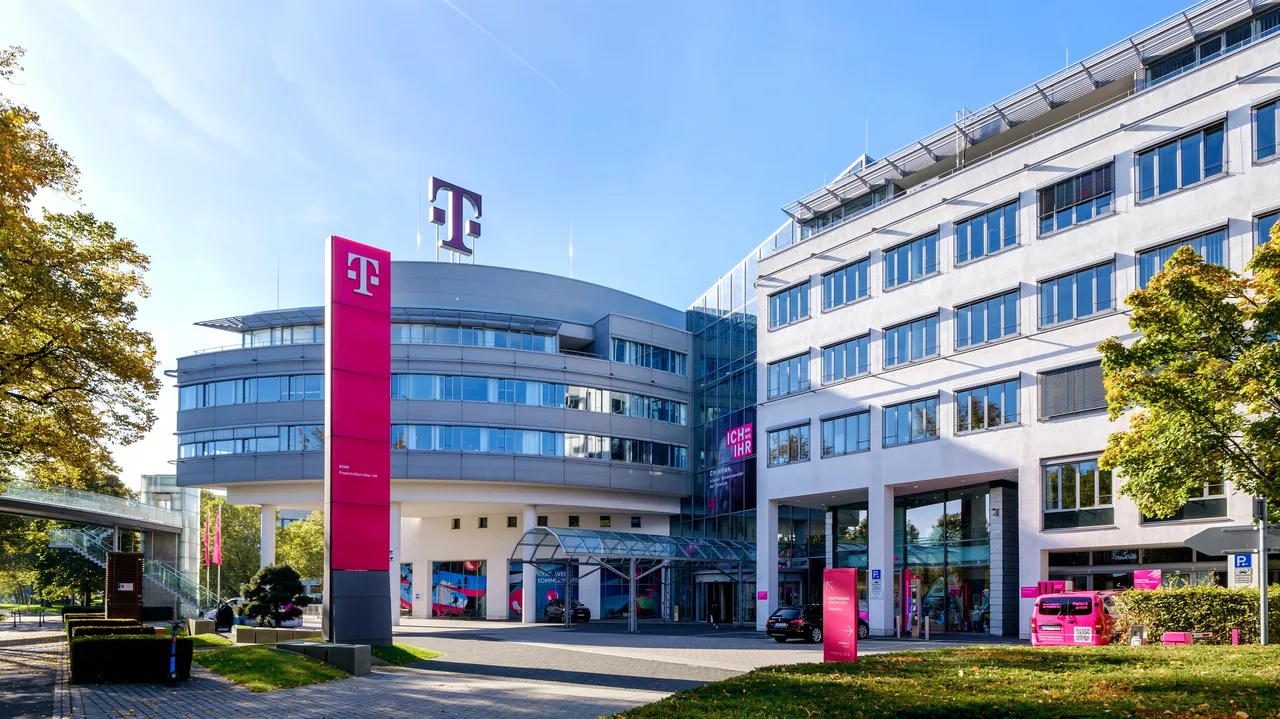
(Source: Deutsche Telekom, Photo: Norbert Ittermann)
For mobile equipment suppliers hoping that a surge in AI-related uplink traffic will soon lead telcos to spend big on capacity upgrades, Deutsche Telekom's incoming chief financial officer has a reality check.
At its inaugural AI Investor Day this week, the German telco mapped out how it is investing in AI and automation and revealed targets for AI-related revenue and cost savings across its markets outside the US. But when it comes to AI's impact on 5G networks, the carrier sees no need for extra spending on additional capacity in the next few years.
One of the financial analysts at the event asked if Deutsche Telekom expects capital intensity to rise after 2027 due to AI's demand on the network, since vendors like Ericsson and Nokia are eyeing a potential sales boost from upstream capacity. The short answer is no.
The operator is in the process of "upgrading mid-range plans," according to Dhananjay Mirchandani, DT's senior VP for group controlling and the group's next CFO from May 1 next year.
"I cannot recall a single conversation in which Alex Jenbar [CTO of Telekom Deutschland] … or somebody else approached us and said, 'in addition to whatever we currently have on our roadmaps for RAN modernization, that there is an incremental requirement for an investment to be able to prepare ourselves for additional uplink/AI-related traffic,'" he said.
"[That's] just to give you a sense of the degree of confidence we have in terms of our own capex planning, specifically related to mobile network capacity," he added.
Per the operator's current guidance, set at its Capital Markets Day in 2024, capital spending (excluding the US and spectrum) is expected to account for 21% of service revenue in 2027. Mirchandani said DT is "trading slightly above" that because it is spending heavily on rolling out fiber in Germany.
Mirchandani will control the group's purse strings from May when he takes over from long-serving CFO Christian Illek, who is retiring. His assessment on medium-term mobile capacity is bound to be sobering for its radio access network (RAN) vendors in Germany: Ericsson, Huawei and Nokia.
Huawei has accounted for roughly two-thirds of the operator's RAN in Germany while Ericsson supplied the remaining one-third. The mix is changing as DT aims to replace Huawei with open RAN technology from Nokia at 3,000 sites by 2027. The carrier had 1,000 Nokia sites live in 2025.
AI uplink preppers
The rise of agentic and physical AI could upend decades of mobile network design that dedicates most bandwidth to download speeds (i.e., downlink) and much less to the data channels for uploads (i.e., uplink). It's not certain how or when traffic patterns will change in a big way, but telcos are talking about preparing for a wave of AI-fueled traffic coming from smartphones, smart glasses or robots.
DT's US operator T-Mobile does not see AI putting a strain on its mobile network but claims it is ready for it with enhanced uplink capabilities it is rolling out with 5G-Advanced features.
A reason for deploying 5G-Advanced is "to improve the uplink performance, especially with the potential surge in AI mobile traffic soon," said T-Mobile CTO John Saw, speaking during the carrier's second quarter earnings call in July. Improvements are coming from "uplink carrier aggregation, uplink MIMO, transmit switching," he added.
Testing by Signals Research Group on T-Mobile's 5G standalone network earlier this year showed the impact on uplink capacity was "very modest" when running AI and augmented reality applications on Meta Ray-Ban Display glasses and Samsung smartphones.
AT&T President and CEO John Stankey flagged the need to "build better upstream" in wireless networks and said this was part of the reasoning behind acquiring EchoStar's 600MHz lowband spectrum. The carrier selected Ericsson's dual-band 600MHz radios that feature "uplink-enhancing 8RX [i.e., eight receiver] technology," which was said to be a first for lowbands.
While uplink capacity for distributed AI applications is a topic of the day, it is often considered in a 6G context too. For example, T-Mobile is a firm believer that physical AI and 6G are telcos' chance for revenue streams beyond connectivity. It describes its 5G-Advanced network as the foundation that makes it "ready for 6G."
"Our network will be the connective tissue for physical AI and AI wearables. It will be part of the intelligent fabric that connects physical AI devices, data center and the network edge," said Saw during DT's AI Investor Day. "6G is not just the next G. It is a generational opportunity for the transformation of the telecom sector, enabled by the perfect storm of AI, wireless and efficient computing."
Deutsche Telekom does not see AI uplink traffic driving an incremental increase to its RAN capex plans in the medium term. Its peers might share this view. Whether telcos adjust uplink capacity via 5G SA upgrades or future 6G decisions, the investments might not necessarily swell overall RAN spending but fall within what they already plan to spend.

-
 C114 Communication Network
 -
 Communication Home
