
 Search

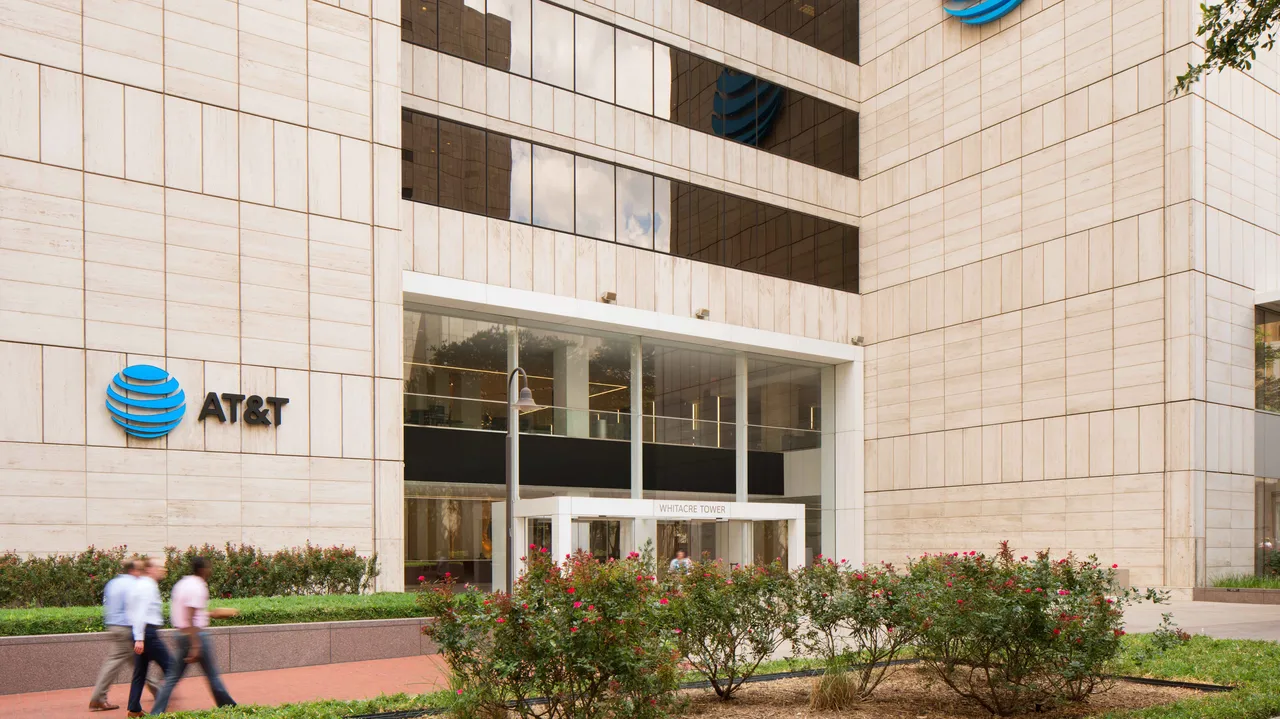
(Source: AT&T)
Almost three years ago, AT&T provoked guffaws among highly placed telecom executives at other companies when it defended a new $14 billion contract with Ericsson as an "open RAN" deal. Short for open radio access network, the label describes technology built with a standardized interface (or i/f), allowing parts from different vendors to be joined. Far from doing that, AT&T seemed to have handed almost its entire RAN to Ericsson. Under the terms of the deal, Ericsson would not only retain the two thirds of the footprint it already served but also replace Nokia, AT&T's only other vendor, as the remaining third.
It was a case of open RAN by name, single vendor by nature, and nothing in the intervening period has changed that perception. AT&T's introduction of 1Finity, Amphenol and Corning as alternative radio vendors is for small cells, not macro sites. Mavenir, another radio vendor named in the lineup, quit the hardware game last year. The RAN does not even look very "virtual." Just 21 sites in two cities used Dell servers hosting Intel's general-purpose processors in May this year.
But in the weeks after the AT&T deal was announced, Ericsson insisted open RAN would change the way it sold networks. "I think the industry has been characterized by vertically integrated geographical splits and we believe that paradigm is gone with this shift," said Fredrik Jejdling, then head of Ericsson's networks business, in February 2024. "Therefore, the competitive premise shifts from being integrated and vertical to being strong and horizontal in the layers."
To enjoy vendor diversity and avoid overreliance on one provider, a national mobile operator would previously carve its territory into two or three separate fiefdoms, each managed by a different supplier. This was exactly what AT&T had done when it divided its RAN sites between Ericsson and Nokia.
In the future envisaged by Jejdling, the network would look more like a tiered cake. Each layer of sponge, icing and sprinkles would represent a slice of the RAN stack and could potentially come from a different vendor. Ericsson might provide all the baseband software for a nationwide network, for instance, while 1Finity stumps up the radios. To make the entire cake, Ericsson would have to be competitive in all layers.
Cakes out, fiefdoms in
But Jejdling left the job about a year later and the strategy appears to have gone with him as Ericsson prepares for 6G. The latest indication of that can be glimpsed in some of Ericsson's recent statements about the emerging generation, now expected to launch in 2030. Multivendor interfaces will probably come with "limited performance." Cake metaphors are out. Fiefdoms are back in.
Those, at least, are the takeaways from a critical paragraph about 6G network architecture in a recent Ericsson update. "Ericsson is embracing all RAN-internal interfaces above as potential multivendor interfaces, where we need to comply and be prepared to do interoperability testing, at least with basic/limited performance/features," said the company. "However, it is expected that the main deployment model for multi-vendor RAN will continue to be by RAN vendor geographic areas, using interoperable Inter-RAN Area Mobility i/f."
Much of this is merely a comment on the state of a market that has not evolved as some would have liked or as Jejdling had seemed to predict. Outside AT&T, open RAN's original enthusiasts have been largely thwarted in their attempts to bring multivendor 5G networks into commercial use. The big five vendors – Huawei, Ericsson, Nokia, ZTE and Samsung – have never combined and still account for 95% of all RAN business, reckons Light Reading sister company Omdia.
Was Jejdling being disingenuous? Did he secretly think the open RAN ship would crash on the rocks of commercial and economic reality, and that Ericsson had to profess support for it to avoid upsetting advocates within telcos? If the chatter about open RAN has quietened since the AT&T deal was announced, Ericsson still boasts products that are compatible with open RAN specs. Yet as well as now tacitly arguing that 6G products for a given site will come mainly from the same vendor, it has never fully embraced the concept.
It has not, for instance, commercialized a purpose-built baseband product that could be connected via the appropriate open interface to a third-party massive MIMO radio, an advanced 5G-era technology. Ericsson's 6672 processor stopped short of providing that functionality and a successor product had not arrived when Light Reading met with Ericsson's executives in Stockholm several months ago. "We have not yet released a new version of RAN compute products," said Gabriel Foglander, Ericsson's head of strategic RAN leadership, in June. "That is still in the roadmap."
Ericsson has, conversely, introduced massive MIMO radios compatible with this same interface, known as open fronthaul category B ULPI (uplink performance improvement). "The most important thing right now is to make sure that every new radio we bring out is capable of this because then we're seeding the market," said Foglander.
Even so, Ericsson's technology is based on a flavor of ULPI that puts uplink functions including the equalizer into the radio unit. That function, which addresses interference, must be included in the baseband or distributed unit to comply with open RAN specs, and some telcos prefer an alternative ULPI flavor that avoids this radio replication. The design could produce simpler radios. It could also lead to performance problems, according to Ericsson and others.
Today, an operator determined to pair Ericsson's baseband software with someone else's massive MIMO radios would have to invest in the Swedish vendor's set of virtual or cloud RAN products. "You have a software-to-software exchange that doesn't need to factor in if we have an Intel chipset here and Ericsson silicon over there," said Foglander. "It is agnostic of the hardware in that way."
Yet those cloud RAN products are the ones that had not advanced in AT&T's network beyond 21 sites by June. Executives including Per Narvinger, who succeeded Börje Ekholm as CEO last week, have this year noted their drawbacks versus custom silicon. "I think the boom in the AI industry and the impact on memory pricing is not making it easy to hit the right TCO [total cost of ownership] on that," said Foglander. "That's probably a situation that will live for some time, and then probably we'll see more capacity coming into the industry."
The 6G pairing problem
To simply assume Ericsson is trying to hinder technologies that could threaten its business model would be unfair. Tommi Uitto, the president of Nokia's mobile networks business group until the end of last year, agreed that pairing baseband and radio vendors in massive MIMO remained difficult even with open interfaces. Beyond Ericsson, there are almost no commercial examples of it. Virtual RAN is little used outside the footprint of Samsung, whose market share was just 5% last year.
The multivendor challenges will probably grow in 6G. Many operators are eager to retain their 5G hardware and introduce 6G in the same spectrum bands through a software upgrade. Big vendors appear to have zero appetite for an interface that would allow them to use different 5G and 6G suppliers.
Meanwhile, new 6G spectrum is likely to be found in the 6GHz and higher bands, several rungs up the frequency ladder from the 3.5GHz band that was the focus of 5G attention. Signals do not travel as far or penetrate walls as effectively at this level. To boost coverage, vendors plan to rely on even more complicated massive MIMO systems. Pairing vendors could be even harder.
Ericsson's latest commentary on 6G does look potentially problematic for AT&T, but largely because of the decisions the operator has made. "That leaves AT&T in an awkward spot," said Alok Tripathi, an independent analyst and former technology expert for Huawei who posts regularly on LinkedIn. "It has removed much of Nokia, so a regional split is largely off the table, and its multivendor plan depends on third-party radios plugging into an Ericsson-led foundation, the arrangement Ericsson itself describes as 'basic/limited performance/features.'"
The Ericsson commentary refers to an inter-RAN area mobility interface that would support handover between mobile sites in the borderlands between vendor fiefdoms. Yet no such borderland will exist in AT&T's network after it has finished removing Nokia, which was present at fewer than 16% of RAN sites in late 2025, according to data shared by Ookla.
AT&T may currently be delighted by its choice of Ericsson, whose reputation for RAN excellence was restored under Ekholm's leadership. But its network appears less multivendor now than it did when the Ericsson deal was announced, and the situation is unlikely to change in 6G. If it is happy pursuing a monogamous affair with Ericsson long into the 2030s, there may be no need to worry. Any alternative scenario would be another matter.

-
 C114 Communication Network
 -
 Communication Home
