
 Search

Ornl.gov
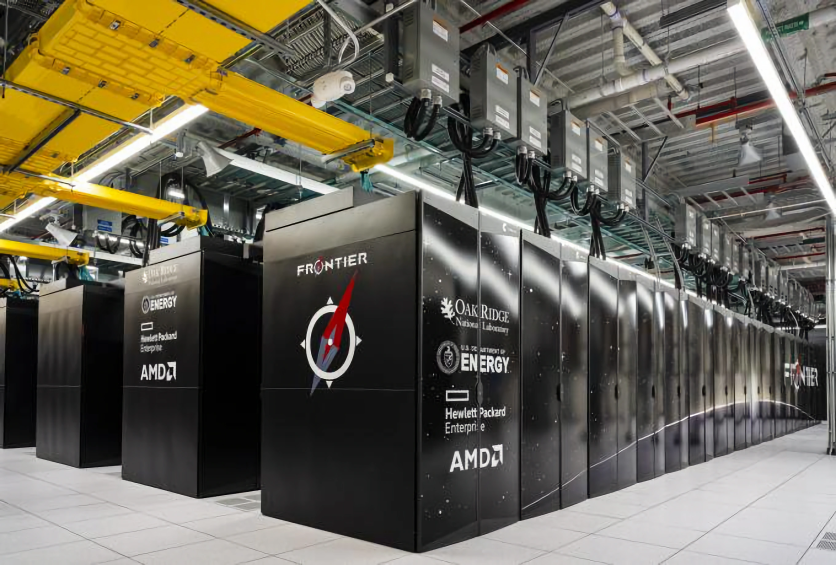
A 20-qubit quantum processor named Pathfinder began operating at Oak Ridge National Laboratory on June 16, 2026, making it the first commercially procured quantum computer at the Tennessee facility — and the first U.S. installation for Finnish manufacturer IQM Quantum Computers. Pathfinder now sits inside the computing campus that houses Frontier, the most powerful supercomputer in the world dedicated to open science, a co-location that places a quantum processor alongside more classical computing power than any comparable deployment on record. Eight days from now, IQM's shareholders vote on the company's planned Nasdaq listing — and this deployment hands investors a concrete proof point on American soil.
Pathfinder's Place in the Machine Room
ORNL owns and operates Pathfinder outright. The system grants IQM no remote access, no cloud billing rights, and no intellectual property claims over any research the laboratory runs on it — a design choice that sets IQM's model apart from every major quantum cloud provider. "Our first U.S. system now sits on Oak Ridge campus, connected to their HPC environment, owned and operated by their teams," said Jan Goetz, CEO and co-founder of IQM. "Quantum becomes useful when it works inside real computing infrastructure, and there is no better place to prove that."
Pathfinder connects to the National Center for Computational Sciences Technology Integration Group test bed through a standard 1 Gigabit Ethernet link — the same class of connection used in the Leibniz Supercomputing Centre deployment IQM documented in a 2025 ACM paper co-authored by IQM engineers and European HPC staff. That paper recorded four operational lessons from running an identical 20-qubit system inside a major supercomputing center: quantum processors require far stricter vibration, temperature, and electromagnetic noise controls than classical HPC nodes; daily automated recalibration must be built into the job scheduler; redundant power and cooling infrastructure is non-negotiable; and hands-on staff onboarding — for both quantum specialists and HPC generalists — is essential for research productivity.
"The presence of the IQM Radiance quantum computer on campus has already accelerated integration with our world-class HPC capabilities," said Travis Humble, Director of ORNL's Quantum Science Center. "Our research teams are now developing new methods and tools to demonstrate applications in materials simulations, chemistry, and artificial intelligence."
Read more: Quantum Computing Explained: Unlocking the Future of Quantum Technology and Its Impact
How Pathfinder Plugs Into an Exascale Environment
The IQM Radiance processor at the heart of Pathfinder is built on flux-tunable transmon qubits arranged in a square lattice. Each of the 20 computational qubits is connected to its neighbors through tunable couplers — dedicated circuit elements that switch between coupling and decoupling states using microwave pulses, suppressing the constant background crosstalk that would otherwise corrupt neighboring qubits during gate operations. The system's native two-qubit operation is the controlled-Z (CZ) gate; published performance data on the same 20-qubit architecture shows single-qubit gate fidelity above 99.9% and two-qubit CZ fidelity above 99.3%.
That fidelity must be maintained at an operating temperature of 10 millikelvin — roughly 15 times colder than outer space — which requires a dilution refrigerator that occupies a footprint similar to a row of HPC nodes. The cryostat's control electronics, housed in a standard 19-inch rack, connect to the quantum processor through dozens of fine-gauge microwave cables that transmit the pulses encoding, entangling, and measuring qubits. Those cables are physically sensitive to vibration, meaning the site survey before installation must measure floor vibration, AC and DC magnetic fields, ambient sound pressure levels, and temperature stability over at least 25 continuous hours.
The integration layer that makes Pathfinder useful inside an HPC environment is IQM's Slurm-based HPC Integration Service, launched in May 2026. Slurm is the workload manager that nearly every major HPC center already uses to schedule jobs across CPUs and GPUs; IQM's service registers Pathfinder as a schedulable node within that same framework. A researcher submits a quantum circuit the same way they submit a GPU job — through the familiar Slurm interface — and the quantum device management layer handles the translation from software instruction to microwave pulse sequence. This transforms the quantum computer from a specialized instrument requiring dedicated operator attention into a co-processor that HPC staff can allocate alongside classical hardware.
The square lattice topology carries a specific advantage for ORNL's research agenda. Surface-code quantum error correction — the leading method for building fault-tolerant quantum computers from noisy physical qubits — requires qubits arranged in a planar grid with nearest-neighbor connections. IQM's Crystal topology maps directly onto that structure without additional routing overhead, meaning ORNL researchers can run error-correction experiments on Pathfinder today and port their results to the larger-qubit systems IQM is delivering to European sites later in 2026.
What a 20-qubit system cannot yet do is match the computational throughput of Frontier for general workloads. Coherence time — the window during which a qubit maintains its quantum state before environmental noise collapses it — averages around 36 microseconds for this transmon architecture, which constrains circuit depth. Current quantum hardware remains in the Noisy Intermediate-Scale Quantum (NISQ) era: these systems are too small and too error-prone to outperform classical computers at most tasks without error correction that requires far more qubits than are currently available. ORNL engineers have described the day-to-day operational reality in interviews: the machine demands dozens of repeated measurements per experiment to build statistically reliable results, because no single quantum measurement is deterministic. The near-term value of Pathfinder lies not in surpassing Frontier but in building the software tooling, hybrid workflow architectures, and researcher expertise that fault-tolerant systems will require when they arrive later this decade.
What a Quantum-HPC Hybrid Can Do Right Now
ORNL has identified three early application targets for Pathfinder: materials simulations, quantum chemistry calculations, and AI algorithm acceleration. Each maps to a class of problems where quantum computers offer a structural advantage over classical ones at sufficient qubit counts.
Materials simulations involve calculating how electrons behave in molecular systems — a task that becomes exponentially harder for classical computers as the system size grows, because representing quantum states on classical bits requires exponentially more memory. Quantum computers represent those states natively. RIKEN and IBM demonstrated in January 2026 the largest quantum chemistry calculation on record — modeling the electronic structure of complex iron-sulfur molecules — by pairing an on-premises IBM quantum processor directly with the Fugaku supercomputer. ORNL's Pathfinder follows the same architectural pattern: classical preprocessing on HPC, quantum circuit execution on the QPU, classical post-processing on HPC.
ORNL's director has framed the goal as integration rather than displacement. The laboratory plans to connect Pathfinder to a smaller classical cluster first — not Frontier directly — while the hybrid software tools mature, with connectivity to larger systems following as those tools stabilize. The forthcoming Lux AI cluster, expected on campus in 2026, and the planned Discovery system in 2028, will provide additional classical horsepower for these workflows.
On-Premises Ownership and Its Consequences for U.S. Research
IQM's commercial model rests on a deliberate distinction from cloud-based quantum access. When a national laboratory connects to a quantum platform through a cloud API, research jobs transit external networks, the hardware runs on a shared schedule, and IP ownership depends on terms of service. When ORNL owns a machine on its campus, the data stays local, the scheduling is controlled entirely by ORNL's staff, and any novel algorithm or workflow developed on the hardware is unambiguously ORNL's property.
IQM says it has delivered more on-premises full-stack quantum systems globally than any other manufacturer, with installations at HPC centers including Leibniz Supercomputing Centre in Germany, CINECA in Italy, and now ORNL in Tennessee. A Center for Strategic and International Studies analysis published in March 2026 identified ORNL as the flagship U.S. institution for quantum-HPC integration, with a Department of Energy budget of $125 million through 2030 allocated specifically to this effort. Nine DOE laboratories are advancing comparable programs, and Pathfinder is the first commercially procured quantum system to enter that portfolio.
IQM's Nasdaq Countdown
IQM announced in February 2026 a business combination with Real Asset Acquisition Corp. (Nasdaq: RAAQ), a special purpose acquisition company, at a pre-money equity valuation of $1.8 billion. The SEC declared the Form F-4 registration statement effective on June 5, 2026. An extraordinary general meeting of RAAQ shareholders is now scheduled for June 25, 2026 — eight days from publication — to vote on the business combination. If approved, IQM will list American Depositary Shares on the Nasdaq Global Select Market under the ticker IQMX, with a secondary listing planned for Nasdaq Helsinki.
The combined entity expects to carry more than $450 million in cash, drawn from RAAQ's approximately $175 million trust account, more than $146 million in committed private investment in public equity financing that includes a €50 million facility from BlackRock, and existing IQM balance sheet assets. The company reported 2025 revenues of €31 million (approximately $36 million).
The Pathfinder announcement arrives eight days before that shareholder vote. An installation at one of the world's most recognized computing institutions is exactly the commercial signal IQM needs at this moment: evidence that its on-premises model has cleared the bar for the most demanding quantum research environments in the United States.
Senator Marsha Blackburn described the deployment as "a major milestone that will empower Tennessee to strengthen America's leadership in quantum science." Senator Bill Hagerty framed it as evidence that "quantum science, energy systems, and economic growth are converging in ways never before seen." The political enthusiasm reflects a broader federal consensus: quantum-HPC integration has become a strategic priority across the DOE, DARPA, and the National Science Foundation, with the United States pressing to establish leadership before European and Asian competitors close the infrastructure gap.
What Comes Next for ORNL and IQM
For ORNL, Pathfinder is a first step toward a longer-term vision of tightly integrated quantum-classical computing, backed by a federal budget that extends to 2030. For IQM, the U.S. market — home to most of the world's leading HPC facilities and the deepest pool of quantum computing researchers — represents the next phase of a global expansion that already spans more than 400 employees and operations across Europe, Asia, and North America. The company's roadmap calls for 150-qubit systems to reach the Leibniz Supercomputing Centre and Finland's VTT by mid-to-end 2026 — roughly a fivefold increase in qubit count over Pathfinder — positioning the company for the error-correction regime where quantum computing's most consequential applications begin to become practical.
Twenty qubits will not solve the problems Frontier was built for. But the software stack under development around Pathfinder — the hybrid workflow tools, the Slurm scheduling integration, the error-correction experiments on a surface-code-optimized topology — is the foundational architecture that will eventually make fault-tolerant quantum computing practical inside the HPC facilities where the world's most consequential science gets done.
Frequently Asked Questions
What does it mean for a quantum computer to be "on-premises" at a national laboratory?
An on-premises quantum computer is physically located at and owned by the institution that uses it, rather than accessed remotely through a cloud service. At ORNL, this means Pathfinder sits in the same facility as Frontier, ORNL's HPC staff schedule jobs on it using the same Slurm workload manager they use for classical nodes, and all research outputs and intellectual property belong to ORNL. Cloud-based quantum access, by contrast, routes jobs over external networks to shared hardware, creating latency, scheduling constraints, and IP ambiguities that on-premises deployments avoid.
What is the IQM Radiance architecture and how does it differ from other quantum computers?
IQM Radiance uses flux-tunable transmon qubits in a square lattice topology with tunable couplers between each qubit pair. The square lattice is specifically designed for surface-code quantum error correction — the leading approach for building fault-tolerant systems from noisy physical qubits — allowing ORNL researchers to run error-correction experiments on Pathfinder and apply those results directly to future larger-qubit systems. IBM's quantum computers use a heavy-hex topology that reduces the number of connections per qubit, which limits certain circuit types but also lowers crosstalk risk. IQM's square lattice accepts higher potential crosstalk, which the tunable couplers are specifically engineered to suppress.
What is the world's most powerful supercomputer, and where does Frontier rank?
El Capitan, hosted at Lawrence Livermore National Laboratory in California, holds the top spot on the Top500 list at 1.809 exaflops — but its primary mission is nuclear stockpile stewardship for the National Nuclear Security Administration, making it largely inaccessible to the broader research community. Frontier at ORNL ranks second overall at 1.353 exaflops and remains the most powerful supercomputer in the world dedicated to open science — meaning it is openly accessible to academic researchers, national lab scientists, and university teams through ORNL's computing user programs.
Why does IQM's Nasdaq listing timeline matter for this deployment?
IQM's planned listing through its merger with Real Asset Acquisition Corp. (RAAQ) heads to a shareholder vote on June 25, 2026. A successful U.S. deployment at a recognized national laboratory, announced the week before that vote, provides concrete commercial evidence that IQM's on-premises model has traction in the American market — the largest and most well-funded quantum computing market in the world. The company reported 2025 revenues of €31 million and expects more than $450 million in cash after the transaction closes.

-
 C114 Communication Network
 -
 Communication Home
