
 Search

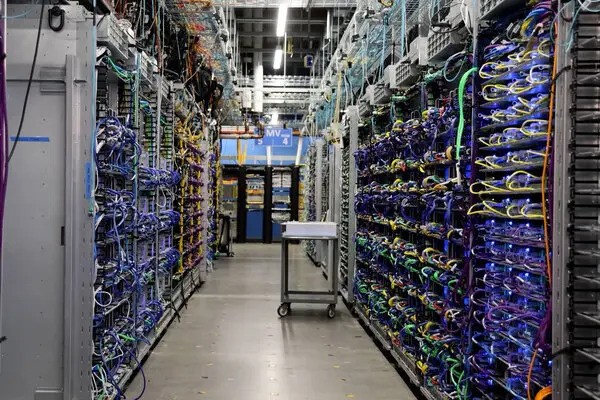
IES-VE, EnergyPlus, CBECC, the standard energy modeling platforms used across the data center industry, were built around a single assumption: that cooling means moving air. When Sabhya Katia, a Senior Building Analyst at Stantec, led the energy and compliance work on a chip-level liquid-cooled mission-critical deployment, he discovered that the assumption was baked into the software at a structural level. There was no established path for modeling liquid cooling for energy code compliance. No industry template. No vendor guidance. Katia built the methodology himself, and it is now the internal standard across Stantec's Midwest and Atlantic teams.
Why Standard Tools Break for Liquid Cooling
Chip-level liquid cooling carries coolant directly to the chip surface via closed loops, removing heat at far higher efficiency than air. But the performance characteristics of those systems, how efficiency varies with thermal load and ambient conditions, are fundamentally different from air-cooled behavior. When Katia attempted to input liquid-cooled system data into IES-VE and EnergyPlus through conventional approaches, the tools defaulted to air-cooling physics, producing predictions that did not reflect how the system actually behaved. The software had never been designed to accept temperature-dependent and load-dependent performance data for a non-air medium, because the application had not previously existed at this scale.
Building the Translation Methodology
Katia developed a methodology for translating vendor component performance curves, the manufacturer data characterizing how liquid cooling equipment behaves across operating conditions, into system-level parameters that IES-VE and EnergyPlus could process within their existing frameworks. The translation captured the temperature-dependent and load-dependent relationships that standard tools could not natively model without requiring the software itself to be modified. The approach was developed entirely through Katia's own analytical work, with no existing industry standard to draw from. Its validity was confirmed through regulatory acceptance: Illinois energy code sign-off under IECC 2021 and LEED BD+C: Core & Shell certification, both requiring independent review of the modeling approach.
Full-Year Simulation and Measurable Outcomes
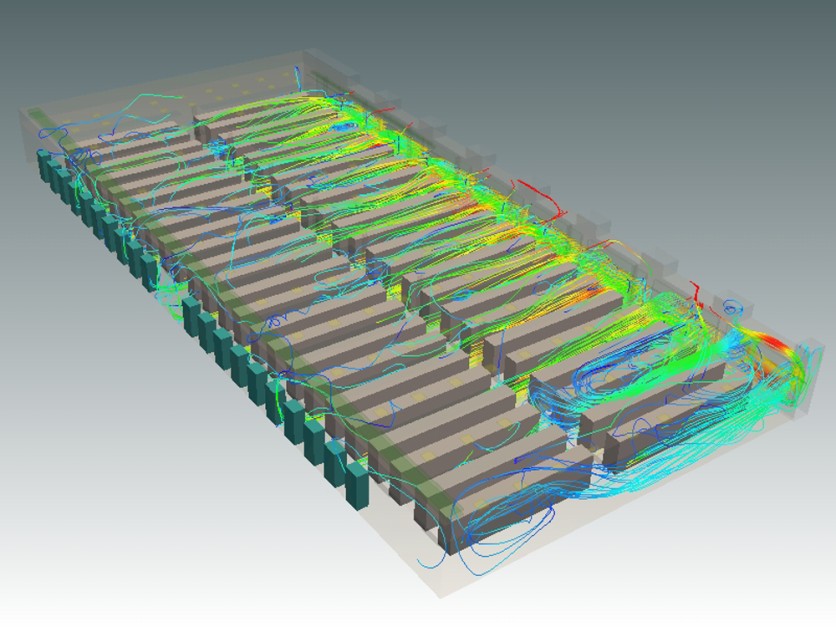
Katia modeled the facility's thermal performance across all 8,760 hours of the year using hourly weather data (changing temperature, wind, and humidity), applying the translated component curves throughout. Transient simulations demonstrated that the liquid system's thermal intensity under all modeled fault conditions remained below the air-cooled baseline, which was central to AHJ permit acceptance. The results: an 18.1% reduction in annual energy use compared to the ASHRAE reference model, a PUE improvement from 1.60 to 1.15, modeled cost savings of $250,000 annually per project, and a corresponding $5 million in asset value. Those numbers hold up precisely because the methodology that generated them withstood independent regulatory scrutiny.
An Industry Foundation That Did Not Previously Exist
As AI workloads drive rack densities beyond what air cooling can efficiently support, every new liquid-cooled project will face the same modeling problem Katia solved. His methodology, validated through state energy code authorities and USGBC review, and already adopted as Stantec's internal standard, gives the broader industry a replicable starting point it did not have before.
"The tools weren't built for this," Katia says. "The question became: how do you make what you know about the system legible to both the software and the regulators at the same time? That is the problem the methodology solves."

-
 C114 Communication Network
 -
 Communication Home
