
 Search

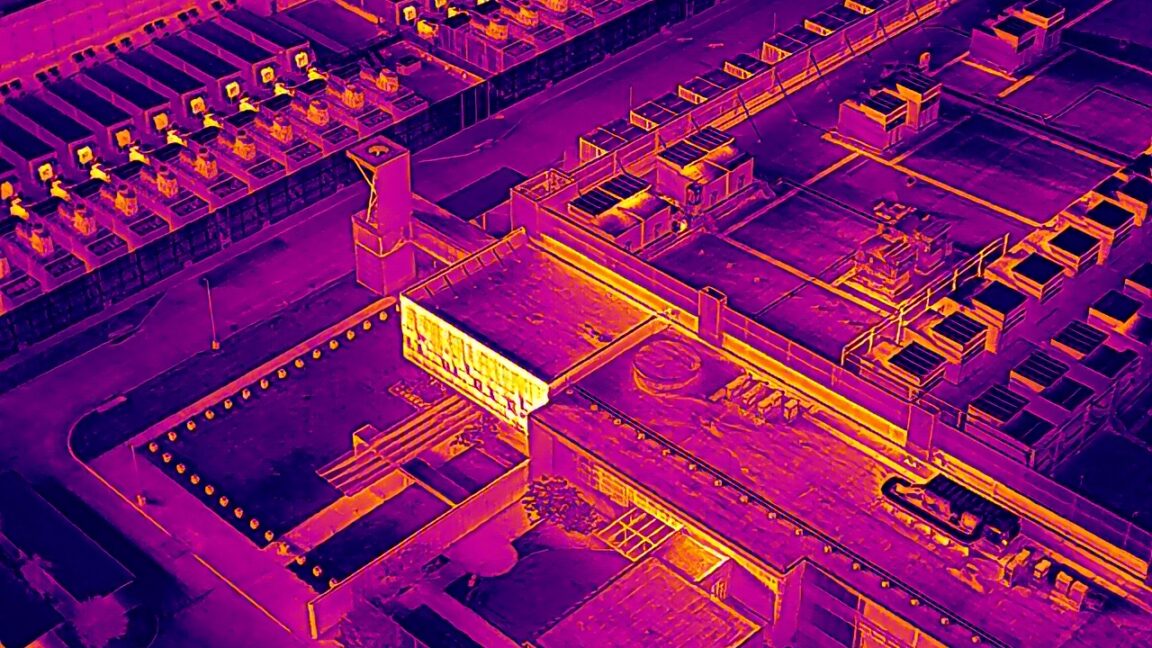
Credit: SynMax Intelligence Vulcan Platform
Silicon Valley has been pouring hundreds of billions of dollars into building ever-larger AI data centers that require as much electricity as hundreds of thousands of US homes—but that massive buildout faces significant construction and power challenges along with growing local resistance. Now satellite imagery is showing that nearly 40 percent of US data center projects may fail to be completed this year as scheduled.
The Financial Times drew upon satellite imagery from the geospatial data analytics company SynMax showing how much progress has been made in clearing land and laying building foundations for each data center project. It also cross-checked project progress against public statements and permit documents compiled by the industry research group IIR Energy. The resulting analysis revealed how major projects from tech companies such as Microsoft, Oracle, and OpenAI are “likely to miss completion dates by more than three months.”
Interviews with more than a dozen industry executives highlighted data center delays caused by “chronic shortages of labor, power and equipment” along with the process of securing the necessary permits, according to the Financial Times. Construction executives involved with OpenAI projects specifically mentioned not having enough tradespeople, such as electricians and pipe fitters, to work on multiple data center projects.
The substantial power demand requirements of the planned data center buildout also represent a huge energy bottleneck, especially as utility companies struggle to build enough power generation and to expand the power infrastructure necessary to deliver more electricity. Tariffs on imported Chinese equipment such as transformers have only made the situation worse for Silicon Valley’s AI ambitions.
Many tech companies are even installing their own on-site power plants, with a heavy reliance on natural gas turbines. An analysis by the market intelligence platform Cleanview highlighted data center developers using mobile gas generators on semi trucks and turbine engines originally designed for aircraft and warships.
There is also growing resistance from communities all across the US to data centers. For example, Virginia, known as “the data center capital of the world,” has seen public opinion turn sharply against new data center development. In a recent poll, a majority of Virginians described concerns about data center land use and environmental impacts, along with worries about the negative impact on home electricity bills. It has now been well documented that data center development can pressure utility companies to raise electricity bills for all local and regional customers.
A data center associated with the Stargate project as seen through a drone’s RGB and thermal imaging cameras.
Credit: SynMax Intelligence Vulcan Platform
The Trump administration responded to concerns about the energy costs surrounding data centers in March 2026 by announcing major tech companies as having signed on to a Ratepayer Protection Pledge, although the agreement lacks any meaningful legal enforcement or practical implementation. Microsoft, on its own, has pledged to pay the full electricity costs for its data centers in an effort to prevent broader rate increases for local communities.
Such gestures have not stopped local lawmakers from considering statewide bans on data center development. Maine legislators recently became the first to pass an 18-month moratorium on approvals for new data centers requiring more than 20 megawatts of power, although Maine Governor Janet Mills must still decide whether to veto the legislation or let it become law.

-
 C114 Communication Network
 -
 Communication Home
