
 Search

(Image credit: AMD)
-
Facebook -
X -
-
-
Pinterest -
Flipboard -
Email
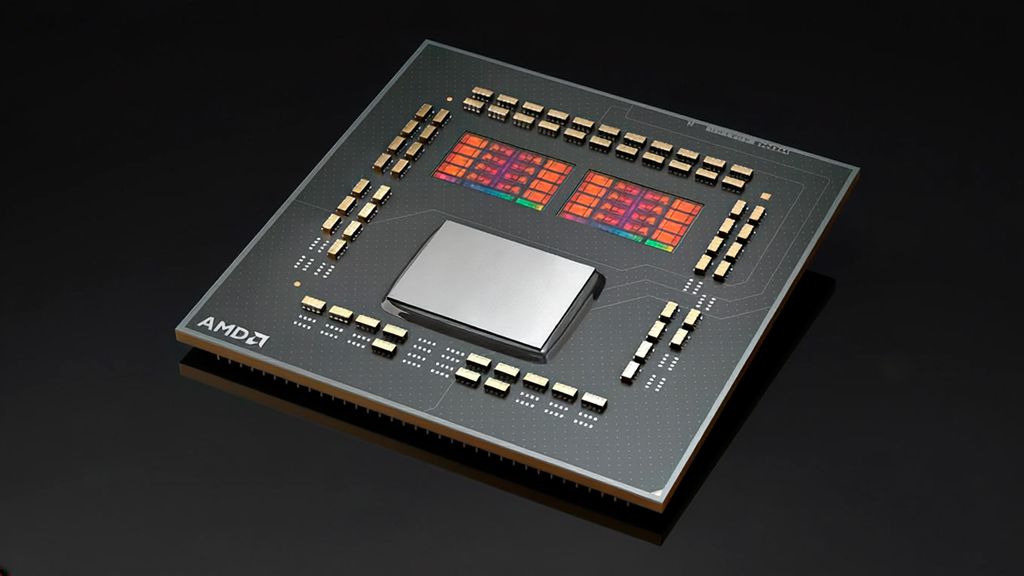
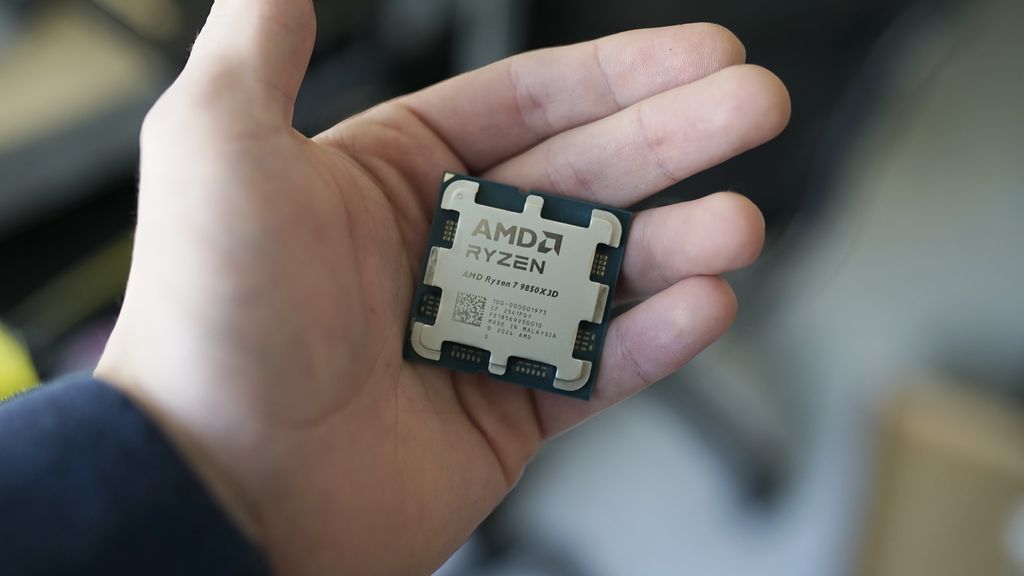
Despite being on the market for four years, the Ryzen 7 5800X3D remains one of the best CPUs for gaming on the AM4 platform. A Ryzen 9 5900X3D, if AMD had released it, would surely have given it a run for its money. Now, years later, an engineering sample of the Ryzen 9 5900X3D has emerged on the Chinese Chiphell forums, giving us a taste of what could have been an awesome 12-core chip for gaming and productivity.
(Image credit: Tom's Hardware)
- Intel VP Robert Hallock sets Nova Lake expectations, teases return to Raptor Lake for DDR4 platforms
- CPU scaling with DLSS
- Intel's one-two punch plan in desktop CPUs is taking shape
- Benchmarking AMD's BC-250, offering Steam Machine-like performance at half the price
- AMD splits Zen 7 into three EPYC families for 2028 and starts selling server CPUs by the agent
What is really funny about the Ryzen 9 5900X3D is that we all knew it existed because AMD teased it at Computex 2021. The chipmaker showcased a “12-core 3D Chiplet Prototype" outperforming a regular Ryzen 9 5900X by up to 15% in average gaming performance, with both processors fixed at a 4 GHz frequency.
The Ryzen 9 5900X3D engineering sample (100-000000652-20_48/32_Y) brought to light by a Chiphell user reveals 128MB of L3 cache, double the amount found on the standard Ryzen 9 5900X. This comes from AMD integrating 64MB of 3D V-Cache onto one of the two Core Complex Dies (CCDs) inside the chip. The CPU-Z screenshot also shows a 4,649 MHz clock speed, which is likely the boost clock. If so, and rounding the boost clock speed to 4.7 GHz, the Ryzen 9 5900X3D could have launched with a boost clock just 100 MHz lower than the Ryzen 9 5900X.
Intriguingly, the 128MB configuration was just one of several experiments AMD was exploring. During a visit to AMD's labs, Gamers Nexus captured a 12-core Zen 3 chip with a staggering 192MB of L3 cache. It is the result of a Ryzen 9 5900X equipped with 64MB of 3D V-Cache on both CCDs. Another 16-core Zen 3 chip also had a similar 192MB L3 configuration, likely a Ryzen 9 5950X3D if it had come out on the retail market.
AMD Ryzen 9 5900X3D Specifications*
Processor |
Architecture / Codename |
Platform |
Cores / Threads |
Base / Boost Clock (GHz) |
L2 Cache (MB) |
L3 Cache (MB) |
TDP (W) |
|---|---|---|---|---|---|---|---|
Ryzen 9 5950X3D |
Zen 3 / Vermeer |
AM4 |
16 / 32 |
? / ? |
8 |
192 |
? |
Ryzen 9 5950X |
Zen 3 / Vermeer |
AM4 |
16 / 32 |
3.4 / 4.9 |
8 |
64 |
105 |
Ryzen 9 5900X3D (AMD) |
Zen 3 / Vermeer |
AM4 |
12 / 24 |
? / ? |
6 |
192 |
? |
Ryzen 9 5900X3D (Chiphell) |
Zen 3 / Vermeer |
AM4 |
12 / 24 |
? / ? |
6 |
128 |
105 |
Ryzen 9 5900X |
Zen 3 / Vermeer |
AM4 |
12 / 24 |
3.7 / 4.8 |
6 |
64 |
105 |
Ryzen 7 5800X3D |
Zen 3 / Vermeer |
AM4 |
8 / 16 |
3.4 / 4.5 |
4 |
96 |
105 |
*Specifications are unconfirmed by AMD.
These early 12-core and 16-core Zen 3 X3D prototypes paved the way for the Ryzen 7 5800X3D, a processor that reigned as the gaming king for several years. AMD's decision to ultimately pursue an asymmetric design was spot on for gaming. An eight-core chip like the Ryzen 7 5800X3D delivers exceptional gaming performance and is not burdened by cross-die latency that can arise when stacking 3D V-Cache on both CCDs.
While AMD initially skipped equipping its 12-core and 16-core Zen 3 chips with 3D V-Cache, it eventually did so on Zen 4 and beyond, leading to the introduction of the Ryzen 9 7900X3D, Ryzen 9 7950X3D, and, more recently, the Ryzen 9 9900X3D and Ryzen 9 9950X3D, or even the over-the-top Ryzen 9 9950X3D2.
A dual-stack configuration is very advantageous for productivity workloads, but it wouldn’t do much for gaming. Equipping both CCDs with 3D V-Cache means dealing with cross-die latency and lower clock speeds due to thermal and power constraints, which are significant trade-offs for gaming. Our CPU hierarchy shows this clearly: for example, the Ryzen 9 9900X3D (12 cores, 128MB L3) falls behind the Ryzen 7 9800X3D (8 cores, 96MB L3) in gaming. Or, in another scenario, the Ryzen 9 9950X3D (16 cores, 192MB L3) offers similar gaming performance to the Ryzen 7 9800X3D.
AMD knows what it is doing, and the eight-core, single-CCD design is where gaming is at. This winning formula is clearly embodied in the Ryzen 7 5800X3D and, after it, the Ryzen 7 7800X3D and Ryzen 7 9800X3D, chips that have set the standard for high-end gaming processors.

Follow Tom's Hardware on Google News, or add us as a preferred source, to get our latest news, analysis, & reviews in your feeds.

-
 C114 Communication Network
 -
 Communication Home
