
 Search

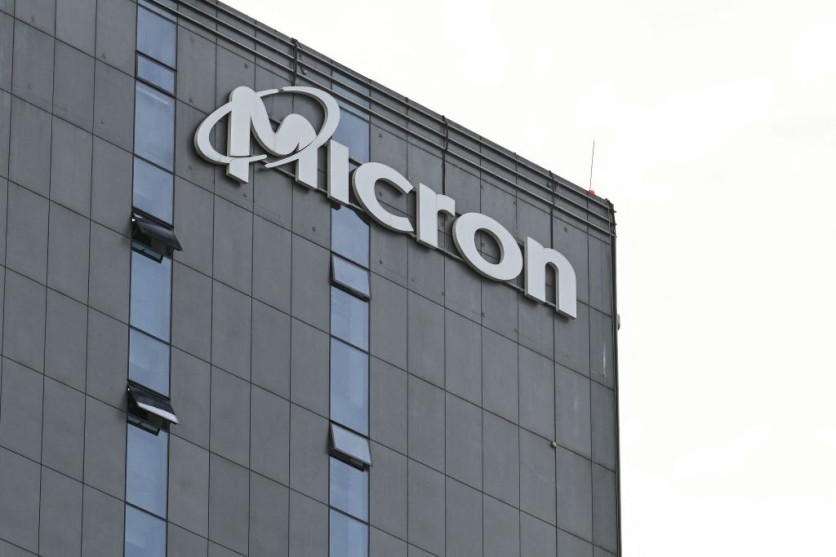
A view of a building where the facilities of US semiconductor giant Micron is located in Shanghai on May 22, 2023. US semiconductor giant Micron has failed a national security review, China's cybersecurity watchdog said on May 21, telling operators of "critical information infrastructure" to stop buying its products. HECTOR RETAMAL/AFP via Getty Images
Micron Technology has posted permanent Seoul-based positions for senior high-bandwidth memory design architects — roles targeting Korean engineers who design the memory chips powering Nvidia's AI accelerators — on the same day Samsung Electronics and its labor union reached a tentative wage agreement that had threatened to send 47,000 workers on strike. The timing crystallizes a strategic contest that has been building for months: a U.S. chipmaker deploying a new playbook in the home territory of its two primary rivals at the precise moment one of them is most distracted.
New Playbook: Design Work in Seoul, Not Taiwan
Micron's most recent Korean job listings depart significantly from earlier rounds of hiring. In previous campaigns — hotel-based interview events in Pangyo in late 2024 and LinkedIn outreach throughout 2025 — the company offered premium packages for positions in Taiwan, Japan, Singapore, or the United States, asking engineers to uproot their lives in exchange for a 10 to 20 percent salary increase and relocation support. Industry reporting from BusinessKorea confirms the new postings represent a strategic escalation beyond those earlier efforts.
The new listings, for titles including "Staff HBM Design Architect" and "Principal HBM Design Architect," list Seoul as the work location. The distinction matters: by bringing the job to the engineer rather than the engineer to the job, Micron removes what industry observers consistently identify as the single largest barrier to job-switching among Korean semiconductor professionals — moving abroad and leaving family networks behind.
The roles require engineers to design and analyze digital and analog DRAM circuits for next-generation HBM products, with responsibilities spanning power, area, and speed optimization of high-speed mixed-signal circuits, through-silicon via-based 3D stacking, and architectural review for future HBM generations. Micron states the primary objective in its postings as developing next-generation HBM solutions for artificial intelligence, machine learning, and high-performance computing.
Compensation reflects the seniority of the target. Based on industry benchmarks, the Staff-level role — requiring at least three years of semiconductor design experience — is estimated to pay between 100 million and 150 million won per year, roughly $71,000 to $107,000 at current exchange rates. The Principal-level role, requiring at least seven years of experience with a bachelor's degree or five with a master's, can reach approximately 300 million won, or around $214,000, when performance bonuses and stock awards are included.
Samsung Strike Resolved, Vulnerability Exposed
Samsung Electronics and its union signed a tentative wage agreement on May 20, 2026, mediated by South Korea's Labor Minister Kim Young-hoon at the Gyeonggi Regional Employment and Labor Office in Suwon. Union members will vote on the deal between May 22 and May 27.
The four-month dispute centered on the size and structure of performance bonuses. Samsung's union — a joint bargaining group including the National Samsung Electronics Union, the Supra-Enterprise Union, and the Samsung Electronics Union Donghaeng — had demanded that the company allocate 15 percent of annual operating profit to a bonus pool and permanently remove the existing cap limiting bonuses to 50 percent of annual salary. Samsung rejected those terms, calling them financially unsustainable. JPMorgan estimated that a sustained strike could have cost Samsung as much as 43 trillion won in annual operating profit, with cascading disruptions to global AI chip supply chains.
Even with the standoff resolved, the dispute made visible something that competitors were already tracking: Samsung's ability to retain its most specialized engineers is under structural pressure. Over the past several years, as SK hynix captured dominant market position in HBM, Samsung union officials have cited persistent reports of memory engineers leaving for SK hynix and for U.S. technology companies. South Korean prosecutors added a sharper edge to the talent-flow debate in December 2025, indicting 10 former Samsung employees for allegedly transferring the company's 10-nanometer DRAM process technology to Chinese chipmaker ChangXin Memory Technologies (CXMT), with prosecutors estimating losses of approximately 5 trillion won. The CXMT case involves alleged criminal espionage by state-backed actors — a categorically different situation from Micron's lawful recruiting — but it has heightened Korean regulatory and public attention to all outflows of semiconductor expertise.
SK Hynix Already Won a Court Case Over Engineer Switching to Micron
The legal terrain for engineers considering a switch carries real stakes. In 2022, a senior SK hynix engineer who had specialized in DRAM and HBM circuit design joined Micron immediately after retirement, despite a non-compete agreement prohibiting work for a rival company for two years following departure. SK hynix filed suit, and a Korean court ruled that the engineer could not work for Micron and would owe SK hynix 10 million won per day — roughly $7,100 — for any violation of the order.
South Korea further tightened these protections in July 2025, when amendments to its Act on Prevention of Divulgence and Protection of Industrial Technology came into force, strengthening restrictions around personnel handling "National Core Technologies" — a designation that covers HBM design processes. Engineers evaluating Micron's Seoul roles will need to assess whether their existing contracts include enforceable non-compete clauses, which Korean courts will uphold if they meet a proportionality standard.
HBM Market Micron Aims to Reshape
The context for Micron's push into Korean talent is its own rapid ascent in a market it once lagged far behind. By Q2 2025, SK hynix commanded approximately 62 percent of global HBM shipments, with Micron at 21 percent and Samsung at 17 percent, according to market data compiled by Counterpoint Research and Chosun Biz.
Micron has closed ground at a pace that surprised the industry. In March 2026, the company announced at Nvidia's GPU Technology Conference that it had begun mass shipments of its sixth-generation HBM4 memory — a 36-gigabyte, 12-high stack delivering 2.8 terabytes per second of bandwidth, a 2.3-times improvement over the previous generation — specifically designed for Nvidia's Vera Rubin platform. Management subsequently confirmed that all 2026 HBM production capacity is sold out under binding agreements. Quarterly revenue for Micron's second fiscal quarter of 2026 reached $23.86 billion, up 196 percent year over year, with a non-GAAP operating margin of 74.9 percent.
CEO Sanjay Mehrotra has projected the global HBM market will grow from approximately $35 billion in 2025 to $100 billion by 2028. Building the engineering capacity to capture a larger share of that market requires people with experience in circuits that only a small number of fabs in the world have actually built — and the largest concentration of those people works in Seoul.
Ecosystem Push, Not Just Talent
Micron's activities in Korea have expanded across multiple fronts. The company ran a selection process for a Korean public relations agency in early 2026 — an unusual move for a company that had previously relied on its product reputation alone in a market dominated by Samsung and SK hynix. Industry analysts read the PR push as part of a broader effort to build brand presence and talent pipeline simultaneously in Korea.
The company also significantly expanded its equipment procurement in Korea, securing more thermal compression bonders from Hanmi Semiconductor in Q1 2025 than it had throughout all of 2024. Thermal compression bonders are essential for the non-conductive film bonding process used in HBM assembly. Securing Korean-made equipment alongside Korean engineering talent represents a coherent vertical strategy.
Micron is not the only American technology company competing for Korean semiconductor engineers on their home turf. In February 2026, Elon Musk used X to post a direct appeal to Korean engineers, adding a South Korean flag emoji and writing that anyone in Korea interested in semiconductor design, manufacturing, or software should join Tesla. The post amplified a Tesla Korea job listing for AI chip design engineers. Tesla has since formalized its Terafab chip manufacturing initiative with an estimated $20 to $25 billion investment, citing insufficient output from existing semiconductor suppliers.
"Micron seems to be pursuing expanded influence within the Korean HBM ecosystem and acquisition of key talent at the same time, going well beyond simple sales expansion," one industry official told Korean media.
What Engineers Gain, and What They Risk
For a senior engineer at Samsung or SK hynix evaluating Micron's Seoul postings, the calculus involves two countervailing forces. On the gain side: compensation that at the Principal level approaches or exceeds what Samsung's current bonus dispute was fought over, a local role that avoids relocation, and the opportunity to work on HBM4 and next-generation memory programs at a company that has committed $200 billion in new U.S. fabrication capacity across Idaho, New York, and Virginia.
On the risk side: a non-compete clause, if it exists and is enforceable, could result in the kind of injunctive relief SK hynix obtained in 2022. Samsung's union has been explicit that it considers retention of memory engineers a priority, and the existing legal framework — reinforced by the July 2025 amendments — provides Korean employers with meaningful tools to contest departures.
The net effect of Micron's Seoul design architect posting is a structural change in the Korean HBM talent market. Earlier recruiting rounds asked engineers to choose between their careers and their country. This one does not ask them to choose.

-
 C114 Communication Network
 -
 Communication Home
