
 Search

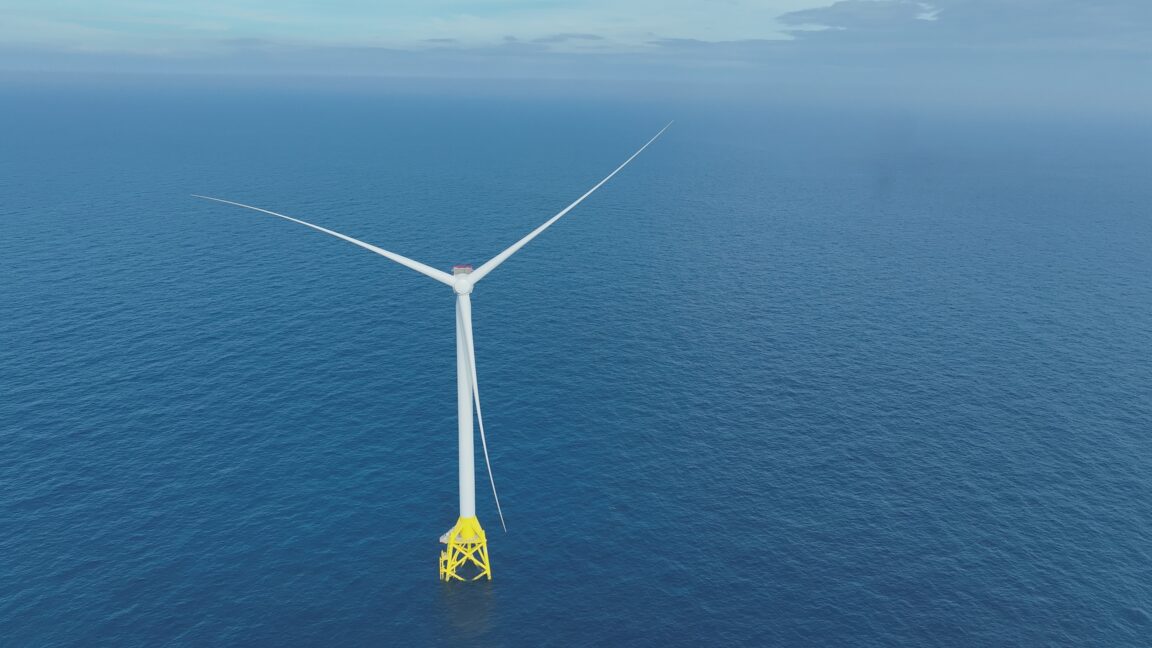
Credit: Hailong Offshore Wind Power | Northland Power
Taiwanese chipmaker TSMC is raking in record profits during the AI boom—but it is also racing to help Taiwan develop wind power and other energy alternatives to fossil fuels amid a global energy crisis.
The chipmaker has signed a 30-year corporate power purchase agreement for 100 percent of the power produced by the Hai Long offshore wind project. The deal between TSMC and Northland Power, a Canada-based global power producer, covers more than 1 gigawatt of power capacity at three offshore wind sites located off the western coast of central Taiwan in the Taiwan Strait, according to an April 30 announcement.
Once completed, the Hai Long offshore wind project would have the capacity to power the equivalent of more than 1 million Taiwanese households. The project’s wind farms began supplying power to Taiwan’s grid in 2025 and are scheduled to become fully operational by 2027.
TSMC’s move comes as many countries have scrambled to shore up energy supplies since the war in the Middle East has disrupted regional energy production and effectively halted shipping through the Strait of Hormuz. When Qatar shut down natural gas production after its facilities were damaged by Iranian drone strikes in March 2026, Bloomberg reported that Taiwan’s power grid lost one-third of its usual supply of liquefied natural gas.
That started an energy crunch countdown because Taiwan relies on natural gas plants to generate about half of its electricity—and Taiwan typically has just two weeks of fuels in reserve. So far, Taiwan’s government has managed to stave off energy shortages by tapping alternative natural gas suppliers such as Australia and the United States, Reuters reported.
During an energy forum on May 6, Taiwan’s Vice Minister of Economic Affairs said that the government had secured enough oil and gas supplies to operate normally through August and possibly September, according to Taiwan News.
But the global energy crisis is also spurring the Taiwanese administration of President Lai Ching-te to accelerate efforts to develop fossil fuel alternatives, including restarting shuttered nuclear power plants and building out renewable power projects. Taiwan relies on imported fossil fuels to meet nearly 97 percent of its overall energy needs, including electricity, transport, and heating, according to the Global Taiwan Institute, a think tank based in Washington, DC.
As part of its energy diversification efforts, Taiwan has pushed to expand offshore wind power with a government plan to make 15 gigawatts of capacity available to developers by 2035. Meanwhile, TSMC has announced that it would aim for renewable energy to meet 60 percent of its global operations’ needs by 2030 and 100 percent by 2040.
TSMC plays an outsized role in shaping Taiwan’s energy future, given the energy consumption of its chip fabs. The chipmaker’s energy needs accounted for nearly 10 percent of Taiwan’s total electricity consumption in 2023, according to the International Energy Agency’s report on energy and AI.
That share could grow to nearly one-quarter of Taiwan’s overall electricity usage by 2030 as TSMC invests in more energy-intensive manufacturing to meet global AI demand for advanced chips, according to S&P Global estimates cited by Data Center Dynamics.
Beyond the Hai Long project, TSMC previously signed another power purchase agreement with the Danish renewable energy company Ørsted in 2020 for 920 megawatts of power from the Greater Changhua offshore wind farm project, which is expected to become fully operational later in 2026. The chipmaker also struck a deal with the German renewable energy developer WPD in 2021 to develop more than 1 gigawatt of onshore and offshore wind power.

-
 C114 Communication Network
 -
 Communication Home
