
 Search

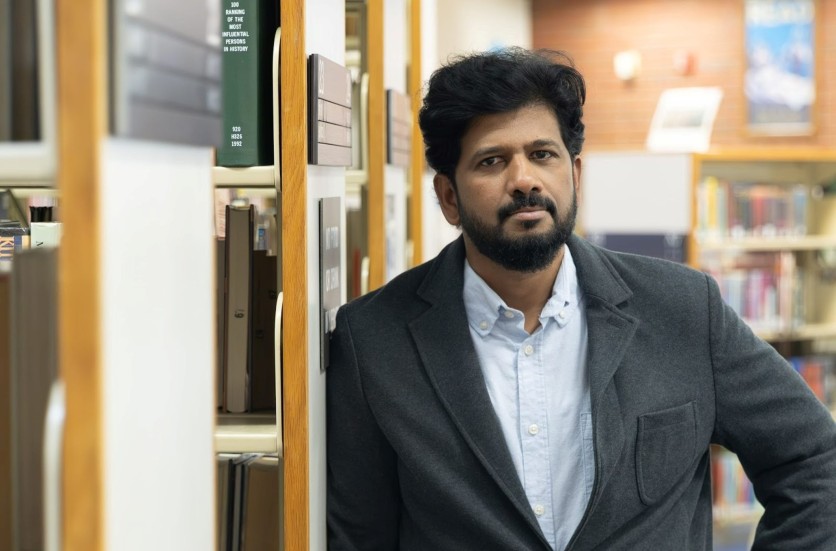
Shaibujan Thankappan Kamalamma
"Optimization demands understanding hardware constraints at the silicon level," reflects Shaibujan Thankappan Kamalamma, whose career spans video codec work, streaming systems, and enterprise security. "Achieving real-time 4K HDR processing at 60 frames per second required rethinking how processors communicate with memory."
The global video encoder market climbed to $2.55 billion in 2024. Analysts project it will reach $3.20 billion by 2030. The next-gen codec market hit $4.27 billion in 2024, with forecasts placing it at $25.77 billion by 2033. That 22.1 percent yearly growth rate reveals how small gains in coding speed can reshape spending worth hundreds of millions.
Major streaming platforms handle billions of viewing hours. They must deliver content across phones, tablets, smart TVs, and desktops all at once. Netflix alone needs 25 Mbps for its best 4K HDR picture, while Amazon and Disney hold similar bars. Meeting those needs at a profit separates thriving platforms from those bleeding cash on delivery costs.
Silicon-Level Optimization Breakthroughs
Thankappan Kamalamma's work at Apple on the VideoToolbox Framework forged key APIs that power fast encoding, decoding, and transcoding across millions of iOS and macOS devices. The framework helps developers around the world build apps that handle video tasks with ease. His work on VTFrameProcessor APIs ushered in machine learning video effects within Apple's ecosystem. He bears sole credit for motion-based temporal noise filtering, having built the full pipeline from low-level code up through the public API seen in VTTemporalNoiseFilterConfiguration and VTTemporalNoiseFilterParameters.
Those features shipped in macOS 15.4 and later reached iOS 26. They gave developers tools that once required deep, niche knowledge. Apps can now run video through a simple two-step flow. Picking an effect and sending frames yields a polished result without deep codec know-how.
Direct DCT transcoding work shows the depth of skill needed at the compression layer. Instead of the usual path of decoding to raw pixels and then re-encoding, Thankappan Kamalamma crafted methods to convert MPEG-2 DCT values straight into H.264. He reused motion data and header info along the way. The method skips costly middle steps and cuts the processing load by a wide margin.
GPU coding with OpenCL paired with SSE tuning opened the door to parallel setups that handle 4K video streams. Standard CPU-only paths fall short when GPU-driven speed cuts power use by 70 percent while keeping broadcast-grade quality. A side-by-side look at 48-channel CPU rigs versus GPU servers reveals savings of $200,000 over five years.
Real-Time HDR Processing Milestones
Imagine a 4K broadcast that crawls at just 3 frames per second. That was the starting point when Thankappan Kamalamma began refining Advanced HDR by Technicolor's inverse tone mapping system. Through careful research into CPU core memory placement, parallel frame handling, and SSE SIMD commands, he drove the speed up twentyfold. The result was real-time 60 fps processing for 4K content, a milestone that unlocked live broadcast use.
Machine learning models trained on colorist habits now enable frame-by-frame tweaks that keep picture quality high without human input. Static lookup tables often yield uneven results. Adaptive methods, on the other hand, examine each frame and its recent history to pick the best mapping path on the fly. Live sports coverage benefits most, since outdoor lighting shifts fast over the course of a game.
Single-stream delivery that serves both SDR and HDR viewers at once trims bandwidth and storage needs by 50 percent. Platforms reaching global audiences save huge sums when smarter compression lets them push top-tier content through current network pipes.
Codec know-how covers MPEG-2, MPEG-4, H.264, and H.265, along with audio formats like g.711 and g.726. Building on DirectShow and GStreamer meant grasping each platform's threading model, memory rules, and API style while still producing matching output across every setup.
Streaming Infrastructure at Global Scale
Thankappan Kamalamma helped shape the Discovery Plus backend transcoding pipeline. The system turns raw video into H.264 and H.265 streams packaged for global reach. The platform went live on January 4, 2021, and had to support millions of viewers at once across many device types. The team chose the Go language with Cadence workflow tools to manage complex encoding jobs.
PlayReady, Widevine, and FairPlay DRM layers let content flow safely to a wide mix of devices. HLS and MPEG-DASH packaging create several quality tiers per piece of content. Playback stays smooth no matter the network speed or screen type.
Porting video and audio codecs to ARM and MIPS chips running embedded Linux built a keen sense for tight resource limits. The global embedded processor market stood at $21.15 billion in 2024, with growth toward $36.63 billion by 2033. That surge mirrors the rise of edge computing, where devices with strict power and heat budgets must still handle heavy processing loads.
Cross-Domain Technical Leadership
Enterprise security projects using PKI, AES encryption, fingerprint readers, and USB device checks reveal skills reaching well past media work. Biometric security systems built at Optiwise Solutions drew press notice in 2005 after demos featured fingerprint and iris scanning.
The bio-certificate idea merges biometric data with PKI-based digital certificates. It blends two proof-of-identity methods into one. Custom crypto systems struck a balance between strong protection and fast response, since too much computing overhead ruins the user's experience, no matter how secure the theory.
IEEE Senior Membership, which calls for proven leadership and ten years of meaningful work, underscores his standing. Peer review duties for PeerJ Computer Science and a judge role at Conrad Challenge 2025–2026 place Thankappan Kamalamma among those who assess cutting-edge research and guide young innovators.
Personal ventures include Classi4U.com, an online marketplace, plus mobile apps on Apple and Google Play stores. Jan Collage Maker earned a 4.6 rating on iOS and 4.2 on Android, proving a knack for consumer apps that rounds out his enterprise-level portfolio.
Dr. Elena Martinez, a lead engineer at a rival streaming company, raises a fair point about how resources get spent. "Performance optimization yields diminishing returns at extreme levels," Martinez observes. "Organizations must evaluate whether incremental gains justify engineering investment when existing implementations serve most use cases adequately."
Her concern about weighing innovation against real-world deployment holds weight. Yet bandwidth economics keep pushing the field forward. Infrastructure costs grow with traffic, so each efficiency gain directly boosts profit for platforms serving millions of streams at once.
"Technical excellence means recognizing that elegant algorithms matter only when deployment realities permit adoption," Thankappan Kamalamma concludes. "The compelling challenges now involve orchestrating heterogeneous processing resources and managing codec transitions across device populations spanning decades. Pure algorithmic advancement no longer suffices when deployment complexity dominates total cost equations."

-
 C114 Communication Network
 -
 Communication Home
