
 Search


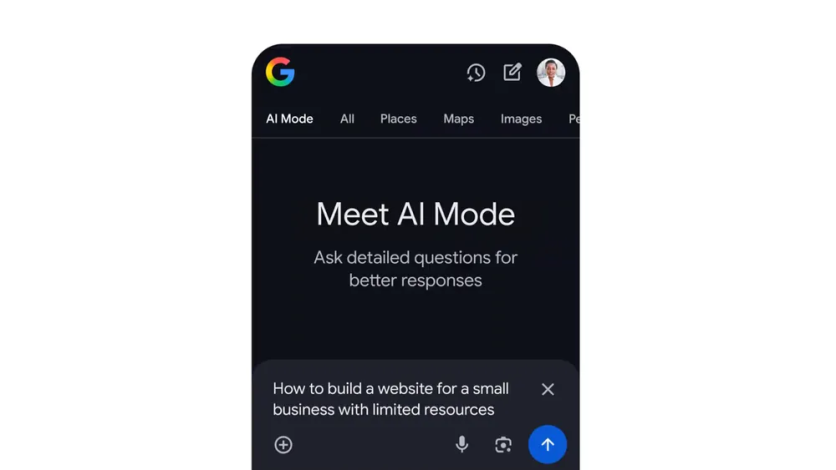
Google announced Monday that Wallet is becoming a connected app for Personal Intelligence in AI Mode, so Search can answer questions using the cards and spending information a user has saved. The pages that govern Search ads and AI training do not mention Wallet anywhere we could find. Google's Gemini app help page does, and its Wallet terms allow training on summaries and inferences drawn from transaction data. Anyone deciding whether to switch the connection on is deciding without a Search-specific answer to what happens to that spending data.
The connection is opt-in and can be turned off, and Google says AI Mode can only read account information but cannot move, manage or invest money. TechCrunch reported the same read-only limit. Wallet is rolling out starting now, so not every user will see it yet, and Google gave no firmer dates for Drive and a Gemini app link than the coming weeks.
Wallet Spending Data Now Feeds AI Mode Answers
Google says Wallet data can help users map spending and cut costs and get more from card rewards such as cash-back categories and travel perks, based on the cards linked in Wallet. Users connect it by opening Search Personalization, choosing Connected Apps and selecting the apps they want. A Personalization icon showing which context shaped an answer is coming soon, not at launch.
The step follows the Gemini app. On Nov. 13, Google added Wallet to Personal Intelligence in Gemini for all U.S. Gemini app users, with examples such as finding recurring subscriptions and price increases. Users there can also link bank and card accounts through Plaid for deeper insights. Google's AI Mode post does not say whether the Plaid link applies in Search, so that remains unconfirmed.
Gemini's Wallet Terms Allow Training on Summaries, Inferences and Human Review
The most specific language on what happens to Wallet data sits on the Gemini Apps Connected Apps help page, not in the Search announcement. That page says Gemini does not train directly on Wallet and payments data but allows training on summaries and inferences drawn from transactions, and it says a subset of connected-app data is reviewed by human reviewers. The Google blog post announcing Wallet in Gemini does not address training.
Google's earlier Personal Intelligence statement said Gemini and AI Mode do not train directly on a user's Gmail inbox or Photos library and instead train on limited information such as specific prompts and the model's responses. Google's Search help page names Drive in its statement on training but does not mention Wallet. The AI Mode post says nothing about training for Wallet or Drive.
Secondhand reports add a switch. Unite.AI reports the Keep Activity setting matters: with it on, Gemini Apps activity including data from connected apps can be used to improve Google services and train models. Android Headlines says raw Wallet records do not directly train the models, but summaries and inferences from spending still can with Keep Activity on. Google's help page as fetched did not use the term Keep Activity, and these accounts concern the Gemini app, not AI Mode.
Read more: Google's New AI Push Promises Ultra-Personalized Search, But Surveillance Issues Could Persist
Google's Ad Provision Names Drive, Gmail and Photos, Not Wallet
Google's privacy policy, effective Oct. 16, says it does not show personalized ads based on content from Drive, Gmail or Photos, unless a user makes that data available to other Google services that support personalized ads. Wallet does not appear in the policy, and the Search help pages we read on connected apps and ads do not mention Wallet either. Because Drive is the next connector to arrive in AI Mode, the policy already names a data source Search has not yet connected, while the one now rolling out is absent.
Ads are also moving closer to connected data. Search Engine Land reported that Google is testing ads in AI Mode for users who connect apps, and that Google said sensitive information will not be used to personalize them. PPC Land reported that Google's examples of sensitive categories do not list financial circumstances, and that none of the sources it reviewed says whether Wallet data can inform ads.
Advertising inside AI Mode is expanding more broadly. On Oct. 28, Google announced ads in ten more countries and multi-turn ads in the U.S., so sponsored results can appear in follow-up queries. Under that rollout, advertisers in healthcare, finance and similar sectors are not eligible to appear in AI Overviews. That restriction concerns which advertisers can run, not whether Wallet-derived context can inform ad selection, and the pages we read do not answer that.
The record on ads has shifted. In March, a Google spokesperson told Search Engine Land there were no ads for connected users of AI Mode and that this was not changing right then. By October, Google had confirmed the test described above. We have not seen Google say whether the test reaches Wallet-informed answers.
How AI Mode Reads Personal Data Without Training on It
Google describes Personal Intelligence as pulling summaries, excerpts and inferences from connected apps to help answer a prompt, which resembles a pattern called retrieval-augmented generation in the research literature. That approach lets a model use new information without retraining. It is why Google can say it does not train directly on a Gmail inbox while Gemini's terms still allow training on summaries and inferences from Wallet transactions.
The distinction matters for spending data because a summary such as "spends heavily on travel and has recurring streaming subscriptions" is a derived profile, not a raw record. Google's Search help page says disconnecting an app does not delete data from Search Services History, and the Gemini page gives no Wallet-specific retention period. The AI Mode announcement does not say how far back recent search context reaches or how it is stored. Personalized answers also narrow what a user sees, an effect researchers describe as a filter bubble, though its size is debated.
Financial Data Rules Do Not Clearly Cover This Connection
Open banking is a main U.S. framework for consumer financial data sharing, and its core rule, the CFPB's Section 1033 rule, is on hold: a court stayed its compliance dates on Oct. 29, 2025, while the bureau reconsiders it. Whether the Gramm-Leach-Bliley Act, which covers companies offering financial products or services, applies to Wallet-derived data in AI Mode is not addressed in Google's announcement. In Gemini, a user who links a bank through Plaid, which communicates through encrypted APIs and does not hold banking login details itself, appears to rely on Google's policies rather than a settled federal rule.
Courts have recently tested Google's data promises. A federal jury awarded $425.7 million in September 2025 to a class of about 98 million users who alleged Google kept collecting app activity after they switched off Web & App Activity. Google says the verdict misunderstands its products and is appealing, and the Ninth Circuit docket sets Google's opening brief for Dec. 14, 2026. The case is about a different product, but it centered on whether Google collected data after telling users it would not, the kind of question Wallet's missing Search documentation leaves open.
What Search's Product Chief Has Said About Knowing Users
Robby Stein, Google's VP of Product for Search, wrote the announcement post. TechTimes reported in December 2025 that Stein described the biggest AI opportunities for Search as lying in the ability to truly know its users. We found no documented Stein positions on financial data policy specifically.
Is Google Using My Wallet Data to Train AI or Target Ads?
For the Gemini app, Google's help page allows training on summaries and inferences from Wallet transactions, with human review of a subset of interactions. For AI Mode, Google has not said whether the same applies. Ads are similar: the privacy policy names Drive, Gmail and Photos and omits Wallet, Google has confirmed an ad test for users who connect apps, and it has not said whether Wallet-informed answers can carry ads or inform ad selection.
What Google Has Not Said About Wallet in AI Mode
- Where and for whom. The post does not state countries, languages, plans or minimum age. Earlier Personal Intelligence rollouts were U.S.-focused and limited to personal accounts, not Workspace business, enterprise or education accounts, but we cannot confirm the same limits apply.
- Which Wallet fields AI Mode sees. The post names cards and spending information but lists no specific fields.
- Retention. We found no statement on how long Wallet-derived context or summaries are kept.
- Training and ads in Search. Neither is addressed for Wallet in the pages we read.
Anyone weighing the connection has four facts to hold together: it is opt-in and reversible, AI Mode cannot move money, Gemini's Wallet terms allow training on summaries and inferences, and Search's ad and training pages do not mention Wallet even as Google tests ads for users who connect apps. Until Google publishes Search-specific terms, the Gemini rules are the closest published guide and the open questions above remain unanswered.
Frequently Asked Questions
Does Google AI Mode use my Google Wallet data?
Only if you connect it. Google says users opt in through Search Personalization and Connected Apps, and can turn connections off at any time.
Why do Search's ad and training pages matter if Gemini already has Wallet terms?
Gemini's help page is the only place we found Google describing Wallet training rules, and it covers the Gemini app. AI Mode is a separate Search product, and its announcement post is silent on training, retention and ads for Wallet.
Can Google use my Wallet data to show ads in AI Mode?
Google has not said. It confirmed an ad test for AI Mode users who connect apps through Personal Intelligence, and its privacy policy and Search help pages name Drive, Gmail and Photos but not Wallet.
Can AI Mode move money or make payments from my Wallet?
No. Google says AI Mode can only read information from connected accounts and cannot move, manage or invest money.
What is Personal Intelligence?
It is Google's feature that lets AI Mode and the Gemini app answer using data from connected apps. It reached AI Mode on Jan. 22 for AI Pro and AI Ultra subscribers with Gmail and Google Photos, and expanded to all U.S. users on March 17.

-
 C114 Communication Network
-
 Communication Home
