
 Search


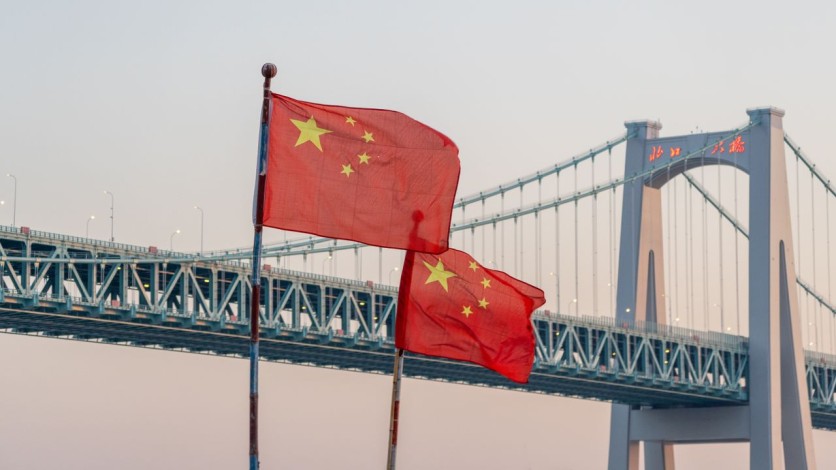
Pexels/Hao Liang
China formally invited the European Commission to join the World Artificial Intelligence Cooperation Organization (WAICO), the Beijing-backed intergovernmental body it established in Shanghai in July, according to three diplomats briefed on the matter by the Commission itself. The Commission briefed national experts on the offer on or around October 21, 2026 — then, when asked to confirm the invitation publicly, its spokesperson denied that any official offer had been received.
The gap between what the Commission told member states in private and what its spokesperson said in public is the clearest signal yet that Brussels is in an uncomfortable position. Washington has already warned that Pax Silica membership — which the EU signed onto in June — is incompatible with joining a rival AI initiative. That warning means Europe's silence on the WAICO invitation is not a diplomatic pause: it is increasingly a de facto alignment choice being made by inaction while the window to exercise any genuine option closes. The US State Department's letter to 35 partner nations laid out the incompatibility directly.
What Is WAICO — and Why Did China Build It
The World Artificial Intelligence Cooperation Organization (世界人工智能合作组织) was formally established on July 16, 2026, when 29 nations signed its founding agreement in Shanghai. The following day, Chinese President Xi Jinping announced the body at the opening ceremony of China's annual World Artificial Intelligence Conference, calling it an "important milestone in AI history" that answered demands from Global South nations for a greater say in how AI is governed.
WAICO's founding roster maps almost exactly onto China's existing influence networks: Russia, Pakistan, Indonesia, Brazil, Malaysia, South Africa, Kazakhstan, Cuba, Venezuela, Belarus, and Serbia are among the signatories, along with ten African and roughly twelve Asian nations. Notably absent are any G7 economies, the United States, the EU, and India — which sent only a junior delegation and declined membership. The WAICO membership roster reflects that pattern precisely.
Headquartered in Shanghai, WAICO operates as an independent intergovernmental organization with a Council and a Secretariat. Its stated mandate covers AI cooperation, standards-setting, and capacity-building, and Xi pledged 5,000 training and seminar slots for developing countries over five years. What WAICO does not yet have is binding rules, enforcement capacity, a public budget formula, or a dispute-resolution function. Whether it becomes a real governance body or remains a declaration-level forum will be determined largely by what happens in its first operational year.
Analysts who study AI governance describe the WAICO model as state-centric: governments retain authority over how AI is deployed, rather than delegating oversight to industry or to a regulatory body with independent powers. Arindrajit Basu of the Carnegie Endowment for International Peace, writing in May 2026, argued that with Washington retreating from global AI norms-setting processes, Beijing "hopes to receive buy-in for its state-centric governance vision of technology from the Global South." That diverges structurally from the EU AI Act, which is market-compatible and risk-based, and from the US approach, which has historically been industry-led.
Pax Silica: What Europe Already Signed
WAICO's immediate geopolitical counterpart is Pax Silica, a US-led initiative launched by the State Department in December 2025. Where WAICO focuses on governance norms and open-source model sharing, Pax Silica is organized around the physical foundations of AI: semiconductor supply chains, critical minerals, computing infrastructure, and export controls. Its motto is "Securing the Silicon Supply Chain."
Early signatories included the UK, Japan, South Korea, Australia, Singapore, Israel, and the United Arab Emirates. The EU's accession was far from smooth: France was the loudest internal critic, with Paris characterizing Pax Silica as an attempt to lock Europe into an American-defined AI stack and export-control regime. Despite those objections, the EU formally joined Pax Silica on June 25, 2026 at the Second Pax Silica Summit in Washington. The Commission secured assurances that the declaration is non-binding and does not prejudice the EU AI Act. As part of a broader EU–US trade framework, Brussels agreed to purchase at least $40 billion in American AI chips, adding a significant commercial dimension to the alignment.
By the time WAICO was formally established in July, the EU was already a Pax Silica signatory. The two frameworks now cover effectively different but complementary halves of the AI race. Pax Silica controls access to the hardware — coordinating export controls on advanced semiconductors so that only US-aligned countries can access the training infrastructure needed to build frontier AI models. WAICO offers the deployed product: open-weight models from Chinese AI labs, promoted as a public good that gives developing countries AI capability without requiring them to navigate US export-control regimes.
Can Europe Be in Both Blocs? Washington's Answer
The question of dual membership was answered, at least from Washington's perspective, by a report on August 14, 2026. The State Department had drafted a letter to 35 countries that signed a US-sponsored "AI Opportunity Statement" in June, warning that joining China's rival AI framework would jeopardize their Pax Silica participation. The US told partners to choose sides and confirmed the draft existed without endorsing its specific language. The draft's language was blunt: "Saying you belong everywhere is the same as saying you belong nowhere." A State Department official put it more directly in comments to the Arab Gulf Business Insight: "Third countries cannot be in China's AI orbit while also advancing and contributing to a shared non-Chinese AI stack as envisioned by Washington," as AGBI reported.
The State Department declined to comment on the "purportedly leaked internal documents" — a response that confirmed the draft existed without endorsing its specific language. The flashpoint country in the draft was Kazakhstan, which signed Pax Silica in June and then participated in the WAICO founding ceremony in July — the only country currently in both rival AI blocs. Washington's draft letter targeted that specific dual membership as untenable.
The EU was not among the 35 countries addressed in the draft. But it is the world's most significant Pax Silica signatory outside the Anglo-Pacific alliance, and it has the world's most advanced AI regulatory framework. For Brussels, the implicit logic of the US warning applies with even greater force than it does to Kazakhstan.
Europe's Diplomatic Dilemma
WAICO's founding agreement is open to all states, regardless of political system. Joining would not, in itself, legally contradict the EU's Pax Silica membership, which is similarly non-binding. But the political and practical consequences would be significant.
Several European capitals have indicated they see WAICO primarily through a geopolitical lens. Germany's digital ministry told Rapporteur in August that it had no plans to join WAICO. Michael Caster of ARTICLE 19, writing for the Central European Institute for Asian Studies in August 2026, was explicit about the stakes: "A European state lending early legitimacy to an organization built to normalize Beijing's alternative to rights-based AI governance should be a wake-up call." WAICO's model, Caster argued, is designed not necessarily to supplant existing governance forums but to "normalize China's approaches to AI governance, which participating members can then actively promote in other fora that remain more influential." The full CEIAS analysis lays out those stakes in detail.
On the other side of the argument, some analysts in Brussels have long sought to position the EU as an independent "third pole" in the US–China tech rivalry. The EU AI Act — the world's first comprehensive AI law — was built on the premise that Europe could set its own standards rather than adopt either Washington's or Beijing's. Joining WAICO, or at minimum maintaining formal engagement with it, could reinforce that posture of strategic autonomy and preserve some influence over governance norms that will increasingly shape AI development across much of the Global South.
But that window is narrowing. The Commission's decision to inform national experts of the WAICO invitation privately — and then deny receiving "any official invitation" when asked publicly — signals that Brussels is aware of the geopolitical tripwire involved and is trying not to trigger it. The EU has already spent significant diplomatic capital justifying its Pax Silica membership to skeptics in Paris and elsewhere. Taking any visible step toward WAICO, even exploratory, would immediately be read in Washington as a breach of the alignment logic the US State Department spent August 2026 trying to formalize.
What the AI Standard Wars Mean in Practice
The deeper contest between WAICO and Pax Silica is not about abstract norms — it is about which technical architecture governs AI globally, and who sets the rules for it. The two blocs represent different answers to the same engineering question: how does a country get access to AI capability?
Pax Silica's answer is hardware-first: coordinate export controls on advanced semiconductors so that only US-aligned countries can access the training infrastructure needed to build frontier AI models. This concentrates AI capability among countries that agree to US terms. WAICO's answer is model-first: share open-weight AI models (developed by Chinese labs like DeepSeek and Qwen) as a public good, creating AI capability access without chip dependence. The CEIAS breakdown of this model-sharing strategy explains how China is deploying it as a governance instrument rather than mere commercial activity.
For the Global South, the WAICO model offers a genuinely attractive alternative. Countries that cannot navigate US export controls and cannot afford to build their own AI infrastructure can deploy Chinese open-weight models immediately. Beijing is offering not just the models but governance frameworks, training programs, and international diplomatic legitimacy — packaged as inclusive multilateralism. For WAICO to become genuinely influential, Beijing will need those models to perform reliably in real-world deployments across diverse linguistic and institutional contexts. That is an open empirical question.
The broader context is that both WAICO and Pax Silica are evolving alongside a third track: the United Nations Global Dialogue on AI Governance, launched in mid-2026. China has publicly endorsed the UN as the "main channel" for global AI rules. Xi Jinping's WAIC 2026 opening remarks signaled that position clearly. That stance gives Beijing an incentive to use WAICO's numerical weight among developing nations to shape UN-level discussions — essentially converting diplomatic membership in WAICO into voting bloc leverage at the UN.
Can the EU Afford to Stay Silent
The Commission's silence on the WAICO invitation is legally defensible. Its Pax Silica membership is non-binding. WAICO's founding agreement is open. No formal rule prevents the EU from exploring both. But the practical reality is that Washington's exclusivity logic has already calcified around Pax Silica, and Brussels' ability to exercise any genuine independent choice is shrinking with each week that its silence is read as compliance.
Three factors will likely determine how this resolves. First, whether the US State Department formalizes the language of its August 2026 draft warning into a binding Pax Silica membership condition — if it does, any EU engagement with WAICO becomes incompatible with US chip access arrangements. Second, whether any other G7-adjacent country breaks ranks and joins WAICO, providing the EU with political cover to follow — no G7 nation has joined as of October 2026. Third, whether WAICO develops the institutional capacity — binding rules, secretariat structure, dispute resolution — to make membership consequential enough to justify the diplomatic cost.
Until those questions are answered, the Commission's most likely course is the one it has already chosen: acknowledge the invitation privately, deny it publicly, and wait to see which bloc blinks first on the incompatibility question.
The EU entered 2026 aiming to be neither America's follower nor China's partner. It may end the year as both — or neither. What it has not managed to be is the independent standard-setter it set out to become.
Frequently Asked Questions
What is WAICO, and how is it different from existing AI governance bodies?
WAICO — the World Artificial Intelligence Cooperation Organisation — is an intergovernmental body established by 29 founding nations in Shanghai on July 16, 2026, under Chinese leadership. Unlike the OECD AI Principles or the EU AI Act, which set voluntary or regulatory standards within existing international frameworks, WAICO is a standalone international organization with its own secretariat and council. Its distinguishing feature is its governance philosophy: WAICO promotes state-centric AI oversight — meaning governments, not industry or independent regulators, retain primary authority over how AI is deployed. That places it in direct tension with both the EU's risk-based regulatory model and the US industry-led approach.
Why can't the EU join both Pax Silica and WAICO?
Technically, nothing in either framework's founding documents legally prevents simultaneous membership. But the US State Department drafted a communication in August 2026 warning that participating in China's AI initiative would jeopardize a country's Pax Silica standing. The State Department warned against dual membership in a draft letter addressing 35 partner countries. The EU signed Pax Silica in June and committed to purchasing $40 billion in American AI chips as part of that arrangement. Any visible step toward WAICO would likely be read in Washington as a breach of the alignment logic underpinning that deal — even if no formal rule has yet been written to say so.
What does Washington's position mean for countries in the Global South that want both AI access paths?
Kazakhstan is the only country currently holding membership in both competing AI frameworks, and it was cited specifically in the US State Department's draft warning as a problematic example. For most developing countries, the choice is less acute because they are not Pax Silica signatories — they can join WAICO without triggering any US penalty. The access-path split matters most for countries that are being actively recruited by both blocs: those that join WAICO get Chinese open-weight AI models and governance frameworks, while those that join Pax Silica get access to US-aligned chip supply chains and investment programs. For countries that want both AI capability and Western investment, the forced choice is becoming increasingly real.
If the EU is already in Pax Silica, is its position in the WAICO dispute essentially decided?
Not formally — but functionally, yes. The Commission's spokesperson denied receiving "any official invitation" to join WAICO on October 23, 2026, the same day Rapporteur broke the story of the invitation. That denial is the clearest signal yet of where Brussels is positioning itself. The EU AI Act, which Brussels actively promotes in international forums including the UN and G7, is built on a regulatory philosophy fundamentally at odds with WAICO's state-centric model. Joining WAICO would be difficult to explain to EU citizens, member states, and Washington simultaneously. The more likely outcome is continued silence — which, given the US exclusivity warning, effectively means the EU's AI governance alignment has already been decided.

-
 C114 Communication Network
-
 Communication Home
