
 Search


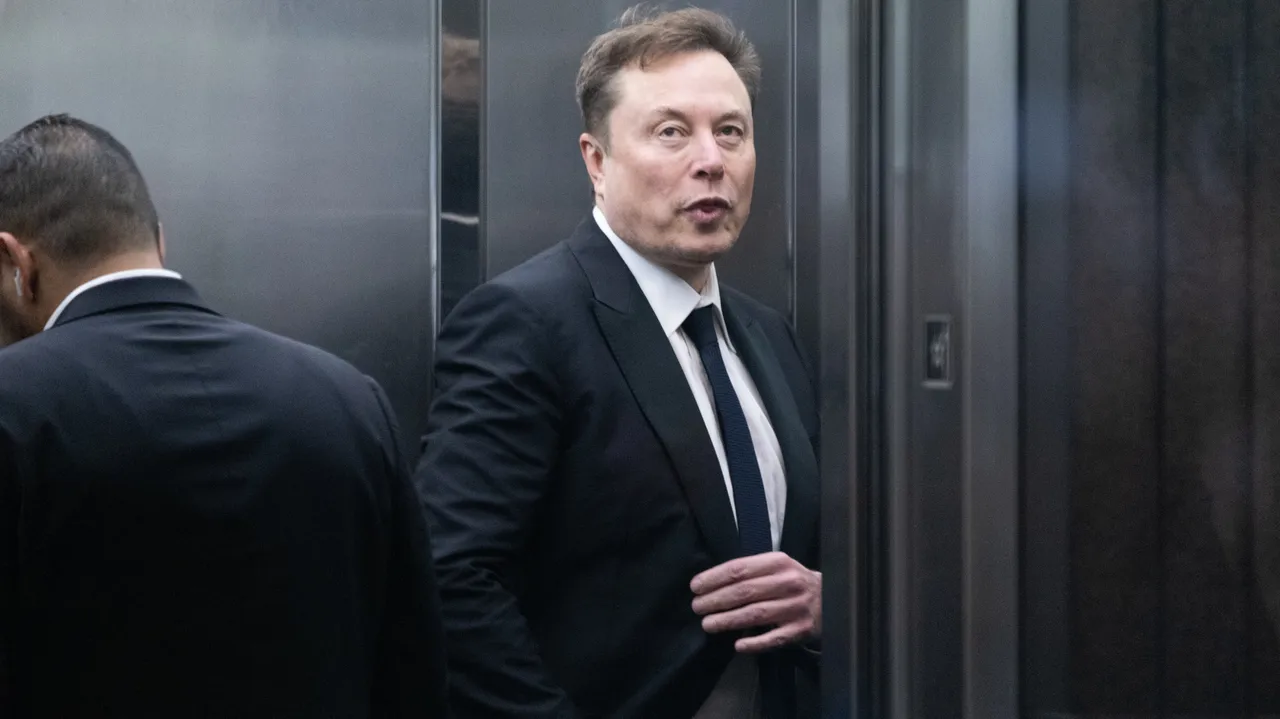
Elon Musk's Starlink and Nokia could make a natural fit.(Source: Benjamin Fanjoy/Getty Images)
Space, if we are to trust Captain James T. Kirk, is "the final frontier," the last great unexplored wilderness for the modern-day versions of the first American pioneers. But for Elon Musk and his telecom ambitions, space has increasingly looked like the starting point, the launchpad from which his Starlink business is approaching the unfamiliar landscape of basestations, antennas and cables that make up an Earth-bound mobile service.
After hurling rockets into orbit, amassing spectrum and talking up plans to turn customer rooftops into small cells, executives at parent company SpaceX seemed finally to recognize the shortcomings of their initial schemes when they alluded to "towers" and "other structures" in a recent filing with the Federal Communications Commission (FCC). Days later, Starlink was reported to be chatting with tower companies such as Crown Castle about accessing up to 80,000 sites.
This is a huge number in the US market, roughly equivalent to the number of macro sites operated by one of the big three existing mobile operators – AT&T, T-Mobile and Verizon. Each company's share price has lurched like the heart monitor of a nervous patient whenever Musk or another senior Starlink executive has emitted so much as a squeak about terrestrial intentions. But the concrete and steel of a tower won't transmit a signal. To do that nationwide, Musk would also have to spend billions of dollars on the necessary electronics.
In the case of the world's richest man, financial resources are probably not the issue. Assuming he will proceed with some manner of terrestrial network construction, Musk would have to pick vendors for the job – and they are in short supply. Whether fully deserved or not, he has a reputation as an innovator and disruptor. Offering a me-too service on the same type of equipment used by AT&T, T-Mobile and Verizon would not be very Muskian.
A GPU RAN plan?
But an intriguing option could be found inside Nokia. The Finnish company, now 161 years old, might not strike the casual observer as very Muskian, either. To the layperson, it is best known for being in the vanguard of the first mobile-phone revolution before it was ultimately disrupted and eclipsed by Apple.
Ignoring Chinese players, it still ranks as the world's second-biggest maker of 5G network equipment, behind Sweden's Ericsson. But annual sales of radio access network (RAN) products have fallen and flattened since the early 2020s. Nokia, moreover, has stumbled as a RAN vendor, losing market share in the lucrative US to both Ericsson and Samsung of South Korea.
Yet under CEO Justin Hotard, Nokia is partway through a major mobile shakeup that could appeal to the likes of Musk. Since joining from Intel in April last year, Hotard has replaced several of Nokia's top European telecom executives with people from outside the industry. Pallavi Mahajan, its chief technology officer (CTO), also came from Intel, as did Udayan Mukherjee, now CTO of the mobile business. Even more significant is the tie-up with Nvidia.
The chipmaking giant made a $1 billion investment in Nokia about a year ago. Nokia, in turn, said it would begin developing 5G and future 6G products based not on custom silicon, the traditional option, but on using Nvidia's graphics processing units (GPUs), the chips that AI companies have bought in massive quantities to train their large language models (LLMs).
It marks a radical and controversial shift by Nokia, but the basic rationale is twofold. First, those GPUs could potentially support more advanced RAN computation, allowing Nokia to switch from conventional, static algorithms to more adaptive and spectrally efficient AI. Not everyone agrees GPUs are necessary to realize those improvements or believes the chips will be economical. But numerous telcos are now participating in trials.
Second, spare capacity on GPUs, not consumed by RAN processing, could be sold to other companies for AI inference, when trained LLMs are deployed to support applications like advanced robotics. As the argument goes, relying for all that on a smaller number of giant data centers would cause service problems. The inferencing must happen closer to the end user to minimize latency, the time a signal takes to go from one point to another.
Again, there is no shortage of skeptics, but the inarguably bold vision is very Muskian. Taking her lead from Musk on a recent earnings call, Gwynne Shotwell, the president of SpaceX, described a future in which networks do far more than simply connecting people. "We expect the market for communications to grow far beyond just human communication that we traditionally think about," she said.
"Connecting cars, robots, and the adoption of super intelligence will increase communication demands, not in percentages, but in many orders of magnitude," continued Shotwell. "In the years ahead, we expect Starlink alone to represent a significant portion of global Internet traffic."
All this neatly dovetails with the messaging put out by Hotard and Nvidia's Jensen Huang, the boss of the company that partly bankrolls Nokia's AI-RAN activities. And while the divisive Musk has clashed with other tech billionaires and AI revolutionaries, he is thought to have a good relationship with Huang. Such factors would make Nokia seem like a more natural fit than any other RAN vendor if Starlink did begin to invest in a land-based network.
While he constructed a greenfield network, Musk's need to spend heavily on RAN products would obviously be much greater than that of any player with existing brownfield infrastructure. His main constraint is spectrum. Starlink acquired a 14MHz sliver of 800MHz spectrum earlier this month, valuable for providing wide-area and in-building service. It also acquired 2GHz spectrum – better for offering high-speed connectivity but worse for coverage – from Echostar last year. Yet this still leaves it with only 80MHz in total, according to the estimate of John Saw, T-Mobile's chief technology officer. T-Mobile has almost 400MHz.
To provide a nationwide service, then, the likelihood is that Starlink would rely on a cocktail of satellites, small cells, macro sites and perhaps even wholesale deals with brownfield players, something they have so far resisted. But Musk could make up for his spectrum deficit in future government auctions. The FCC reportedly plans to begin selling upper C-Band spectrum between 3.98GHz and 4.2GHz as soon as next year. Brendan Carr, its current chair, is another of Musk's high-profile pals. And those airwaves would be ideal for supporting more advanced 6G services in densely populated urban areas.
Nokia's mobile priority
They could also be an excellent showcase for a GPU-based RAN. Nokia is under pressure from shareholders to convert trials of Nvidia's chips into commercial deals that boost profits. Today, just about everything it sells is based on custom silicon supplied by Marvell Technology, incorporating intellectual property from CEVA for digital signal processing. But under its new strategy, the latest Marvell product, codenamed ABIP by Nokia, will be the last custom silicon design it ever brings to market. Unless telcos are sold on ABIG, the GPU successor, Nokia is heading for trouble.
It has promised to offer ABIG for the same price as older products that do not feature GPUs. That seems risky. AI demand is driving up component prices and Per Narvinger, Ericsson's CEO, has argued that the increases will have a bigger impact on chips designed to support multiple needs than on custom silicon made for a specific purpose. If Nvidia's chips are costly, maintaining prices at historical levels could hurt Nokia's profitability.
But Nvidia is conceivably prepared to swallow those costs. "A few hundred million dollars of revenue from Nokia's use of Nvidia's GPUs for baseband is not even a rounding error for Nvidia," said Alok Tripathi, an independent analyst and former technology expert for Huawei, in a LinkedIn post. "I therefore believe Nvidia is willing to subsidize Nokia (as long as it stays away from Marvell-CEVA) so that GPU cost never becomes a factor."
The danger is that power consumption by GPUs leads to higher operating costs for telcos. "[A] subsidy cannot fix operating costs," said Tripathi. "A GPU baseband directly affects operators' opex, starting with power, and it must also meet each site's space and cooling limits." ABIG has been designed to slot into the same Airscale chassis that currently hosts Marvell Technology's silicon. If it could not function within the same power envelope, there might be nasty consequences for the equipment.
Regardless of such concerns, Nokia still needs operators to buy ABIG cards along with GPU-based servers and appliances. T-Mobile, its only remaining US mobile customer and most important client by far, has been the most vocal about the potential attractions of a GPU RAN. But it has also said it does not foresee a major increase in network spending before 6G arrives in 2030. Any commercial rollout of GPUs next year seems likely to be targeted, not widespread.
The same cannot be said about a mobile network rollout by Starlink. If the two JHs – Justin Hotard and Jensen Huang – could persuade Musk to invest in a GPU RAN, and its advantages over the 5G networks operated by existing telcos quickly became apparent, other companies would be motivated to follow. After the latest news about those 80,000 towers, talks with Musk should be a Nokia priority.

-
 C114 Communication Network
-
 Communication Home
