
 Search

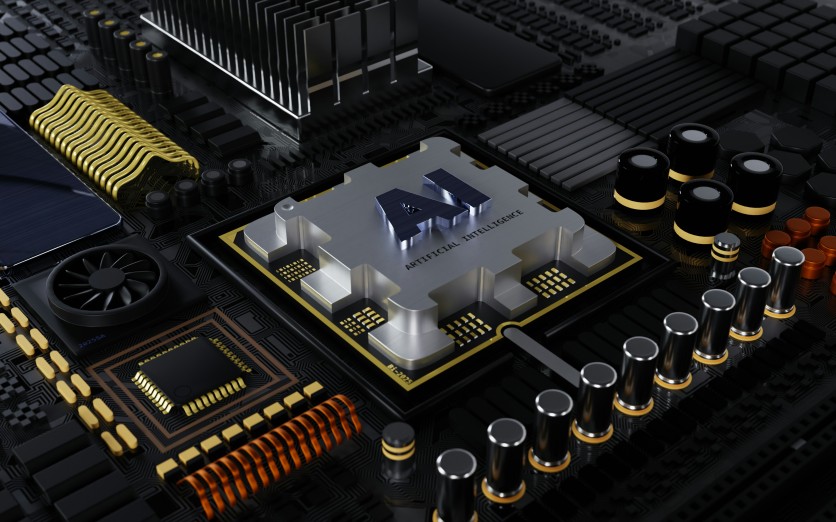
BoliviaInteligente/Unsplash
AI in science is changing how researchers approach discovery by making complex problems faster to solve and easier to understand.
Across fields like biology, chemistry, physics, and climate studies, AI scientific discoveries are helping scientists process massive datasets and identify patterns that would otherwise remain hidden. Instead of replacing traditional research methods, AI powered discoveries are becoming part of the workflow, supporting more efficient and scalable analysis in emerging science.
The growing role of machine learning and scientific automation is also shifting how experiments and theories are developed. AI research is no longer limited to computation alone; it now plays a role in prediction, simulation, and interpretation.
As scientific data continues to expand, AI is becoming a practical tool for managing complexity and improving the quality of decisions made in research environments.
10 Ways AI Is Helping Scientists
AI is becoming a key part of modern scientific work by improving how researchers analyze data, run experiments, and interpret results. Across many fields, it is helping scientists work faster, more accurately, and at a much larger scale than before.
1. Speeding up data analysis
AI in science helps researchers process massive datasets quickly, especially in experiments generating millions of data points, making analysis faster and more efficient. This allows scientists to focus more on interpretation and decision-making rather than manual processing.
2. Finding hidden patterns
Machine learning models detect complex relationships in data that humans may miss, strengthening AI scientific discoveries across multiple research fields. These insights often lead to new hypotheses and research directions.
3. Improving drug discovery
AI research helps identify promising compounds, predict drug behavior, and reduce early-stage testing time in pharmaceutical development. This speeds up the overall drug development pipeline significantly.
4. Predicting protein folding
AI powered discoveries have improved biological research by helping scientists understand protein structure and function more accurately. This has accelerated breakthroughs in structural biology and medical research.
5. Enhancing climate modeling
AI improves weather prediction and climate simulations by processing large environmental datasets and refining model accuracy. It also helps researchers model long-term climate change scenarios with greater reliability.
6. Automating laboratory tasks in machine learning
Laboratory AI systems run experiments and analyze results automatically, reducing repetitive manual work and increasing efficiency. This also helps reduce human error in routine testing processes.
7. Designing materials
AI helps researchers develop advanced materials for batteries, semiconductors, and industrial applications by analyzing structural possibilities. These discoveries support innovation in energy and manufacturing sectors.
8. Supporting medical diagnostics
AI identifies disease markers in scans and patient data, improving accuracy and speed in medical diagnosis. This enables earlier detection and better treatment planning for patients.
9. Organizing research papers
AI tools summarize studies, sort literature, and help researchers stay updated across fast-growing emerging science fields. This reduces time spent searching and improves access to relevant knowledge.
10. Improving simulations
AI enhances simulations in physics, chemistry, and engineering by improving how models respond to real-world data inputs. This leads to more precise predictions and better experimental design.
Read more: Will Solar Energy Ever Match Nuclear Power Production? Comparing the Future of Clean Energy
Why AI Is Changing Scientific Research
AI research is changing scientific work by removing bottlenecks in data analysis, experimentation, and interpretation. Instead of replacing scientists, AI in science supports them by handling repetitive tasks and improving focus on hypothesis development and critical thinking, which speeds up research.
AI scientific discoveries are increasing because many fields produce datasets too large for traditional methods. Genomics, climate science, and imaging rely on machine learning to process complex information efficiently. In emerging science, this scalability is becoming essential as data grows rapidly across disciplines.
AI powered discoveries also help generate and test ideas. AI can identify patterns to form hypotheses and validate them using larger datasets. This dual role strengthens accuracy and improves the reliability of scientific research outcomes across modern scientific fields.
Where AI Matter Most in Scientific Discoveries
AI in science has the greatest impact in fields with large, complex, and fast-growing data. Drug discovery, protein folding, and genomics rely on machine learning for pattern recognition and deeper analysis. Climate modeling also benefits through improved prediction accuracy and long-term forecasting.
AI research supports collaboration by helping scientists organize literature, compare results, and prioritize experiments across disciplines. In emerging science, this improves coordination where multiple fields overlap to solve complex problems more efficiently.
The strongest AI powered discoveries come from combining human expertise with machine intelligence. Scientists guide research direction and interpret results, while AI handles repetitive and computation-heavy tasks. This partnership improves efficiency, strengthens accuracy, and supports faster scientific progress without replacing human judgment.
Why AI Is Becoming A Core Scientific Tool
AI in science is becoming essential because it allows researchers to work faster, handle larger datasets, and improve accuracy in complex studies. From drug discovery and climate modeling to materials research and data analysis, AI scientific discoveries are shaping modern research workflows. Machine learning and automation continue to expand what scientists can achieve in less time.
As AI research develops further, its role in emerging science will likely grow through deeper collaboration between humans and machines. AI powered discoveries are not replacing scientific thinking but enhancing it by making research more efficient and scalable. This evolving partnership is becoming one of the defining shifts in how science is done today.
Frequently Asked Questions
1. How is AI used in science today?
AI in science is used to analyze data, run simulations, and identify patterns in large datasets. It helps researchers work faster and more efficiently across many fields. AI scientific discoveries are especially common in biology, chemistry, and climate studies. It is also used in automating repetitive lab tasks.
2. What are examples of AI powered discoveries?
AI powered discoveries include drug candidates identified through machine learning and breakthroughs in protein folding prediction. AI is also used in climate forecasting and materials design. These discoveries often come from analyzing large datasets that humans cannot process quickly. Many emerging science fields rely on these advancements.
3. Why is machine learning important in scientific research?
Machine learning is important because it can process complex data and detect patterns that are difficult for humans to see. It improves prediction accuracy in scientific models and experiments. AI research also helps reduce time spent on repetitive analysis. This makes scientific workflows more efficient.
4. Will AI replace scientists in research?
AI will not replace scientists but will support their work. Human expertise is still needed to design experiments and interpret results. AI in science handles computation-heavy and repetitive tasks instead. This partnership improves both speed and quality of research.
Read more: Naver AI Search Fund Pays 3,000 Creators Monthly to Feed Its AI Briefing

-
 C114 Communication Network
 -
 Communication Home
