
 Search

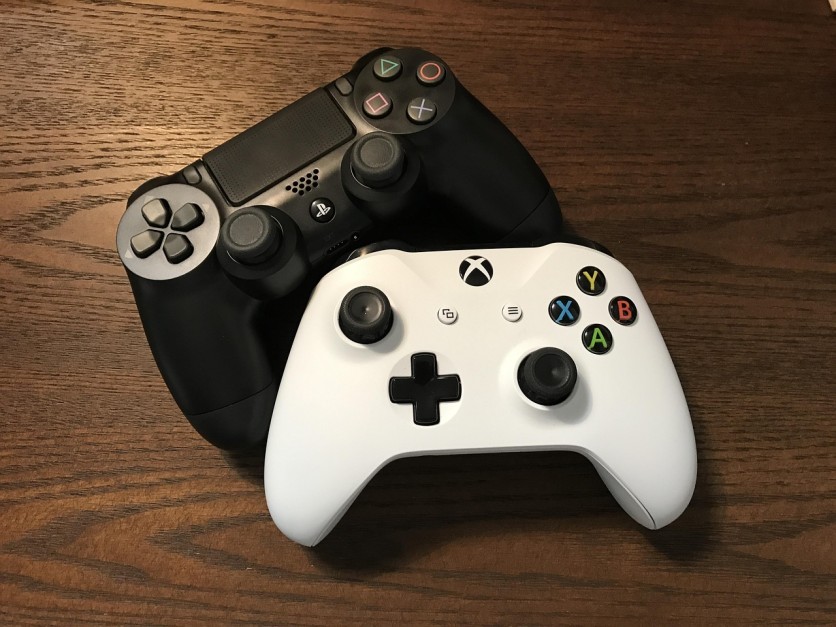
Humans outperform AI in new games using real world priors and faster flexible learning, giving them a key advantage in adapting to unfamiliar environments quickly. Pixabay, AlohaWorld
Artificial intelligence has achieved major milestones in gaming, from defeating grandmasters in chess to mastering complex strategy titles. Yet when it comes to learning new games, Humans still outperform AI. Researchers point to real-world priors as the key advantage, enabling faster flexible learning that machines have yet to replicate.
Humans vs AI in New Games: A Clear Gap
When faced with new games, humans quickly understand rules, mechanics, and goals, even with little guidance. This ability comes from real-world experience. People instinctively recognize patterns, predict outcomes, and adapt strategies.
AI, by contrast, typically needs extensive training. Most systems rely on reinforcement learning, which involves running thousands or millions of simulations to learn effective actions. Without prior data, AI struggles to interpret unfamiliar environments.
For example, a human can pick up a new puzzle or platform game and make meaningful progress within minutes. AI often starts from zero, requiring repeated trial and error before improving.
What Are Real-World Priors?
Real-world priors are the intuitive knowledge humans gain from interacting with their environment. This includes understanding gravity, motion, object behavior, and cause-and-effect relationships.
These priors transfer seamlessly into digital spaces. A player doesn't need instructions to know that a falling object might be dangerous or that barriers block movement. This allows humans to interpret new games quickly and make informed decisions.
AI systems lack this built-in understanding. Unless trained on similar patterns, they do not inherently grasp even basic physical or logical rules. Instead, they must learn everything from data, which slows their ability to adapt.
Faster Flexible Learning Gives Humans the Edge
Humans excel at faster flexible learning, the ability to apply knowledge from one situation to another. This makes it easier to navigate unfamiliar games.
Key strengths include:
- Pattern recognition, allowing quick identification of familiar mechanics
- Abstraction, applying general rules across different contexts
- Reasoning, predicting outcomes without repeated trials
For instance, a player encountering a new strategy game may recognize resource management systems from past experiences. This allows them to make smart decisions almost immediately.
AI systems struggle with this kind of transfer. Even highly trained models may fail when faced with slightly different rules or environments, highlighting a major limitation in adaptability.
Why AI Still Struggles With New Games
Despite rapid progress, AI faces several challenges in learning new games:
- Overfitting to specific training data, limiting generalization
- Lack of common-sense reasoning
- Heavy reliance on large datasets and repeated simulations
- Difficulty adapting to unfamiliar or changing environments
As a result, AI often performs well only within the boundaries of its training. Even small changes in a game can significantly impact performance.
Humans, on the other hand, remain flexible and adaptive, especially in unpredictable situations.
Research Insights: Humans Maintain the Advantage
Studies comparing human players with AI models consistently show that humans learn new games faster and more efficiently. This advantage comes from real-world priors, which allow people to make predictions and decisions with minimal data.
Rather than relying purely on trial and error, humans draw on prior knowledge to guide their actions. This leads to quicker understanding and better early performance in unfamiliar games.
These findings highlight a broader distinction: AI excels in narrow, specialized tasks, while humans dominate in general learning and adaptability.
Read more: Tech Acquisitions Surge as AI Startup Acquisition Drives Big Company Strategies
Can AI Catch Up to Human Learning?
Researchers are actively working to improve AI's ability to handle new games. Some approaches include:
- Transfer learning, allowing AI to reuse knowledge across tasks
- World modeling, helping systems predict how environments behave
- Embodied AI, training systems through interaction with real or simulated worlds
While promising, these efforts have yet to fully replicate human-like faster flexible learning. Capturing the depth of human experience remains a major challenge.
Why Are Humans Better Than AI at Learning New Tasks?
Humans outperform AI because they combine real-world priors with reasoning and adaptability. This allows them to interpret unfamiliar situations quickly and act effectively.
AI depends on structured training and prior data. Without it, machines struggle to understand context or make accurate predictions, especially in new games.
What Is Flexible Learning in Humans vs AI?
Flexible learning is the ability to adapt knowledge to new situations. Humans do this naturally, adjusting strategies and applying past experiences with ease.
AI systems tend to follow rigid learning patterns. They perform best in controlled environments but struggle when conditions change.
This difference explains why faster flexible learning remains a key human advantage.
Humans, AI, and the Future of New Games
The gap between Humans and AI in learning new games reveals a fundamental difference in intelligence. Humans rely on real-world priors and faster flexible learning to adapt quickly, while AI depends on data and repetition.
As research continues, bridging this gap remains a central goal. For now, when it comes to understanding and mastering new games, humans still lead, and real-world experience is the reason why.
Frequently Asked Questions
1. How do children compare to adults in learning new games?
Children often adapt faster due to curiosity and experimentation, while adults rely more on prior knowledge and strategy.
2. Do certain types of games reduce the gap between Humans and AI?
Yes, highly structured games with clear rules and limited variables tend to favor AI performance.
3. Can gaming experience improve faster flexible learning in humans?
Yes, frequent exposure to different game genres can strengthen pattern recognition and adaptability.
4. Why is common-sense reasoning hard to program into AI?
Because it requires broad, real-world understanding that is difficult to capture using fixed data and rules.
Read more: Google's AI Overviews Pump Out Millions Of Wrong Answers Each Hour Despite 90% 'Accuracy' Rate, Study Finds

-
 C114 Communication Network
 -
 Communication Home
