
 Search

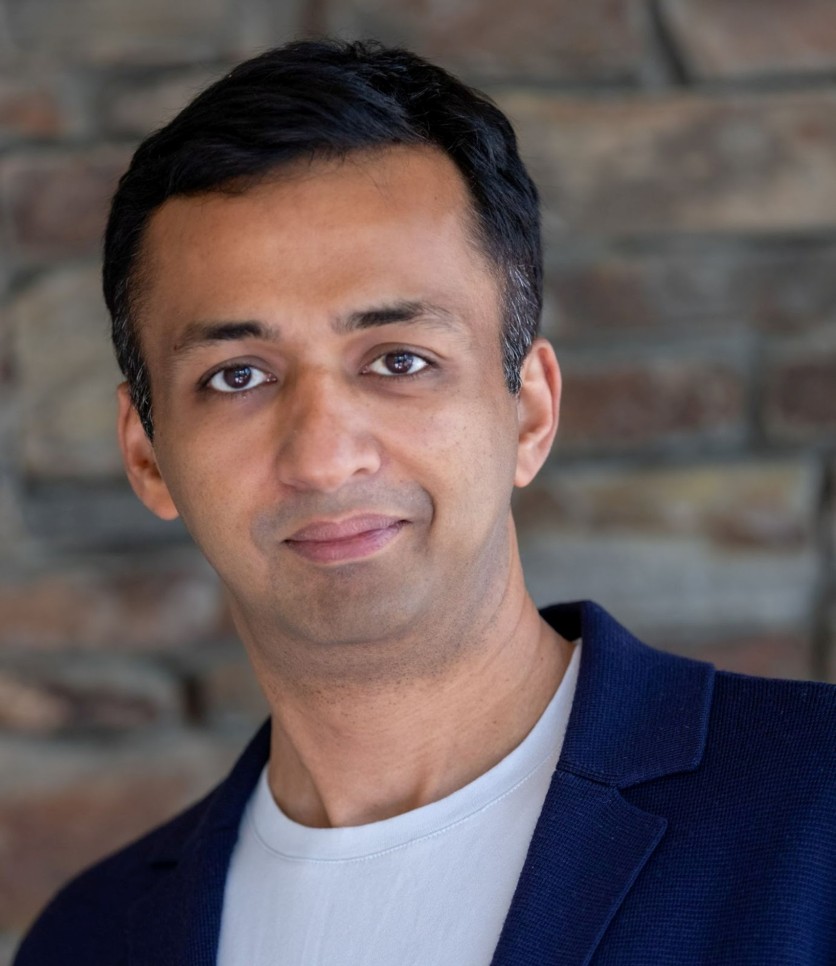
Harsh Singhal
While organizations were still debating whether large language models could be trusted in production when Harsh Singhal was already running them in real-time content moderation across ten languages, on a platform with tens of millions of active users. That decision, made years before the industry broadly accepted LLMs as viable for high-stakes safety applications, compressed what most teams were still treating as a research question into a production engineering problem with real consequences for real users.
Singhal now works as a Software Engineer at Glean, where his focus is on AI governance, data security, and building enterprise systems that make machine learning safe and enforceable at organizational scale, applying tools and methods developed through years of building safety systems under conditions far more demanding than most enterprise environments face.
The Decision to Deploy Early
When Singhal joined Koo as Senior Director and Head of Machine Learning in 2021, the platform had a specific and urgent problem. Content moderation across ten Indian languages simultaneously, in real time, for a social platform growing toward tens of millions of users, required capabilities that standard moderation tools could not provide. Those tools were built for English, and Koo's users communicated in Hindi, Tamil, Telugu, Kannada, Bengali, Marathi, and others, often blending languages and scripts within single posts in ways that English-trained classifiers were structurally unable to parse.
His team turned to Meta's open-source LLaMA models, fine-tuning them for multilingual toxicity detection across Koo's supported languages. Deploying fine-tuned LLMs for real-time safety was an uncommon choice at that point in the industry, with most production language model deployments concentrated in generation or search tasks where latency requirements were more forgiving and errors were less consequential. Content moderation operated under harder constraints, requiring decisions at social media speed with direct consequences for user safety when the system produced errors.
"Fine-tuned LLMs for real-time moderation was not what the industry was doing," Singhal said. "The tooling for running inference at that latency, at that scale, across that many languages, did not come pre-built. We had to put a lot of that infrastructure together ourselves. But we had looked at what the alternatives could actually do, and they were not good enough."
Mayank Bidawatka, Co-founder of Koo and Singhal's direct supervisor during his tenure, confirmed the scope of what the work represented. "He championed the early adoption of Meta's LLaMA models for multilingual toxicity detection," Bidawatka noted, "positioning Koo as one of the first social platforms globally to deploy fine-tuned LLMs for real-time safety applications."
KooBERT as a Production Asset and Public Resource
Alongside the LLaMA deployment, Singhal led the development of KooBERT, an open-source multilingual transformer model built for Indian-language content across more than 20 languages. The general multilingual models available at the time had been trained on formal text corpora and underperformed on code-mixed, transliterated content, which characterized the majority of user-generated posts on Koo. KooBERT was trained specifically for those patterns, and its open-source release extended its potential reach well beyond the platform, giving researchers and engineers working on Indian-language NLP access to a model with genuine production provenance rather than one built from formal corpora that did not reflect how people actually write online.
"We released KooBERT publicly because the work had broader relevance," Singhal said. "A lot of the Indian-language NLP resources that existed had been built from formal text. We had built something from the kind of content people actually write. That seemed worth sharing."
From Social Safety to Enterprise Security
The transition from social media content moderation to enterprise AI security involves fewer conceptual discontinuities than it appears from the outside. Both require classifiers that understand context rather than surface content alone. Both require systems that can apply policy logic at production speed. Both require governance outputs that security and trust teams can act on reliably rather than treat as background noise. At Glean, Singhal's work has contributed to sensitive content detection capabilities that use enterprise graph signals, document permissions, user activity patterns, and contextual classifiers together to identify genuinely sensitive information in unstructured enterprise data, achieving accuracy rates above 80 percent in a domain where traditional data loss prevention tools have historically fallen well short of that threshold because they cannot incorporate the organizational context that makes sensitivity situational rather than absolute.
His patent filings in this space include US20250371085A1, covering enterprise-aware data security posture management using contextualized access intelligence, and provisional applications addressing security assurance for AI agents and adaptive enterprise planning systems.
His recent technical work has expanded into enterprise-aware data security, AI agent assurance, and adaptive enterprise systems designed for increasingly autonomous workflows.
The agent security work responds to a challenge the enterprise security field is only beginning to address systematically. As AI agents take on autonomous workflows inside organizational systems, interacting with external data and tools in ways that existing security frameworks were not designed to monitor, the governance surface expands in ways that require fundamentally new technical approaches.
The Broader Shift in AI Safety Engineering
A 2025 survey from Pacific AI found that only 30 percent of organizations have deployed generative AI systems to production, with governance infrastructure frequently lagging behind deployment pace among those that have. The engineers who spent years building safety systems under the constraints of real production environments, where the cost of failure was immediate and visible, are arriving at the enterprise governance problem with experience that is increasingly rare and increasingly needed.
"The enterprise security challenges in AI are in some ways harder than what we faced in consumer content safety," Singhal said. "The data is more varied, the stakes per event can be higher, and the organizations running these systems have compliance requirements that do not bend. That requires a different level of rigor, and a very different kind of system."

-
 C114 Communication Network
 -
 Communication Home
