
 Search

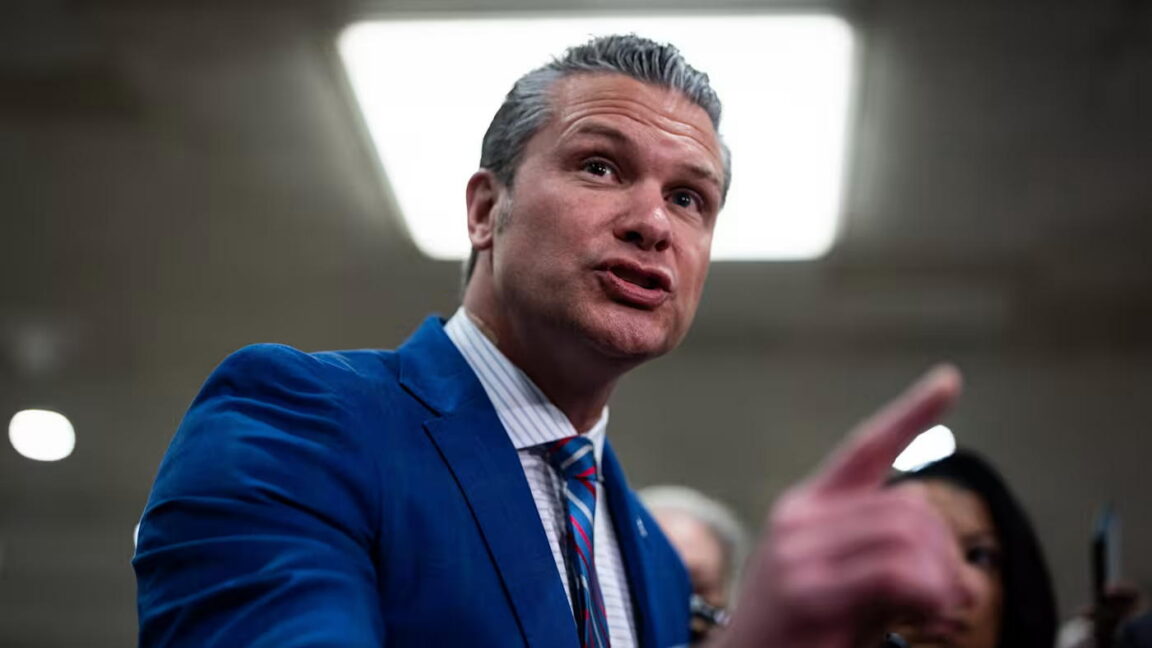
Credit: Al Drago/Bloomberg
US Defense Secretary Pete Hegseth has threatened to cut Anthropic from his department’s supply chain unless it agrees to sign off on its technology being used in all lawful military applications by Friday.
The threat is the latest escalation in a feud between Anthropic and the department, triggered by the AI group’s refusal to give unfettered access to its models for classified military use, including domestic surveillance and deadly missions with no direct human control.
Hegseth summoned Anthropic chief executive Dario Amodei to Washington for a meeting on Tuesday. During tense talks, the defense secretary threatened to cut the company out of the department’s supply chain or to invoke the Defense Production Act, a Cold War-era measure enabling the president to control domestic industry in the interest of national defense, said a person with knowledge of the talks.
Anthropic had until 5:01 pm on Friday “to get on board or not” with Hegseth’s terms, said a senior Pentagon official.
“If they don’t get on board, [Hegseth] will ensure the Defense Production Act is invoked on Anthropic, compelling them to be used by the Pentagon regardless of if they want to or not,” the official said. The Defense Department would also label Anthropic “a supply chain risk.”
“You can’t lead tactical ops by exception,” the official added, claiming “this has nothing to do with mass surveillance and autonomous weapons being used.”
Anthropic said it had continued with “good-faith conversations about our usage policy to ensure Anthropic can continue to support the government’s national security mission in line with what our models can reliably and responsibly do.”
The $380 billion start-up could take legal action if Hegseth follows through on his ultimatum, according to people familiar with the matter.
The disagreement threatens to widen a fault line between the White House and one of the US’s leading AI labs.
Anthropic has pushed for tighter regulation of AI, and Amodei has repeatedly warned of the risks of the technology. Meanwhile, President Donald Trump and his advisers have promoted a light-touch regulatory framework.
Trump’s AI tsar, David Sacks, has derided Anthropic as “woke” and last October accused the $380 billion company of “running a sophisticated regulatory capture strategy based on fear-mongering.”
Those attacks echo criticisms from Elon Musk, who Sacks last year described as “a good friend.” Sacks worked with Musk at PayPal and has invested in xAI and other Musk groups. Sacks divested those positions when he was appointed to his government role.
But the Pentagon has relied on Anthropic for AI technology. The San Francisco-based company’s Claude tool has until recently been the only model working on classified missions as a result of its partnership with Palantir.
Hegseth is negotiating with AI labs, including Google, OpenAI, and Elon Musk’s xAI, to replace Anthropic and integrate their technology into classified military systems.
The senior Pentagon official said Musk’s Grok “is on board with being used in a classified setting, while the rest of the companies are close.”
Cutting Anthropic from the Pentagon supply chain is an extreme measure typically reserved for companies linked to foreign adversaries. But at the same time, deploying the DPA would suggest Anthropic’s technology is critical to Pentagon operations.
Invoking the DPA would allow the Pentagon to make use of Anthropic’s tools without an agreement.
The act gives the administration the ability to “allocate materials, services and facilities” for national defense. The Trump and Biden administrations used the act to address a shortage of medical supplies during the coronavirus pandemic, and Trump has also used the DPA to order an increase in the US’s production of critical minerals.
The Pentagon has pushed for open-ended use of AI technology, aiming to expand the set of tools at its disposal to counter threats and to undertake military operations.
The department released its AI strategy last month, with Hegseth saying in a memo that “AI-enabled warfare and AI-enabled capability development will redefine the character of military affairs over the next decade.”
He added the US military “must build on its lead” over foreign adversaries to make soldiers “more lethal and efficient,” and that the AI race was “fueled by the accelerating pace” of innovation coming from the private sector.
Anthropic has expressed particular concern about its models being used for lethal missions that do not have a human in the loop, arguing that state of the art AI models are not reliable enough to be trusted in those contexts, said people familiar with the negotiations.
It had also pushed for new rules to govern the use of AI models for mass domestic surveillance, even where that was legal under current regulations, they added.
A decision to cut Anthropic from the defense department’s supply chain would have significant ramifications for national security work and the company, which has a $200 million contract with the department.
It would also have an impact on partners, including Palantir, that make use of Anthropic’s models.
Claude was used in the US capture of Venezuelan leader Nicolás Maduro in January. That mission prompted queries from Anthropic about the exact manner in which its model was used, said people familiar with the matter.
A person with knowledge of Tuesday’s meeting said Amodei had stressed to Hegseth that his company had never objected to legitimate military operations.
The Defense Department declined to comment.
© 2026 The Financial Times Ltd. All rights reserved. Not to be redistributed, copied, or modified in any way.

-
 C114 Communication Network
 -
 Communication Home
