
 Search

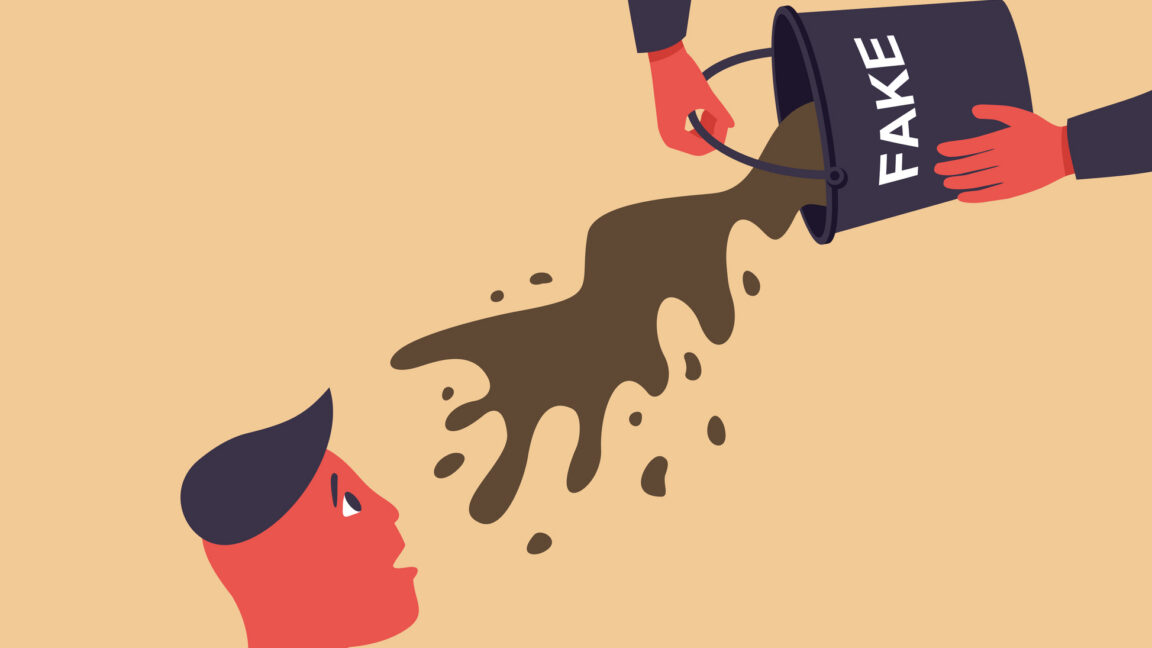
Like most tools, generative AI models can be misused. And when the misuse gets bad enough that a major dictionary notices, you know it’s become a cultural phenomenon.
On Sunday, Merriam-Webster announced that “slop” is its 2025 Word of the Year, reflecting how the term has become shorthand for the flood of low-quality AI-generated content that has spread across social media, search results, and the web at large. The dictionary defines slop as “digital content of low quality that is produced usually in quantity by means of artificial intelligence.”
“It’s such an illustrative word,” Merriam-Webster president Greg Barlow told the Associated Press. “It’s part of a transformative technology, AI, and it’s something that people have found fascinating, annoying, and a little bit ridiculous.”
To select its Word of the Year, Merriam-Webster’s editors review data on which words rose in search volume and usage, then reach consensus on which term best captures the year. Barlow told the AP that the spike in searches for “slop” reflects growing awareness among users that they are encountering fake or shoddy content online.
Dictionaries have been tracking AI’s impact on language for the past few years, with Cambridge having selected “hallucinate” as its 2023 word of the year due to the tendency of AI models to generate plausible-but-false information (long-time Ars readers will be happy to hear there’s another word term for that in the dictionary as well).
The trend extends to online culture in general, which is ripe with new coinages. This year, Oxford University Press chose “rage bait,” referring to content designed to provoke anger for engagement. Cambridge Dictionary selected “parasocial,” describing one-sided relationships between fans and celebrities or influencers.
The difference between the baby and the bathwater
As the AP points out, the word “slop” originally entered English in the 1700s to mean soft mud. By the 1800s, it had evolved to describe food waste fed to pigs, and eventually came to mean rubbish or products of little value. The new AI-related definition builds on that history of describing something unwanted and unpleasant.
Although he didn’t coin the term “AI slop,” independent AI researcher Simon Willison helped document its rise in May 2024 when he wrote on his blog comparing it to how “spam” had previously become the word for unwanted email. Quoting a tweet from an X user named @deepfates, Willison showed that the “AI slop” term began circulating in online communities shortly before he wrote his post advocating for its use.
The “slop” term carries a dismissive tone that sets it clearly apart from prominent corporate hype language about the promises and even existential perils of AI. “In 2025, amid all the talk about AI threats, slop set a tone that’s less fearful, more mocking,” Merriam-Webster wrote in a blog post. “The word sends a little message to AI: when it comes to replacing human creativity, sometimes you don’t seem too superintelligent.”
In its blog post announcing the word of the year selection, Merriam-Webster noted that 2025 saw a flood of AI-generated videos, off-kilter advertising images, propaganda, fake news, AI-written books, and what it called “workslop,” referring to reports that waste coworkers’ time. Ars Technica has covered similar phenomena invading various fields, including using the term “hiring slop” to describe an overflow of AI-generated résumés in June.
While some AI critics relish dismissing all generated output as “slop,” there’s some subjective nuance about what earns the label. As former Evernote CEO Phil Libin told Axios in April, the distinction may come down to intention: “When AI is used to produce mediocre things with less effort than it would have taken without AI, it’s slop. When it’s used to make something better than it could have been made without AI, it’s a positive augmentation.”
Willison had his own nuanced take, since he’s a proponent of using AI responsibly as tools to help with tasks like programming, but not with spamming. “Not all promotional content is spam, and not all AI-generated content is slop,” he wrote in May 2024 when discussing the term. “But if it’s mindlessly generated and thrust upon someone who didn’t ask for it, slop is the perfect term for it.”

-
 C114 Communication Network
 -
 Communication Home
